
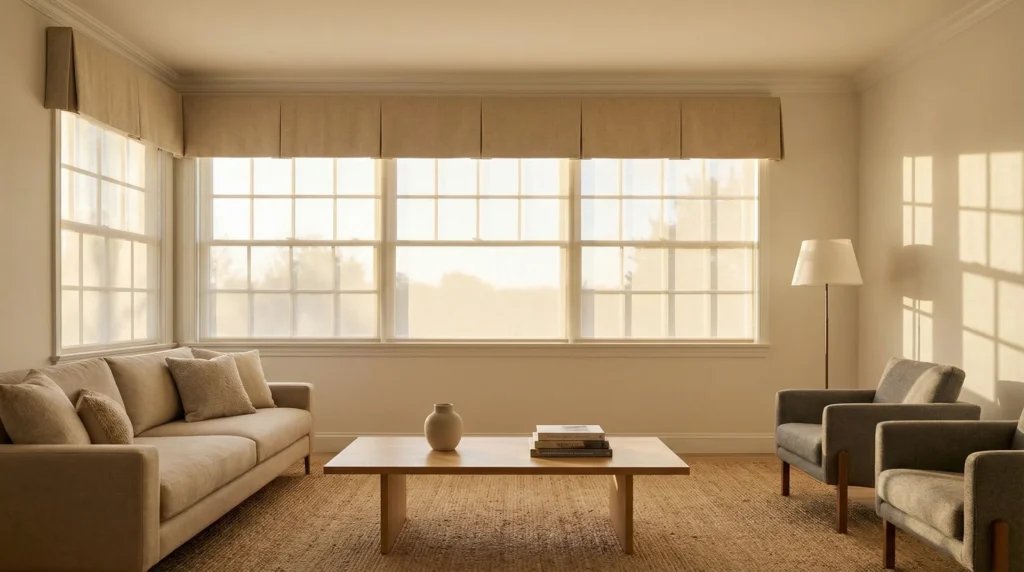
I remember the first time a client of mine pointed at the bare rod above her living room window and said, “Something feels unfinished here, but I don’t want anything fussy.” She had a clean, modern home, and she was genuinely afraid a valance would pull it backward in time. I understood exactly where she was coming from, because that fear is one of the most common things I hear from homeowners trying to refine their spaces.
Here is the short answer you came looking for: modern window valances absolutely belong in today’s homes. They come in structured, minimal, fabric-forward, and even architectural forms that complement contemporary interiors beautifully. You do not need ruffles, swags, or heavy brocade to get the benefit of a valance. You need the right style, the right fabric, and an honest read of your room.
Over a decade of working in residential design, from cozy urban apartments to sprawling suburban homes, I have styled more windows than I can count. And I keep returning to valances because they solve a specific visual problem that curtains or blinds alone simply cannot. They frame a window from the top, add intentional design detail, and tie the whole room together in a way that feels genuinely complete.
Throughout this piece, I walk you through the styles, the room-specific choices, the fabrics, the measurement process, and the real-world decisions that go into picking a modern valance. Think of this as me sitting across from you at a kitchen table, walking you through everything I have learnt firsthand.
Are Valances Still in Style?
The word “valance” probably conjures something your grandmother had in her formal dining room. Heavy fabric, gathered pleats, possibly a tassel or two. For a long time, valances carried that visual baggage and fell out of fashion during the minimalist wave of the early 2010s when bare windows and industrial-style hardware became the aesthetic of choice.
But here is what I observed working with clients across very different design tastes: the desire for a finished, layered window treatment never truly went away. People still wanted something at the top of the window. They just wanted it to look intentional.
A well-chosen valance acts like a picture frame for your window. It signals that the design of the room was thought through, not just assembled.
The valances that work today share a few common traits. They tend to be cleaner in silhouette, lower in fuss, and smarter in fabric choice. Box pleats replaced gathers. Linen replaced chintz. Geometric patterns replaced florals. The valance itself did not go anywhere. Only the visual language around it evolved.
What Makes a Valance Feel Modern: A Simple Framework
Before I get into specific styles, here is the framework I use when helping clients decide whether a valance will feel current or dated in their space.
Three things that determine whether a valance reads as modern:
- Silhouette: Clean, geometric, or tailored silhouettes read contemporary. Excessive gathering, cascading layers, or ornamental trim tend to feel older in style.
- Fabric: The material you choose carries more visual weight than most people realise. Linen, cotton canvas, woven textures, and light sheers all feel current. Heavy jacquard and velvet trim pull a valance into traditional territory unless used very deliberately.
- Proportion: A valance that hangs too long or sits too short relative to your window will always look off, regardless of style. I typically recommend a valance covering roughly 15 to 20 percent of the total window height, adjusting for ceiling height and window width.
These three elements work together. You can have a beautifully structured box pleat that still looks dated simply because the fabric is too ornate, or a simple flat panel that feels incomplete because it covers too little of the window. Getting all three right is the actual goal.
What Styles of Valances Are Trending in 2026
Before I break down each style in depth, here is where the market is right now. In 2026, the strongest trends in modern valance design are:
- Natural linen and organic textures are replacing synthetic fabrics across all styles
- Tonal window treatments where the valance matches or nearly matches the wall color for a quiet, architectural effect
- Layered treatments pairing structured valances over sheer roller shades for both beauty and function
- Cornice boards in grasscloth or painted finishes are having a significant comeback in elevated interiors
- Relaxed, unlined shapes in bedrooms and casual living spaces that prioritise ease over formality
This shift reflects a broader movement in interior design toward spaces that feel curated but not contrived, and valances are fitting right into that.
The Modern Window Valance Styles Worth Knowing
1. Box Pleat Valances
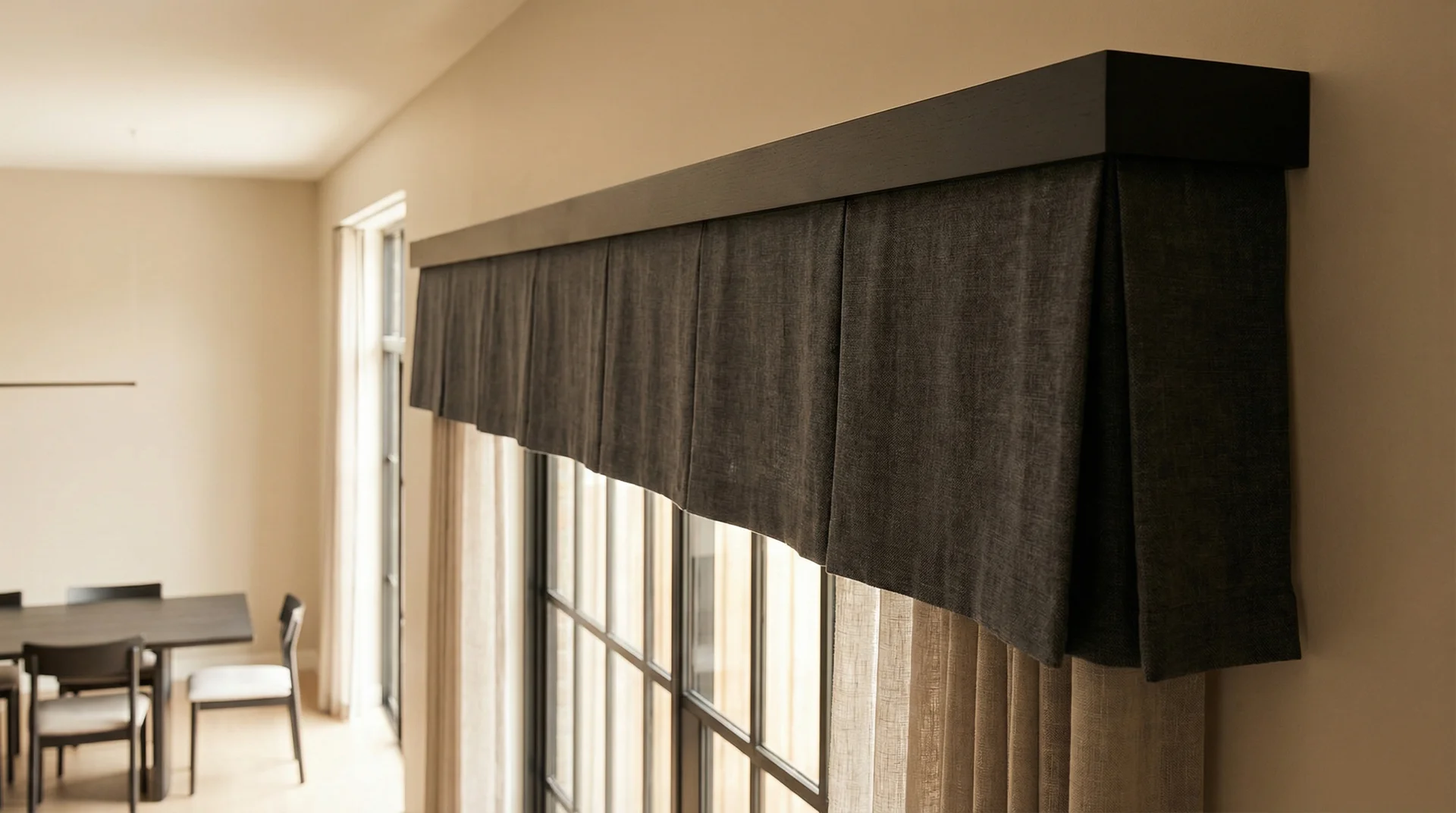
The box pleat valance is my personal go-to for living rooms and formal spaces where I want clean structure without stiffness. The fabric folds into neat, symmetrical pleats that sit flat against the rod or board, giving the valance a tailored, almost architectural quality.
I styled a box pleat valance in charcoal-washed linen for a client’s dining room, and the result looked genuinely custom even though we built it on a simple mounting board. The key with box pleats is keeping the spacing even and choosing a fabric with enough body to hold the fold.
Works best in: Living rooms, dining rooms, formal entryways
Fabric to reach for: Medium-weight linen, cotton twill, textured weaves
Practical tip: Mount the hardware 4 to 6 inches wider than the window frame on each side. This gives the pleats room to breathe and makes the window appear wider.
2. Flat Panel Valances
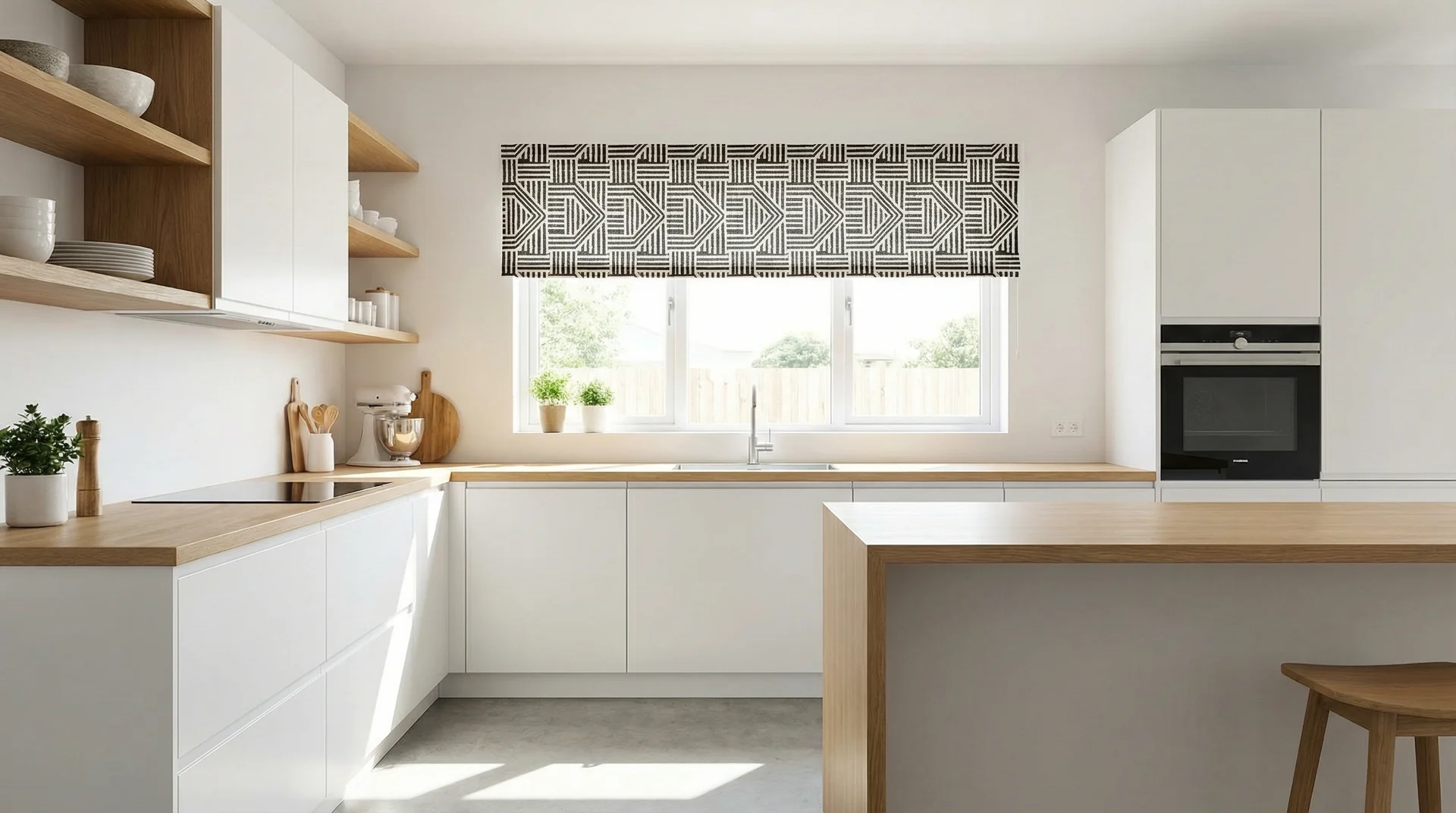
If you are working in a minimalist or Scandinavian-inspired space, the flat panel valance deserves serious consideration. A single, flat piece of fabric mounted at the top of the window with no gathering or pleating at all.
What I love about flat panels is their ability to showcase a bold pattern clearly. I once used a graphic black-and-white geometric linen flat panel in a client’s modern kitchen, and it brought significant personality to an otherwise neutral space without overwhelming it.
Works best in: Kitchens, home offices, minimalist bedrooms
Fabric to reach for: Printed cotton, linen blends, light canvas
Practical tip: Choose a fabric with a distinct pattern or interesting texture, because the flatness means the material itself does all the visual work.
3. Relaxed Roman Valances
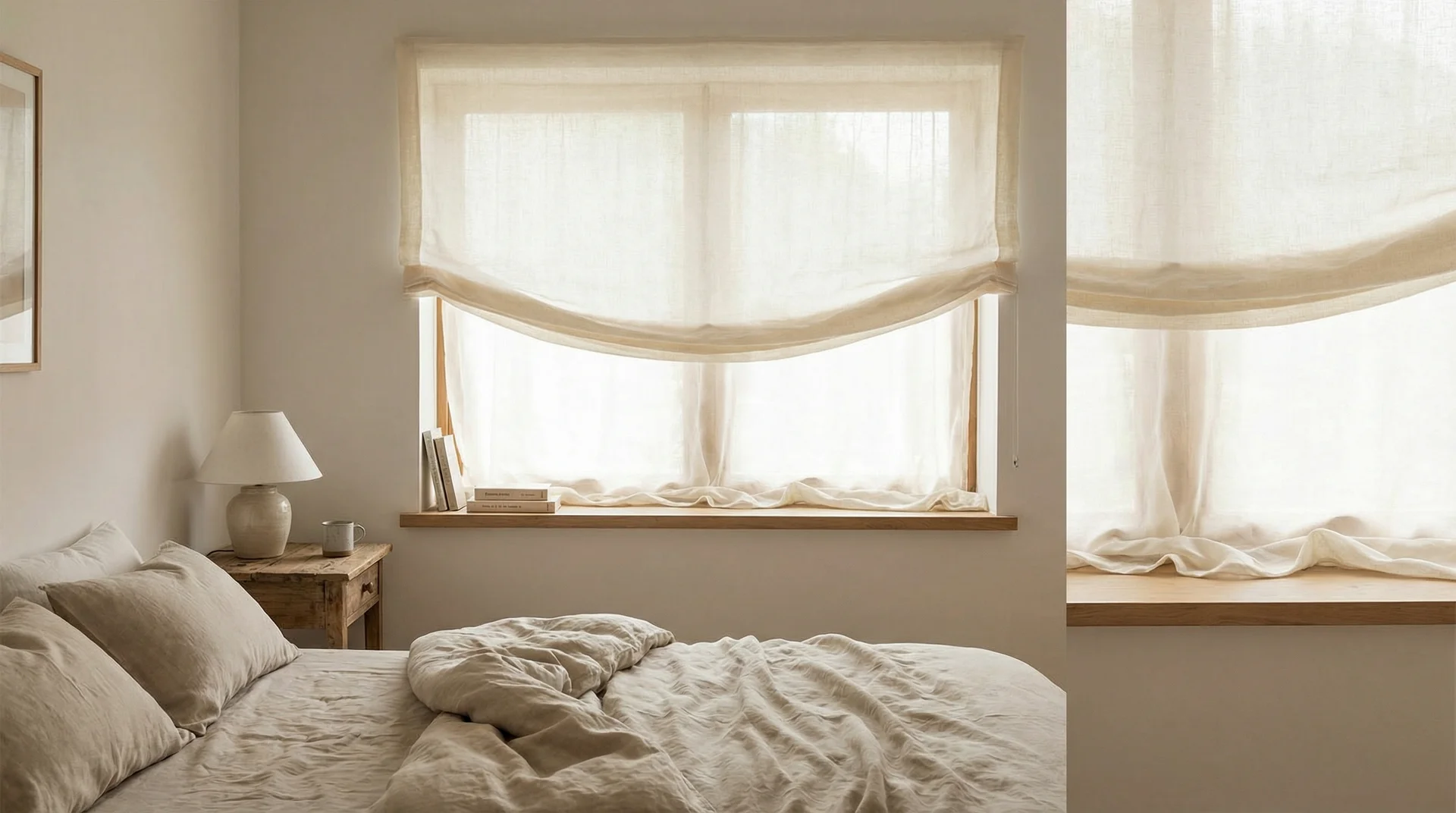
The relaxed Roman valance brings softness into the modern vocabulary in a way that feels very right for bedrooms and casual living spaces. Unlike a structured Roman shade, the relaxed version hangs with a gentle, informal swoop at the bottom rather than crisp horizontal folds.
This style straddles the line between polished and lived-in, the sweet spot for most of the homes I work in. It feels curated without feeling uptight, and it introduces fabric softness to balance rooms that lean heavily on hard surfaces like tile, concrete, or wood.
Works best in: Bedrooms, casual living rooms, sunrooms
Fabric to reach for: Sheer linen, gauze, soft cotton voile
Practical tip: Let the fabric pool slightly at the lowest point of the swoop for an effortlessly elegant look rather than pulling it perfectly taut.
4. Cornice Valances (Reimagined for Modern Spaces)
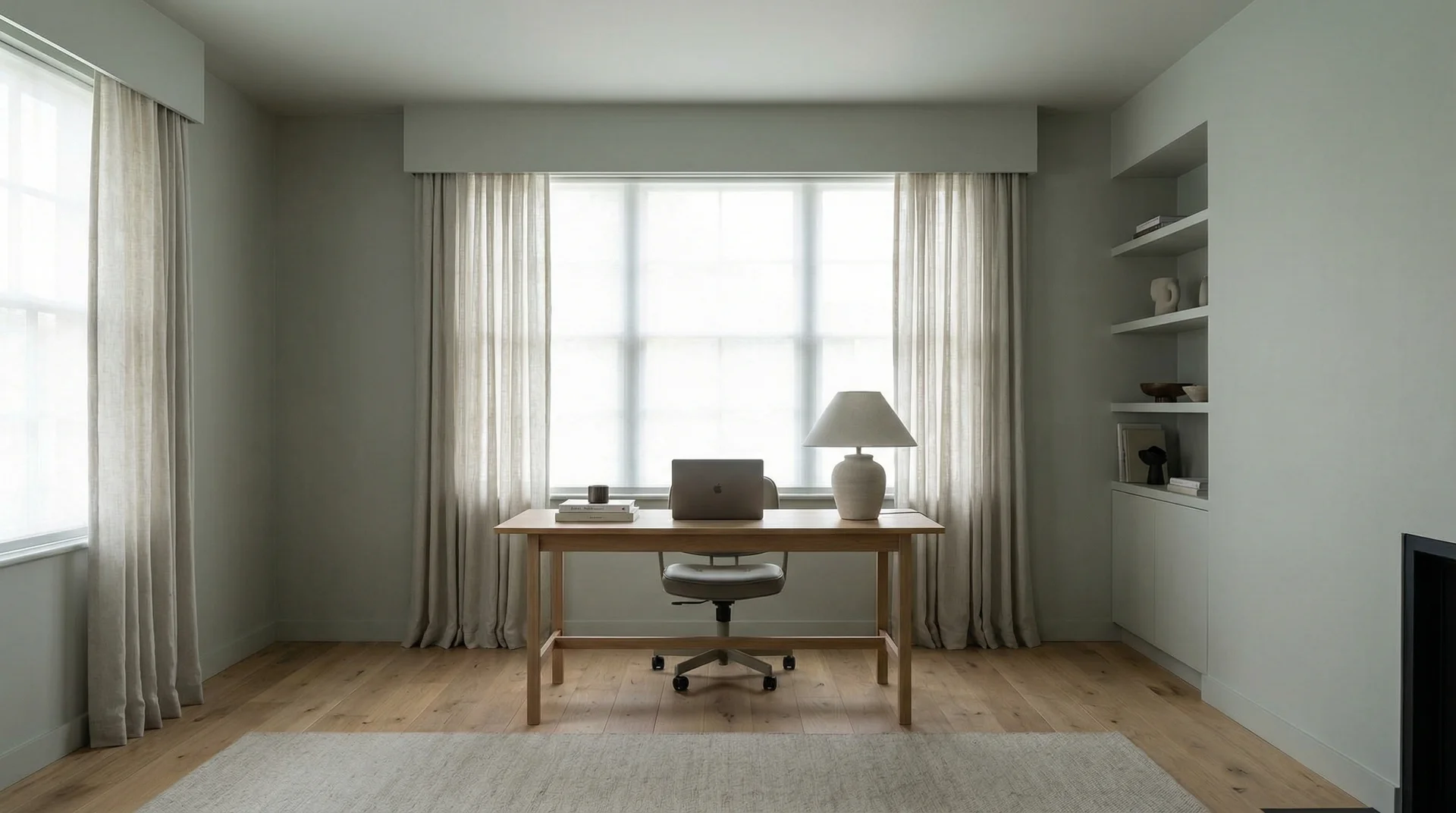
Cornice boards often get lumped into the traditional category, but that does them a real disservice. A cornice is essentially a structured box covered in fabric or paint that mounts above the window, concealing hardware and adding an architectural element.
In contemporary spaces, I have seen cornices upholstered in grasscloth wallpaper, painted to match the wall color for a seamless built-in look, and wrapped in smooth canvas for a refined modern effect. When you strip away the fringe and ornate trim, a cornice is a very clean, geometric form.
Works best in: Home offices, media rooms, bedrooms with strong design intent
Finish or fabric to reach for: Grasscloth, painted wood, upholstered velvet, smooth canvas
Practical tip: For a truly modern cornice, paint it the exact same color as your wall. The treatment disappears into the architecture and looks intentional rather than decorative.
5. Rod Pocket Valances
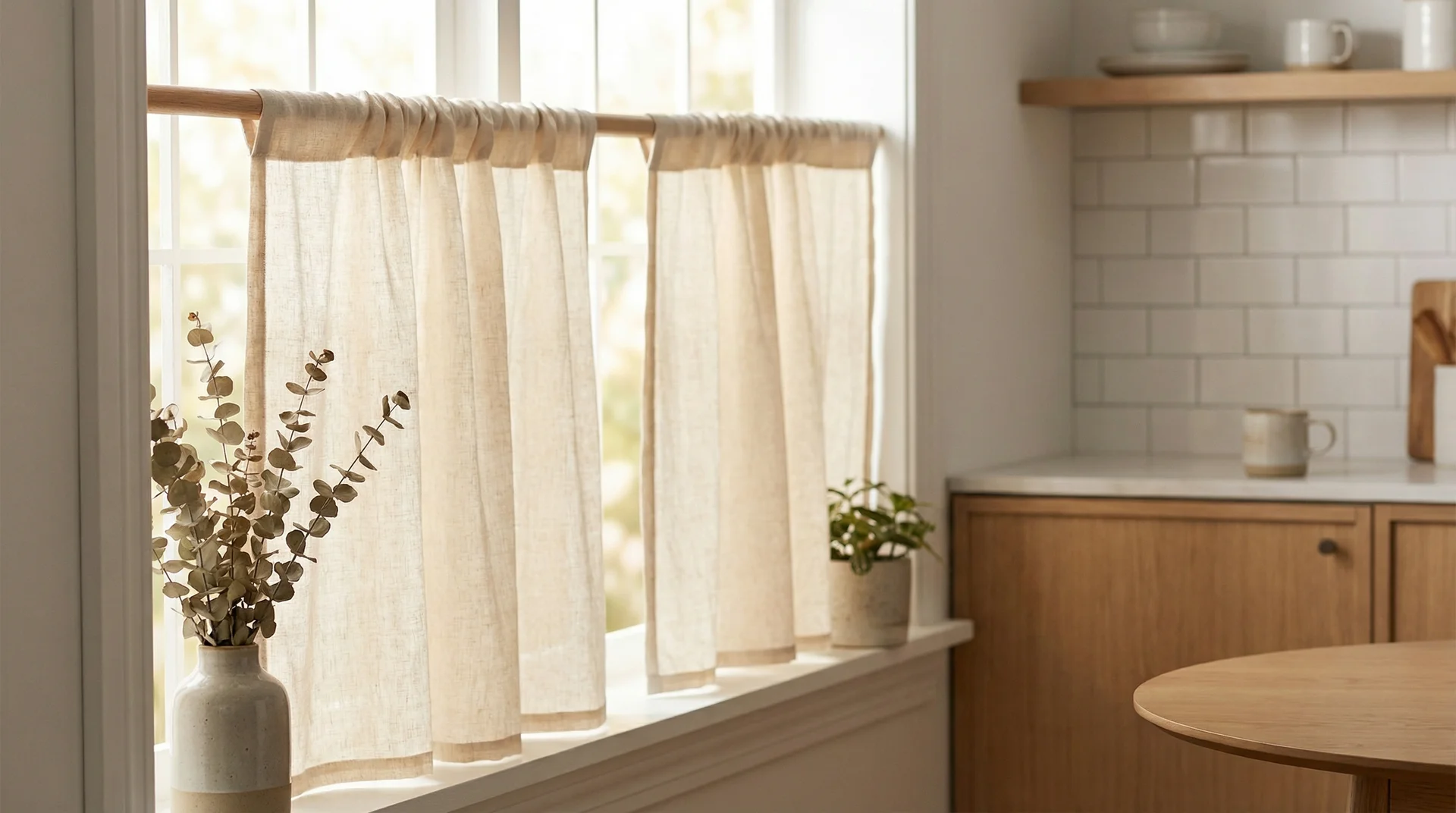
Rod pocket valances offer an easy entry point into window styling and remain surprisingly relevant when you use the right fabric with a moderate gather ratio. Too much gathering creates the fussy, ruffled look that feels dated. A tighter gather with a light fabric produces soft, tailored folds that read as casual-modern.
I tend to use these in kitchens and bathrooms where the valance needs to be easy to remove and wash, and where the room benefits from softness without anything too structured.
Works best in: Kitchens, bathrooms, casual dining areas
Fabric to reach for: Light linen, cotton muslin, sheer fabrics
Practical tip: Use a gather ratio of 1.5 to 1 (fabric width is 1.5 times the rod width) for a modern, less ruffled look instead of the traditional 2 to 1 or 3 to 1 ratio.
6. Asymmetrical and Waterfall Valances
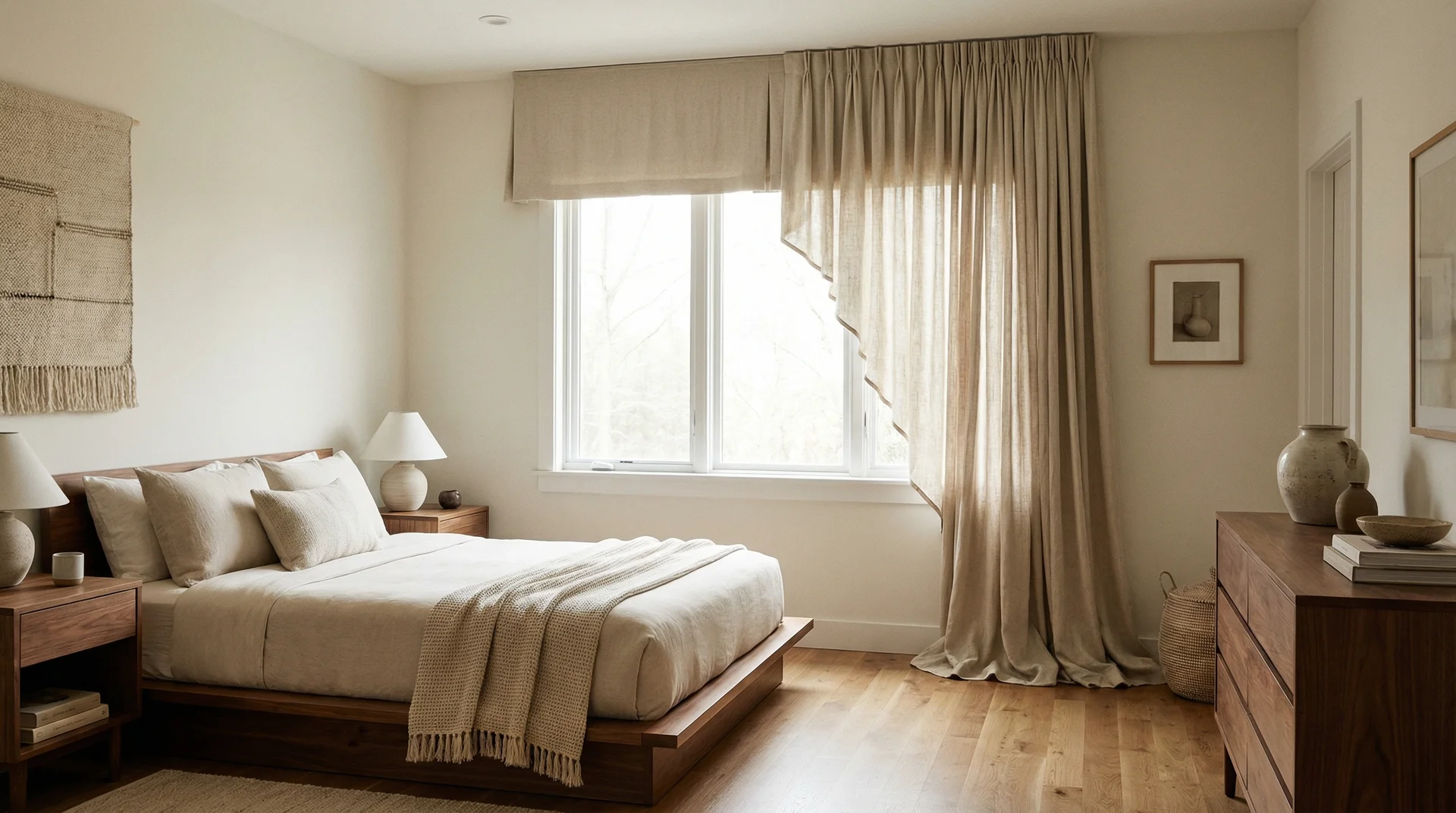
If you want your window treatment to function as a genuine design statement, the asymmetrical valance delivers that in a way very few other styles can. One side hangs longer than the other, creating a diagonal or waterfall effect that is inherently artistic.
I introduced an asymmetrical linen valance in a client’s bedroom where one side cascaded into a soft puddle on the floor while the other held at a standard valance height. The visual effect was dramatic but completely intentional, and it gave the room a high-end feel that far exceeded the actual cost of the fabric.
Works best in: Master bedrooms, accent windows, reading nooks
Fabric to reach for: Lightweight linen, draped silk blends, soft woven cotton
Practical tip: Anchor the longer side above the window frame rather than at ceiling height to keep the proportions grounded and deliberate.
7. Layered Valances
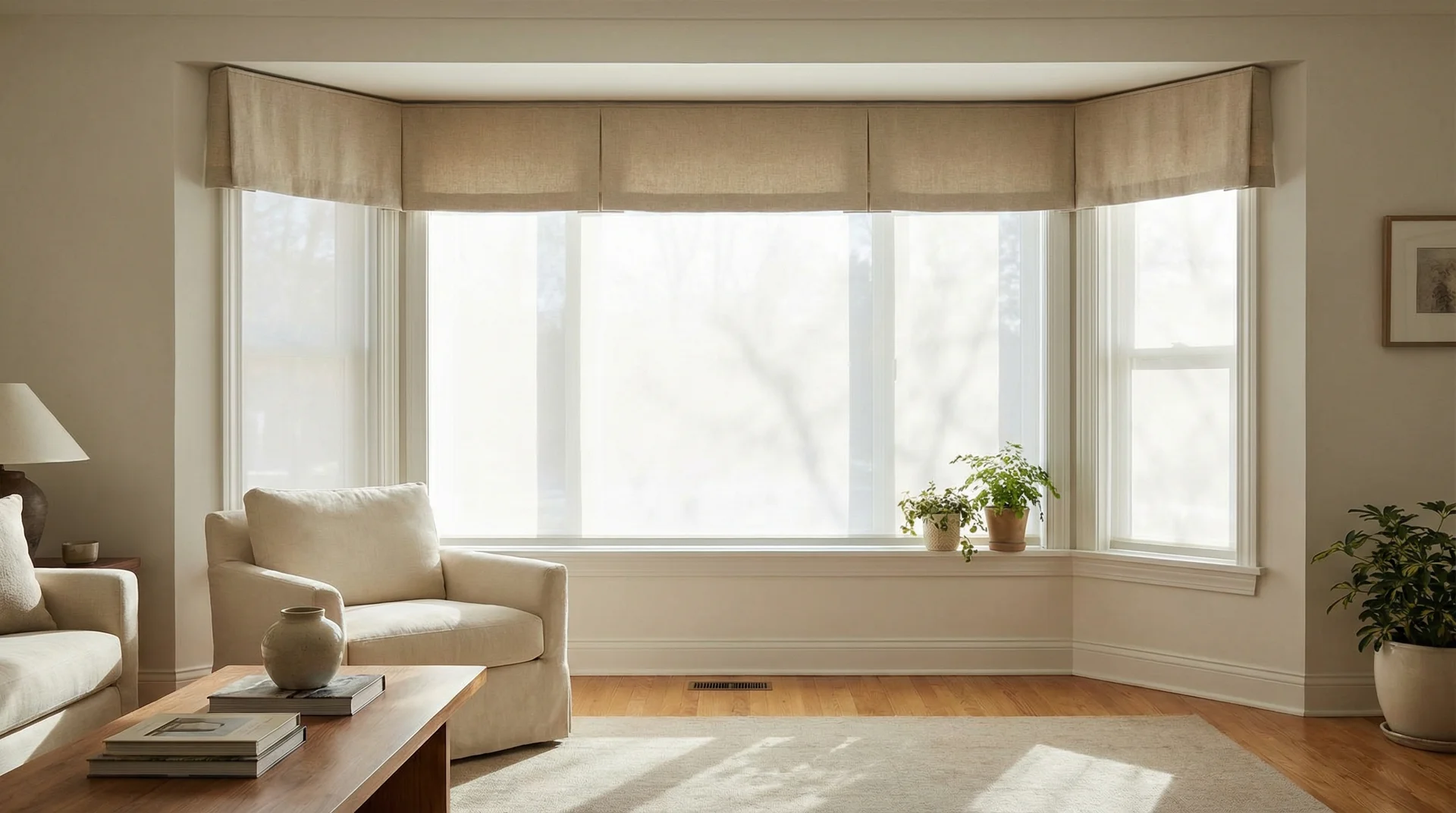
Layering a valance over blinds or shades is one of the most functional and visually rich approaches to window treatment design. The valance handles the decorative work at the top, while the blind or shade manages light control below.
A sheer roller shade with a structured linen box pleat valance above gives you diffused natural light, privacy when needed, and a refined look throughout the day. This combination resolves a tension I see in almost every client project: the desire for both beauty and practical function.
Works best in: Living rooms, bedrooms, spaces with high light exposure
Combination to consider: Sheer roller shades with linen valances, cellular shades with structured cornices
Practical tip: Keep the valance color within the same tonal family as the shade underneath so the two layers work together rather than compete.
Valances for Specific Window Types
This is an area most general advice skips entirely, and it genuinely matters. The wrong valance on the wrong window type creates a proportion problem that no amount of beautiful fabric can fix.
Bay Windows
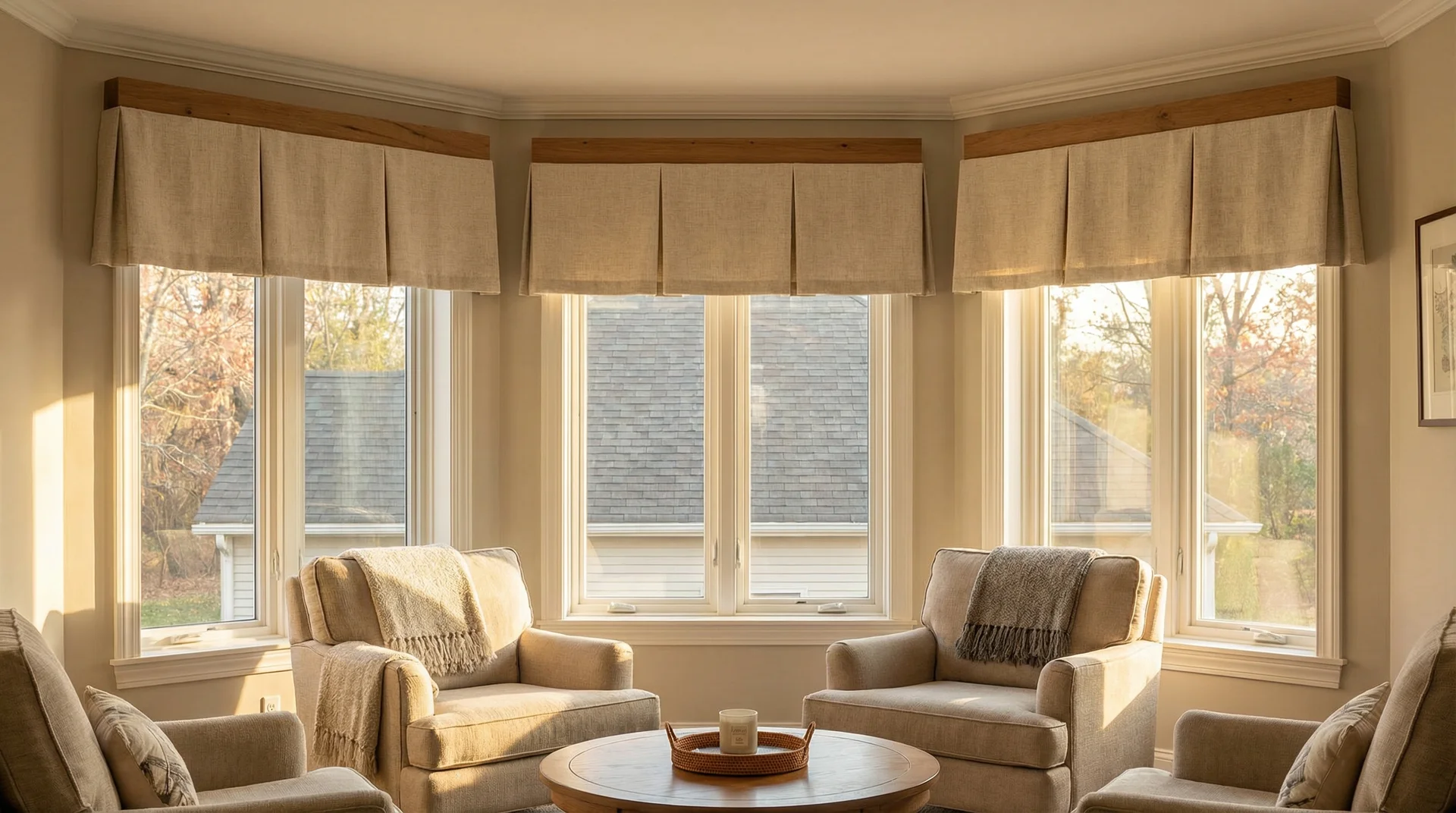
Bay windows call for valances that follow the angle of the structure rather than spanning the entire opening in one flat piece.
I recommend either separate box pleat valances on each window section of the bay, mounted on individual boards that follow the angles, or a flexible cornice cut to mimic the bay’s geometry. Avoid a single continuous gathered valance across a bay window. It fights the architecture and looks like an afterthought.
Sliding Glass Doors
Sliding doors are tricky because any valance you choose has to work with the door’s function. My recommendation is a cornice board mounted high above the door frame, wide enough to clear the door opening entirely.
This frames the glass beautifully without interfering with the door’s operation. A flat panel valance also works here if you centre it above the fixed glass panel rather than the sliding portion.
Small Windows
Small windows in bathrooms, kitchens, or utility rooms benefit from a valance that sits inside the frame rather than outside it, or mounts just barely above the frame with minimal width extension.
An inside-mounted flat panel or a small rod pocket valance in a sheer fabric keeps the treatment appropriately scaled. The biggest mistake with small windows is adding too much width extension, which makes the valance look like it belongs on a much larger window.
Tall Narrow Windows
For tall, narrow windows common in older homes or stairwells, a valance can actually help you work with the proportions rather than against them. I use a shorter drop length here, around 10 to 12 inches, and keep the width close to the frame rather than extending dramatically.
This draws attention to the window’s height while keeping the valance visually proportional.
DIY Modern Valance Ideas Worth Trying
A significant portion of readers want to create rather than purchase, and honestly, some of the best-looking valances I have seen in client homes were DIY projects. Here are the approaches I find most achievable and genuinely stylish.
No-sew flat panel valance: You can create a clean, modern flat panel valance using iron-on hem tape and a piece of fabric cut to your measurements. Choose a fabric with a tight enough weave that it does not fray easily, finish the edges with the hem tape, and hang it from a tension rod or clip rings. The result is indistinguishable from a purchased version in most rooms.
Repurposed tablecloth valance: A linen or cotton tablecloth with a simple border can become a beautiful flat panel valance with minimal cutting. The borders often provide a finished edge that reads as an intentional design detail, saving you the hemming work entirely.
Painted cornice board: If you have basic woodworking confidence, a cornice board made from a cut plywood board, painted in your wall color or a complementary shade, is one of the most impactful and cost-effective window treatments you can make. The materials cost a fraction of a custom cornice, and the painted finish looks deliberately architectural rather than DIY.
Knotted or tied valance: For a casual, coastal, or relaxed boho-modern aesthetic, you can create a simple tie-top valance by cutting fabric to size, hemming the edges, and adding fabric ties at intervals across the top. Tie the panels to a dowel rod for a light, effortless look that works beautifully in bedrooms and sunrooms.
A Quick Style-to-Room Reference Table
| Room | Recommended Style | Fabric | Key Benefit |
|---|---|---|---|
| Living Room | Box Pleat or Layered | Medium linen, textured weave | Structured and polished |
| Bedroom | Relaxed Roman or Asymmetrical | Gauze, silk blend, soft cotton | Warmth and softness |
| Kitchen | Flat Panel or Rod Pocket | Printed cotton, washable linen | Easy maintenance, personality |
| Bathroom | Rod Pocket or Flat Panel | Cotton voile, sheer linen | Light and privacy balance |
| Home Office | Cornice or Box Pleat | Canvas, grasscloth, solid cotton | Clean, focused look |
| Dining Room | Box Pleat or Cornice | Cotton twill, woven texture | Formal but contemporary |
| Sunroom | Relaxed Roman or Sheer Flat Panel | Sheer linen, gauze | Maintains airiness |
Choosing the Right Fabric: What I Look for First
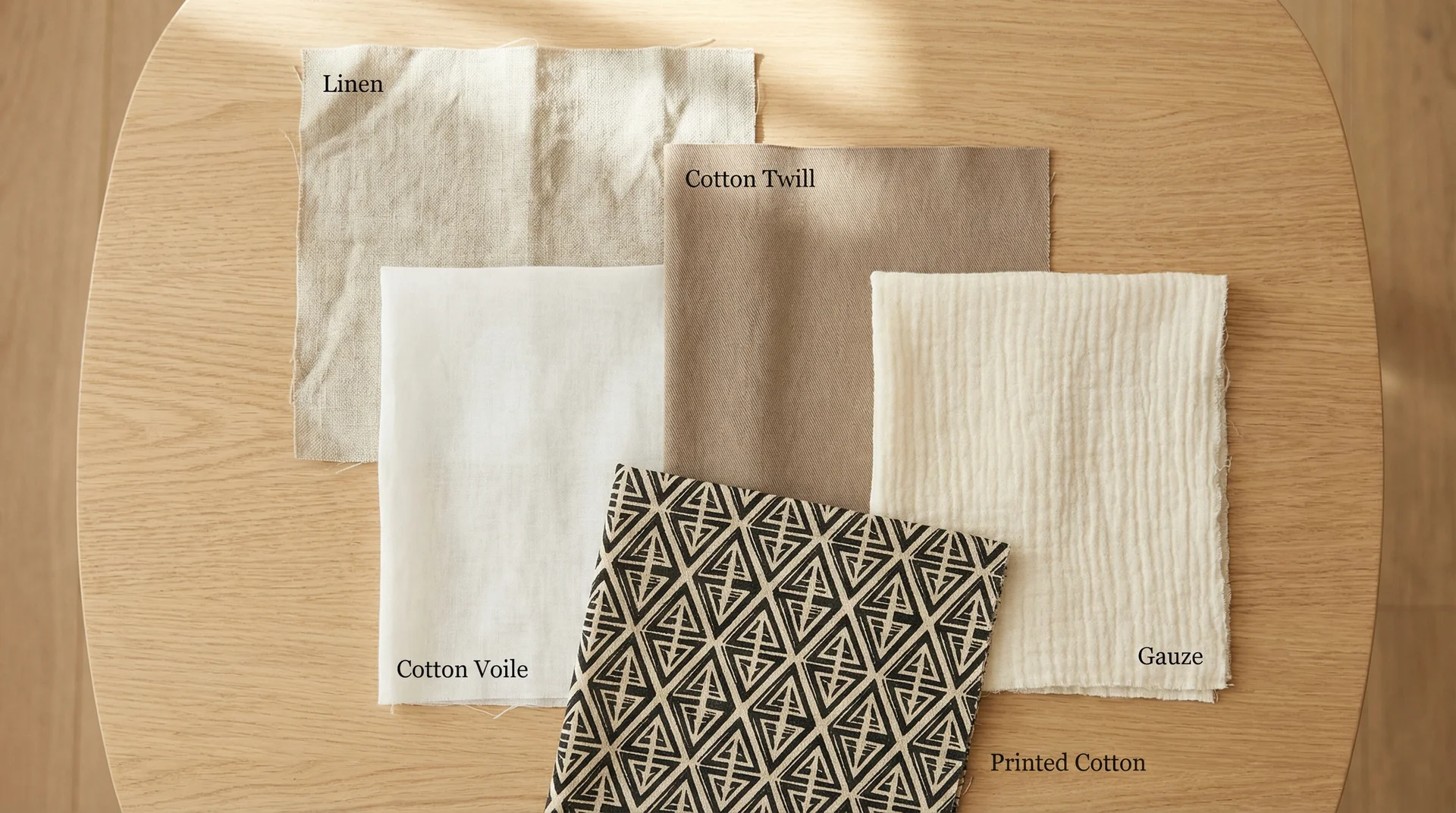
Fabric choice is where I spend a disproportionate amount of time with clients because it affects how the valance hangs, how it interacts with light, how easy it is to clean, and ultimately how modern or traditional it reads.
For light and airy rooms, linen, cotton voile, or gauze works beautifully. These fabrics move gently with airflow, soften the light, and feel casual in the best way.
For structured, architectural rooms, heavier options like cotton twill, canvas, or a medium-weight upholstery-grade linen hold their shape, which is essential for box pleats and cornice boards.
For pattern-forward spaces, a flat panel style with a printed cotton or woven geometric pattern works well. Abstract watercolor prints, large-scale botanicals, and graphic stripes all translate cleanly to valance-scale fabric panels.
For kitchens and bathrooms, always choose synthetic blends or preshrunk cotton that tolerates washing and moisture without warping or fading.
A tip I give every client: hold your fabric sample up against the window in the actual room before buying. Fabric looks completely different when light passes through it versus how it looks under store lighting.
How to Measure a Window for a Valance
Measuring for a valance sounds simple until you get it wrong and end up with fabric that bunches awkwardly or barely covers the rod. Here is the process I follow.
Step 1: Decide on Your Mounting Method
Modern valances almost always use an outside mount, placed above and outside the window frame, because it makes the window appear wider and taller. Inside mounts work for small windows where extending beyond the frame would look disproportionate.
Step 2: Measure the Width
For an outside mount, take the full width of the window frame and add 4 to 6 inches on each side. A 36-inch-wide window calls for a valance spanning roughly 44 to 48 inches total. For gathered styles, multiply this total width by your gather ratio to determine fabric yardage.
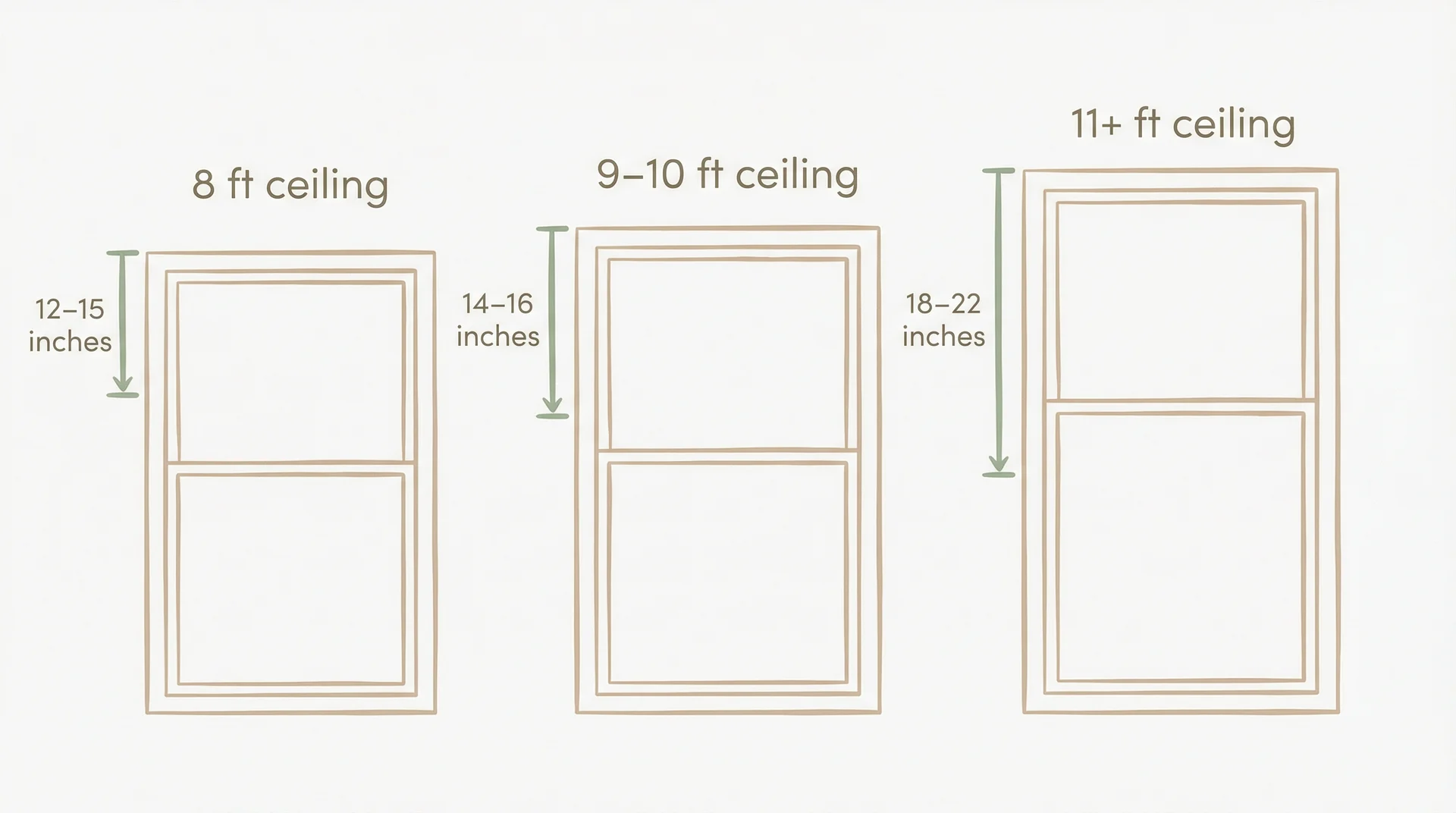
Step 3: Determine the Drop Length
The drop refers to how far the valance hangs down from the mounting point. Use this as your guide:
| Ceiling Height | Recommended Valance Drop |
|---|---|
| 8 feet | 12 to 15 inches |
| 9 feet | 14 to 16 inches |
| 10 feet | 16 to 18 inches |
| 11 feet and above | 18 to 22 inches |
Step 4: Set Your Mounting Height
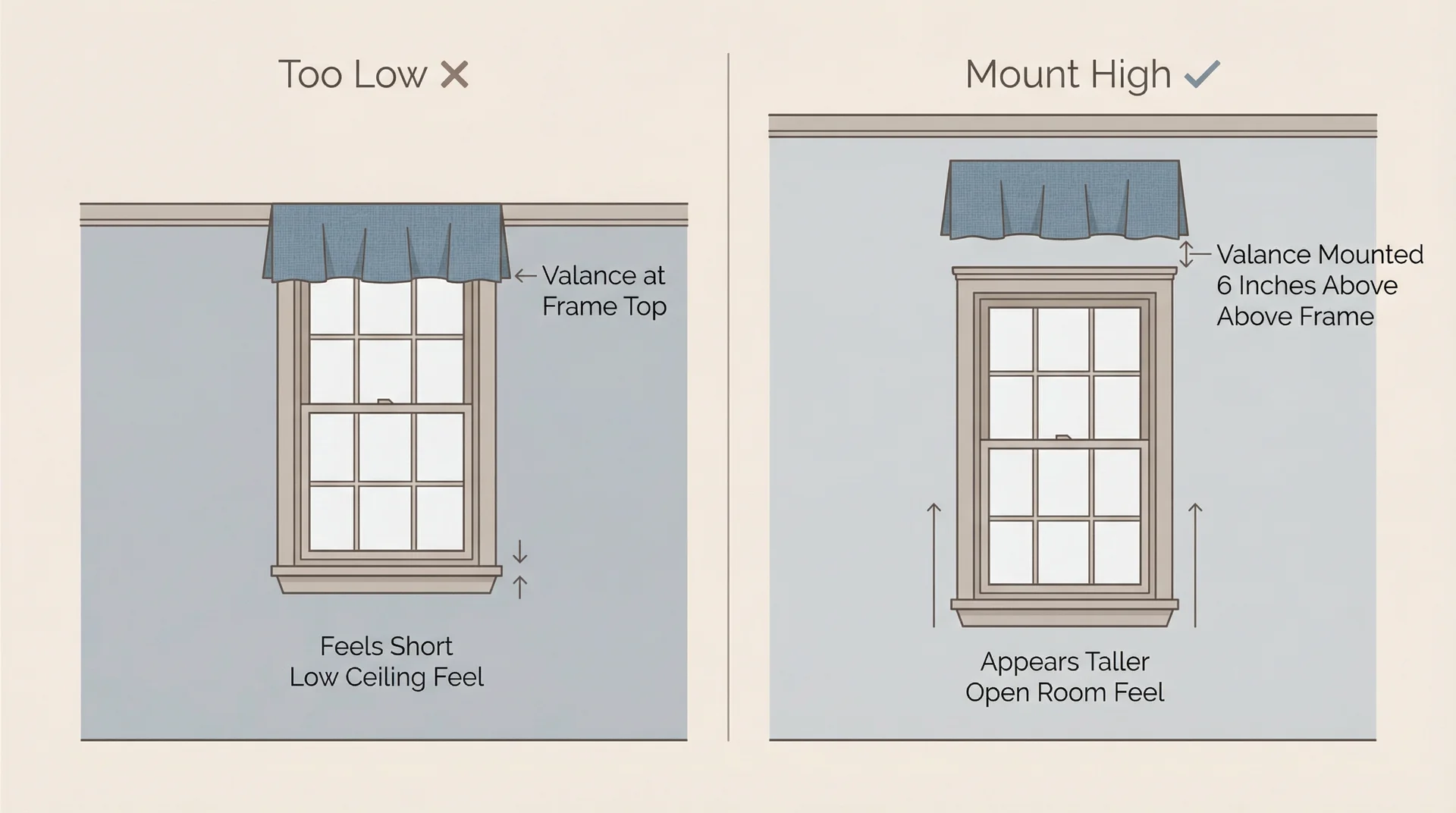
Mount the hardware as close to the ceiling as practically possible, or at a minimum, several inches above the window trim. This elongates the window visually and gives the room a sense of more height without any structural changes.
Common Mistakes I See (and How to Avoid Them)
Hanging the valance too low. When a valance sits right at the top of the window frame instead of above it, the window looks shorter, and the ceiling feels lower. Mount your hardware 4 to 8 inches above the frame.
Using too much fabric. Over-gathered valances belong to a different era. Scale back the gather ratio and let the fabric breathe.
Ignoring the room’s light conditions. A heavy, opaque valance in a north-facing room makes a dim space feel heavier. In low-light rooms, always lean toward lighter-weight fabrics or open weaves that let some light through.
Mismatching the valance scale to the window. A narrow valance on a wide picture window looks timid. A sweeping valance on a small bathroom window looks overdone. Proportional relationship is everything.
Choosing a style that fits the room’s vocabulary. A very ornate, gathered valance in a room full of clean-lined modern furniture creates a visual dissonance that people sense even if they cannot name it. The valance should complement the room, not introduce a conflicting aesthetic.
Colour and Pattern: How to Get It Right
The most versatile approach is to choose a valance colour within the same tonal palette as your wall or trim. A soft white valance on a light grey wall essentially disappears into the architecture and lets the window itself become the feature.
For a room that needs warmth, pull a colour from your existing textiles, whether that is a sofa cushion, a rug, or an art piece, and choose a valance in that same colour family. This ties the room together and makes the window treatment feel considered.
For a statement valance, these are the patterns I find most reliably modern:
- Large-scale geometric prints in two-tone colourways (black and natural, navy and ivory)
- Abstract botanical prints with organic, irregular forms rather than traditional, realistic florals
- Subtle woven textures like herringbone, linen slub, or basket weave that add depth without a formal pattern
- Neutral-ground watercolor patterns where the design bleeds softly into the fabric
What I tend to steer clients away from in modern settings: highly symmetrical traditional florals, toile, overly small-scale ditsy prints, and anything with a formal medallion or damask pattern.
How Valances Work Room by Room
Living Rooms
The living room is where valances earn the most admiration when they are done well. A structured box pleat or a layered valance over sheer roller shades gives a living room the kind of refined, finished quality that makes a room feel designed rather than assembled.
In living rooms with large picture windows or floor-to-ceiling glass, I lean toward cornices painted to match the wall. They add architectural structure without adding visual weight.
Bedrooms
Bedrooms call for softness. A relaxed Roman valance or a gently gathered rod pocket valance in a gauze or linen fabric serves that beautifully.
I often layer these over blackout roller shades for clients who need complete light control for sleeping while wanting something beautiful at the window during the day. For master bedrooms with strong design identities, the asymmetrical valance adds a touch of drama that elevates the entire room.
Kitchens
Kitchens benefit enormously from valances because they add what most kitchens are missing: softness. All that cabinetry, countertop, and backsplash create a hard-surfaced environment, and a simple flat panel valance in a printed cotton introduces warmth and personality beautifully.
Always use washable fabrics here. Grease and steam settle on window treatments, and a valance you can remove and wash is genuinely more practical than one requiring dry cleaning.
Bathrooms
In bathrooms, a valance is an opportunity to add a small luxury detail without the commitment or cost of full-length curtains. A simple rod pocket valance in a sheer linen or cotton voile lets light filter in while adding the layered look of a styled window. Keep the length on the shorter side; 10 to 12 inches works for most standard bathroom windows.
Home Offices
Home offices often get overlooked in window treatment planning, but I always advocate for giving the home office window the same attention as the rest of the house. A clean cornice board painted to match the wall, or a sharp flat panel valance in a solid linen, gives the space a focused quality. A sheer flat panel valance combined with a light-filtering cellular shade is one of my most recommended combinations for reducing screen glare without sacrificing natural light.
DIY vs. Ready-Made vs. Custom: What to Choose
| Option | Best For | Approximate Investment | Level of Effort |
|---|---|---|---|
| Ready-made (Target, IKEA, Amazon) | Renters, low-commitment styling, starter homes | Low | Minimal |
| Mid-range retail (West Elm, Pottery Barn) | Homeowners wanting better fabric without full customisation | Moderate | Minimal |
| Custom via Etsy makers | Exact measurements, specific fabrics, unique styles | Moderate to high | Low (they do the work) |
| Local workrooms or designers | Full custom, highest quality, design-led projects | High | Collaborative |
I find Etsy to be one of the most underrated sources for custom modern valances. Independent soft furnishings makers work to your exact measurements and fabric preferences, and the prices are often competitive with mid-range retail. You also get the benefit of working with someone who genuinely loves the craft, and that shows in the finished product.
Caring for Your Valances
Regular maintenance: Lightly vacuum your valance with an upholstery brush attachment every few weeks to prevent dust from settling into the weave. This matters most for velvet, thick linen, or deeply textured fabrics.
Spot cleaning: Address spills immediately with a clean, damp cloth and a small amount of gentle fabric detergent. Blot rather than rub.
Washing: For rod pocket and flat panel valances in cotton or linen, most tolerate a cold, gentle machine cycle inside a mesh laundry bag. Remove them while slightly damp and hang them back on the rod to finish drying. This prevents wrinkles from setting.
Professional cleaning: Structured valances like box pleats and cornices hold their shape better with professional steam cleaning. Once or twice a year is typically sufficient.
Sun fading: Direct sunlight fades almost every fabric over time. In south-facing or west-facing windows with strong afternoon sun, choose a UV-resistant fabric treatment or layer the valance over a UV-blocking shade.
Frequently Asked Questions
What is the difference between a valance and a cornice?
A valance is a fabric-based window topper, either gathered, pleated, flat, or draped. A cornice is a structured, rigid box mounted above the window and usually covered in fabric, paint, or wallpaper. A cornice gives a cleaner, more architectural look. A valance offers more softness and fabric texture. Both work in modern spaces, depending on the room’s aesthetic.
What valances are in style right now?
In 2026, box pleat valances in natural linen, flat panel valances with organic or geometric prints, relaxed Roman valances in soft cotton or gauze, and painted cornice boards are the styles with the strongest contemporary presence. Tonal window treatments, where the valance closely matches the wall, are also very much in favour right now.
Are valances outdated?
The traditional gathered, fringed, or heavily layered valance does feel dated in most modern contexts. The style and fabric choices have simply evolved. A clean, minimal valance in the right material and proportion looks completely current in today’s homes.
How long should a valance be?
For most rooms, a drop of 12 to 18 inches works well. Rooms with higher ceilings can go up to 20 to 22 inches. The general rule is that the valance covers roughly 15 to 20 percent of the total window height.
Can you put a valance over blinds or shades?
Absolutely, and I recommend it often. Layering a valance over blinds or shades is one of the most functional approaches to window design. The valance handles the decorative element while the shade manages light and privacy. Keep the two in the same tonal family so they read as a considered pair.
What is the best fabric for a kitchen valance?
Washable, preshrunk cotton or a linen-cotton blend works best in kitchens. Printed cotton flat panels are my most-recommended style for kitchen windows because they are easy to clean, visually engaging, and proportionally suited to standard kitchen window sizes.
My Final Thoughts
After all the clients, all the windows, and all the fabric samples I have held up against windows over the years, my honest opinion is this: a modern window valance is one of the highest-return design decisions you can make in a room.
The investment is relatively modest compared to furniture or flooring. The visual impact is disproportionately large. And when you choose the right style for your space, the room goes from feeling assembled to feeling designed.
The things I want you to carry forward from everything I have shared here:
- Match the silhouette to your room’s aesthetic. Structured rooms call for structured valances, and soft rooms call for soft ones.
- Invest in the right fabric. This is where you feel the quality difference most acutely.
- Mount the hardware high. This single step transforms how modern and intentional the valance reads.
- Keep the proportions honest. Measure carefully and do not over-gather or over-lengthen.
- Let the valance do its job. Its role is to frame the window and complete the room, not compete with other elements in the space.
If you have a window in your home that feels unfinished or slightly off, there is a very good chance a thoughtfully chosen modern valance is exactly what it needs. I have seen that transformation happen more times than I can count, and it never stops being satisfying.