You have probably stood in the lip gloss aisle, read the word “hydrating” on the label, bought it, and then spent the next three hours reapplying it because your lips felt tighter than before. I have watched dozens of my bridal clients sit in my chair holding a gloss they swore by, not realising it had been quietly working against them the whole time.
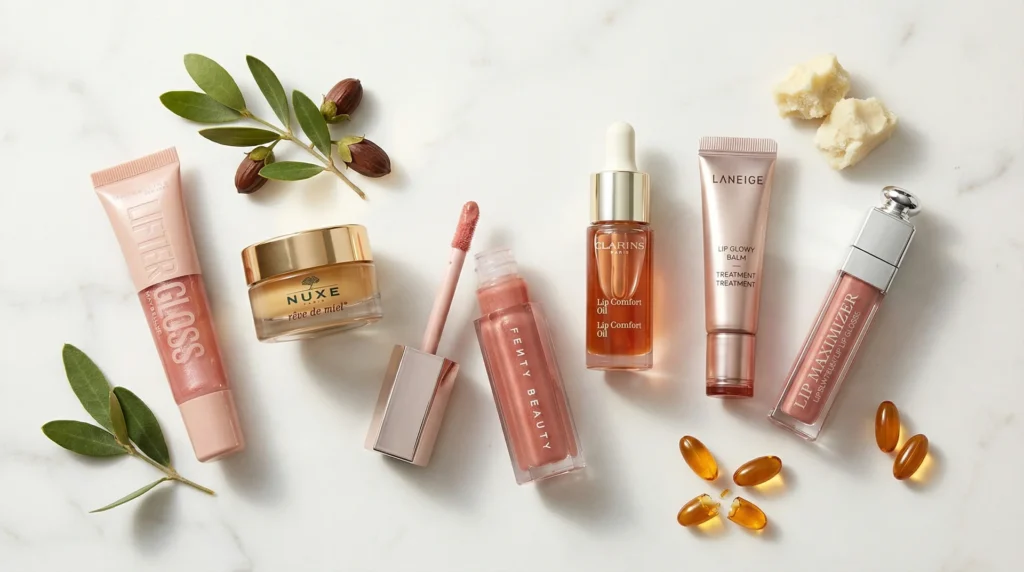
| So here is the short answer first: the best hydrating lip glosses in 2025 are Tower 28 ShineOn Lip Jelly, Maybelline Lifter Gloss, ILIA Overglaze, Rhode Peptide Lip Treatment, Kosas Wet Lip Oil Gloss, and BUXOM Full-On Plumping Lip Cream. Each one combines humectants, emollients, and occlusives together, which is the only formula combination that keeps lips genuinely comfortable all day. |
If you want to shop right now, those are your picks. But if you have been buying “hydrating” glosses for years and your lips are still dry and peeling by noon, keep reading. The problem almost always comes down to one ingredient you apply every single day.
Why Most “Hydrating” Lip Glosses Actually Dry Your Lips Out
Your Lips Have No Oil Glands, and That Changes Everything
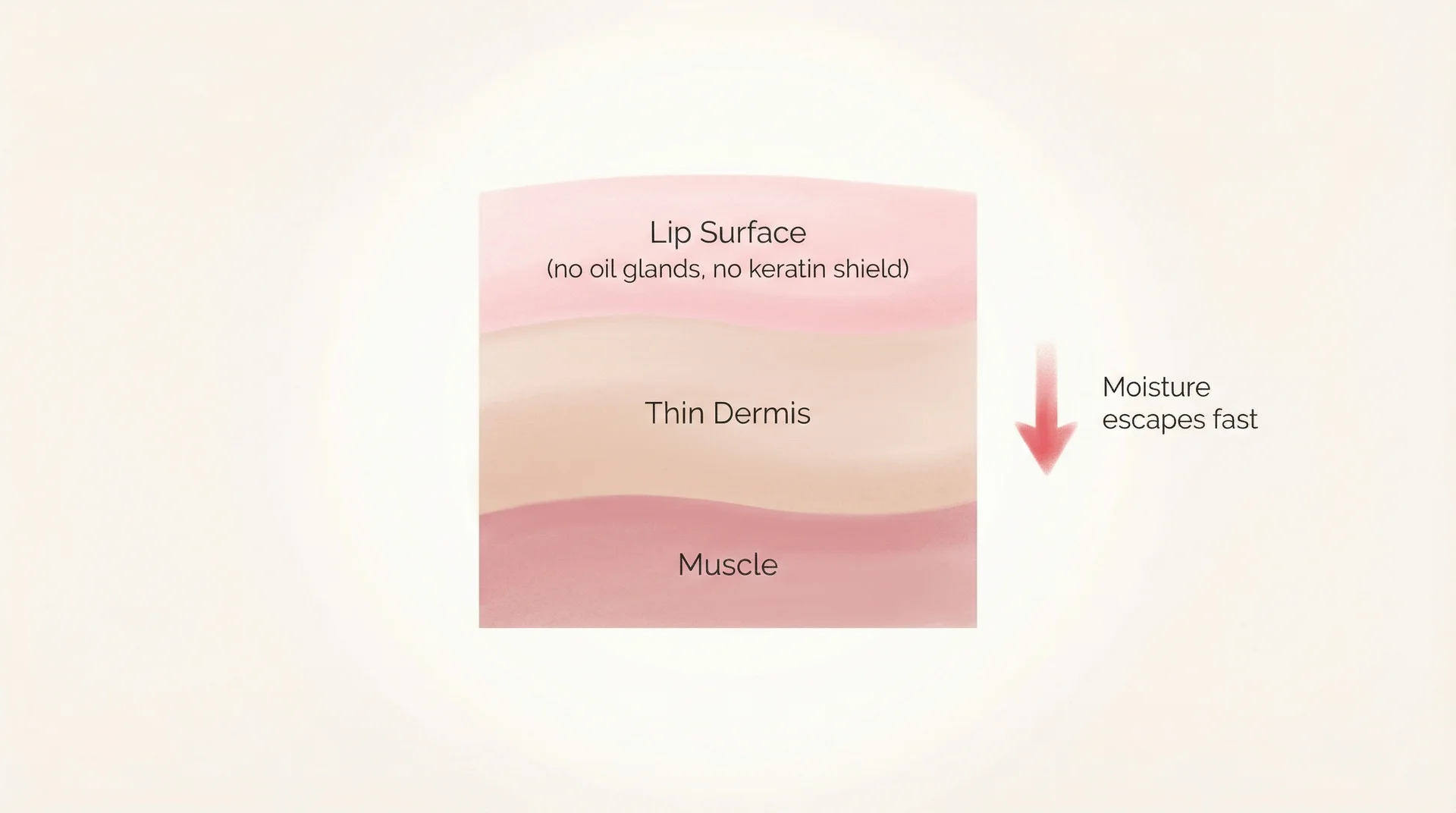
Lips are three to five times thinner than the skin on the rest of your face. They have almost no keratin protection and zero sebaceous glands, which means they cannot self-moisturize at all. Every other part of your skin produces natural oils to create a moisture barrier. Your lips rely entirely on what you put on them and how much water you drink.
When the air is dry, or when a gloss formula contains an evaporating ingredient, moisture leaves your lips faster than anywhere else on your face. That is the starting problem. Most glosses make it worse.
The Ingredients That Work Against You
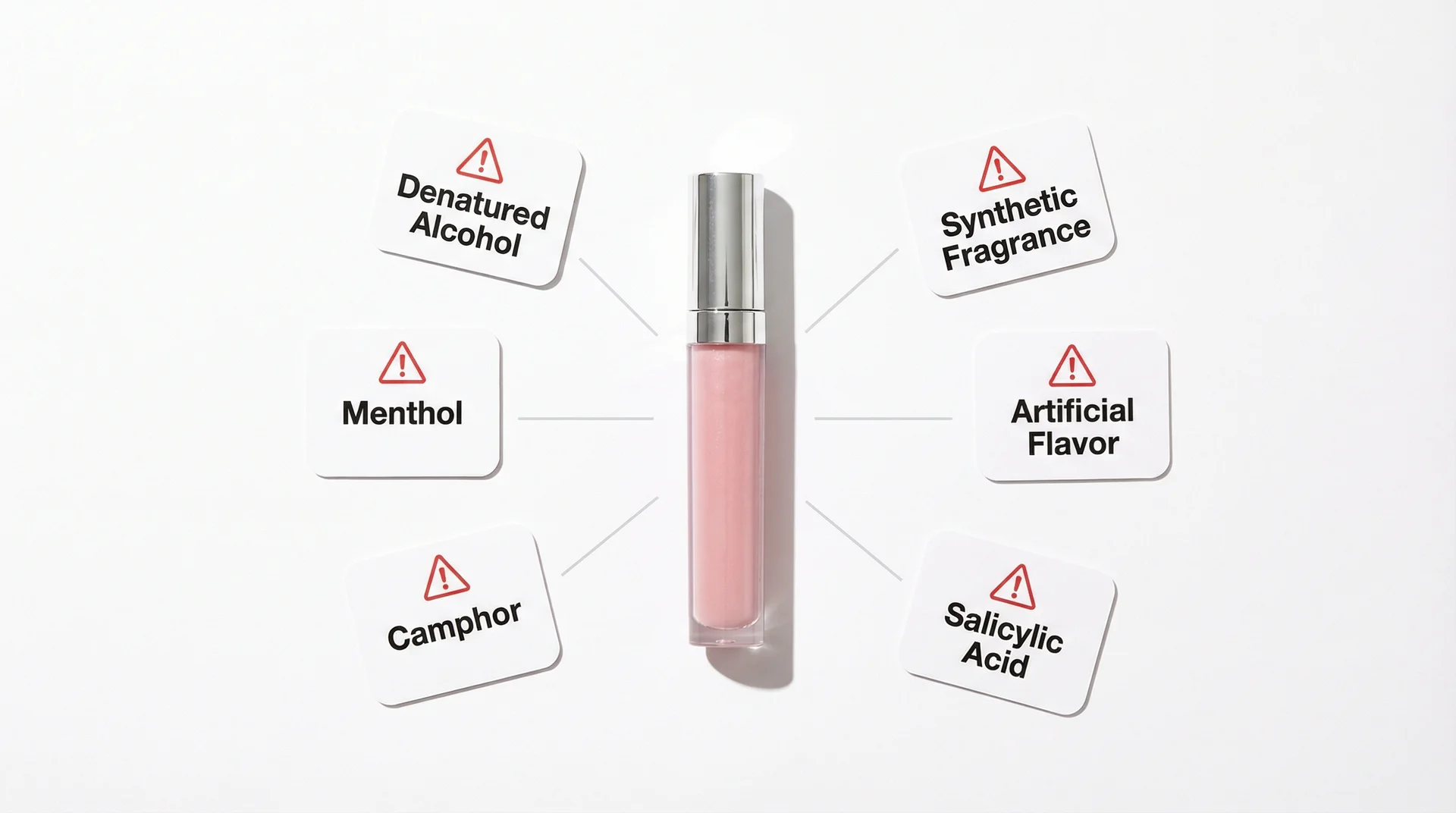
These appear in popular, well-reviewed glosses constantly, and they drive the dry-then-reapply cycle most people are stuck in.
Watch for these on any ingredient list:
- Denatured alcohol – evaporates on contact and strips the thin moisture barrier on the lips
- Menthol, camphor, and peppermint create a tingling sensation that feels refreshing but irritates the lip surface repeatedly over time
- Synthetic fragrance and artificial flavor (cinnamon, citrus, vanilla in some formulas) – the American Academy of Dermatology lists these among the most common causes of lip contact dermatitis
- Salicylic acid – changes the pH of your lip surface and acts as an exfoliant that strips the moisture barrier rather than supporting it
If your gloss tingles, smells strongly of mint, or has a flavor you can actually taste, your lips are being mildly irritated with every application. That tingling is inflammation, not plumping.
The Hyaluronic Acid Trap
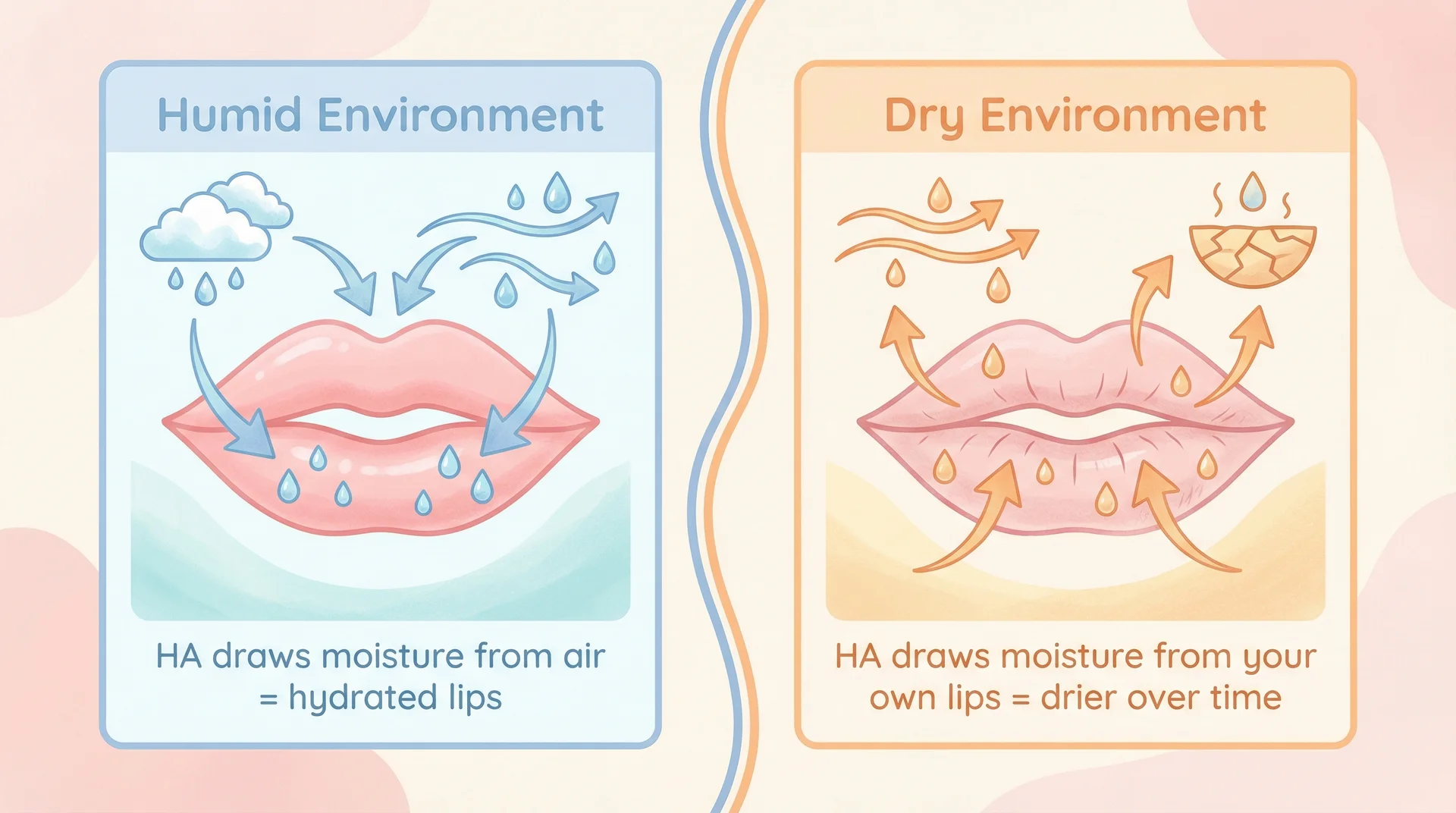
Hyaluronic acid has become the headline ingredient on almost every lip gloss marketed as hydrating in the past three years. Here is what the label does not explain: hyaluronic acid is a humectant, which means it draws moisture toward itself.
In humid air, it pulls moisture from the environment into your lips. In dry air, when there is not enough ambient moisture to attract, it draws from the next available source, which is the deeper layers of your lip tissue itself.
This is why so many people find their hyaluronic acid gloss works beautifully in summer and leaves their lips cracked by January. The ingredient has not changed. The humidity has. The fix is pairing it with an occlusive, and you will see exactly which formulas get this right in the product section below.
What a Truly Hydrating Lip Gloss Formula Looks Like
Once you understand how a good formula is built, no marketing copy will fool you again.
The Three-Layer Formula Framework
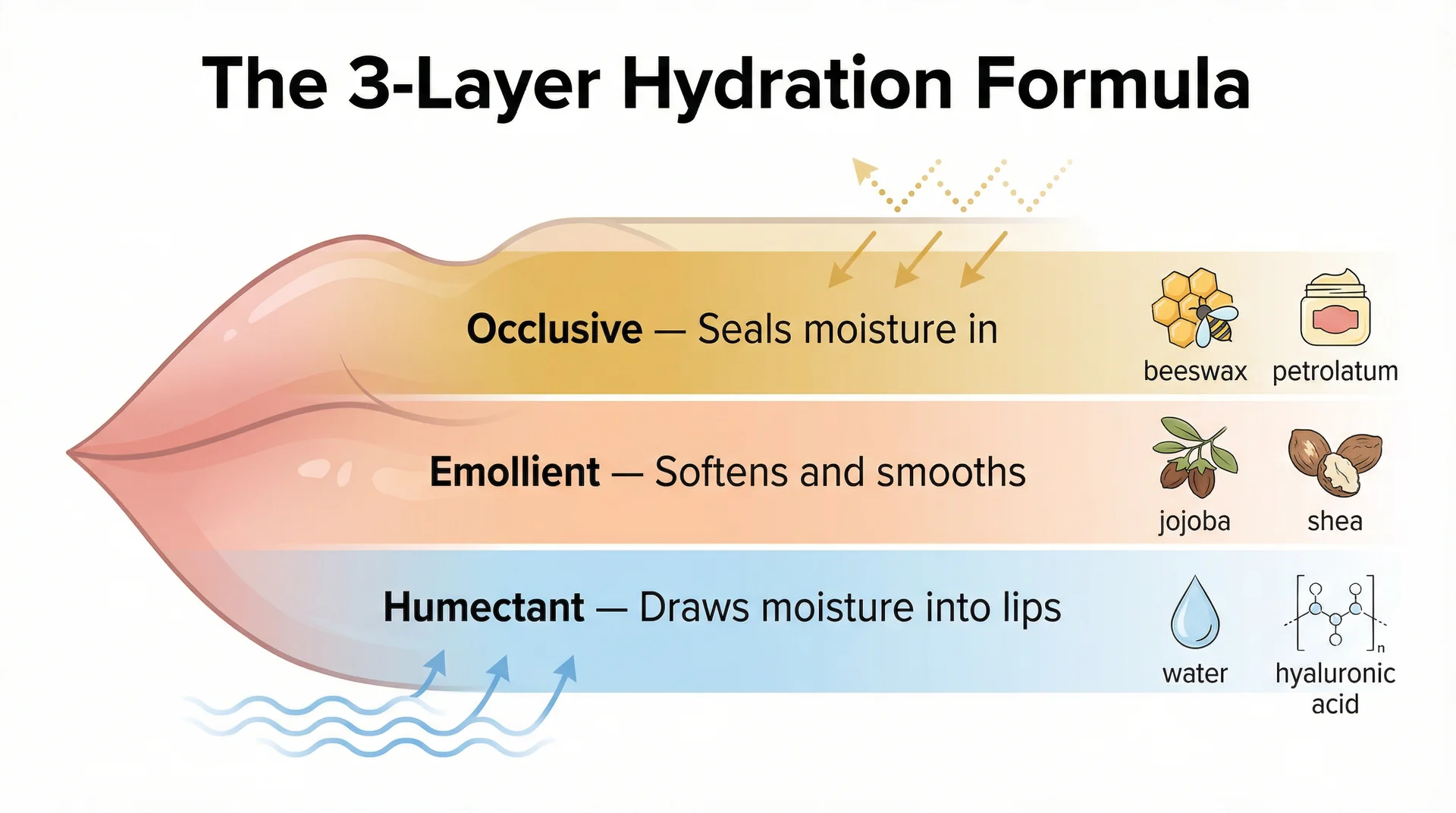
Think of your lips as a surface that needs moisture added and then sealed. A formula that only does one of those steps will always underperform.
| Layer | What It Does | Ingredients to Look For |
|---|---|---|
| Humectant | Draws moisture into the lip tissue | Hyaluronic acid, glycerin, aloe vera |
| Emollient | Softens and fills in cracks on the surface | Jojoba oil, shea butter, vitamin E, squalane, castor oil |
| Occlusive | Seals everything in, prevents evaporation | Petrolatum, beeswax, castor oil (can function as both) |
When a formula contains all three, the humectant attracts moisture, the emollient smooths the surface, and the occlusive sits on top like a seal. That combination keeps lips soft for hours rather than thirty minutes.
Hero Ingredients Worth Scanning For
These are the ingredients I check for when evaluating a new gloss, especially for brides who will be photographed in natural light for eight hours and cannot reapply constantly.
Castor oil gives gloss its signature thickness while conditioning the lip surface. Higher concentrations mean better slip and longer-lasting hydration.
Squalane is a lightweight emollient derived from olives or sugarcane that absorbs quickly, leaves no heavy residue, and works particularly well for sensitive or reactive lips.
Vitamin E (tocopherol) acts as both an antioxidant and an emollient, protecting the delicate lip tissue from environmental damage while softening the surface.
Peptides appear more in newer hybrid treatment formulas. They support skin structure and can visibly improve fine lines around the lip border with consistent use.
Seaweed extract and omega-9 oils are cleaner alternatives that attract and retain moisture at the surface level, pairing well with heavier occlusives to lock in that hydration.
What to Avoid on the Label
Skip any gloss that lists these near the top of the ingredient list:
- Denatured alcohol or SD alcohol 40
- Fragrance or parfum (without further specification)
- Artificial flavors, especially mint-family ingredients
- Menthol or camphor
- Salicylic acid
The higher up these appear in a formula, the higher their concentration. A fragrance listed eighth is less concerning than one listed second.
How to Choose the Right Hydrating Lip Gloss for Your Concerns
Before getting to specific products, the right starting point is your actual lip situation, not just the marketing claim on the tube.
| Your Concern | What to Prioritise | Formula to Look For |
|---|---|---|
| Chronically dry or chapped | Occlusive-heavy base, fragrance-free | Balm-gloss hybrid or treatment gloss |
| Sensitive or reactive lips | No fragrance, no flavor, minimal ingredients | Single-formula clean beauty picks |
| Want color and hydration | Tinted formulas with an emollient base | Tinted gloss oil or buildable tinted gloss |
| Want fuller-looking lips | Peptide or plumping agents without menthol | Peptide-based treatment glosses |
| Budget-conscious | Hyaluronic acid + emollient base | Drugstore picks with multi-ingredient formulas |
| Want SPF protection | Gloss with zinc oxide or titanium dioxide | SPF-specific formulas or layered balm with SPF underneath |
A note on SPF: lips are among the most sun-damaged areas on the face because they lack the protective outer skin layer that the rest of your face has. If you spend significant time outdoors, applying a balm with SPF 30 underneath your gloss is one of the most practical habits you can build.
The AAD recommends SPF 30 as the minimum, and zinc oxide or titanium dioxide as the preferred sunscreen types for lip skin specifically.
The Best Hydrating Lip Glosses (Tested and Recommended)
Every product here has earned its place through actual use, either in my kit on set, through recommendations to bridal and editorial clients, or through follow-up conversations where someone told me what finally worked after a long stretch of frustrating trial and error. These are ranked by the three-layer formula standard and real-world comfort across a full day of wear.
1. Best Overall: Tower 28 ShineOn Lip Jelly
Tower 28 built the ShineOn Lip Jelly around five natural oils: apricot kernel, raspberry seed, avocado, rosehip, and sunflower. Each brings a different fatty acid profile, so the formula covers a wider emollient range than a single-oil gloss can. The texture is jelly-like rather than thick or goopy, spreading evenly and refusing to migrate into fine lines.
It is also fragrance-free and formulated without any common irritants, which makes it the first gloss I reach for with clients who have described a history of sensitivity or reaction. I keep a tube in my kit specifically for brides who mention reactive lips.
Best for: Everyday wear, sensitive lips, clean beauty preference
Price: Around $14
2. Best Drugstore Pick: Maybelline Lifter Gloss
For under $10, this gloss consistently outperforms formulas priced three to four times higher. The hyaluronic acid gives it the humectant layer, and the wide doe-foot applicator deposits enough product in a single swipe to create a functional film across the whole lip.
Across 34 shades, the range is one of the widest available at the drugstore.
One practical note: it works best in moderate humidity. In very dry winter conditions, apply a thin balm layer underneath first so the hyaluronic acid can draw from that moisture rather than from your own lip tissue.
Best for: Budget shoppers, first-time gloss buyers, versatile everyday color
Price: Under $10
3. Best Luxury Pick: ILIA Overglaze Hydrating Lip Gloss
ILIA’s Overglaze uses seaweed extract as the lead hydrating ingredient, paired with a 24-hour moisture claim that, in real use, lasts longer than most glosses I have tested before eating or drinking shortens the wear window.
The gel-like texture gives a dimensional shine that reads beautifully in photographs, and the formula resists feathering into lip lines, which matters enormously for bridal and editorial work.
Best for: Special occasions, photography-heavy days, clean luxury preference
Price: Around $28
4. Best for Severely Dry or Chapped Lips: Rhode Peptide Lip Treatment
Rhode functions more like a treatment than a traditional gloss, but the result on the lips looks glossy and full. The peptide complex supports skin structure while the occlusive base seals the treatment layer against the lip surface.
For clients who describe their lips as perpetually cracked or uncomfortable regardless of what they apply, this is the product that has most consistently broken that cycle in my experience.
Color payoff is very sheer. Layer it over a liner or tint if pigment matters to you. If you want your lips to feel genuinely comfortable and look healthy, the Rhode formula delivers that more reliably than almost anything else on the market currently.
Best for: Chronically dry lips, lip recovery, the reader whose lips are always dry
Price: Around $16
5. Best Tinted Hydrating Lip Gloss: Kosas Wet Lip Oil Plumping Peptide Gloss
Kosas threads the needle between a tinted gloss and a lip oil better than most hybrids manage.
The hyaluronic acid and peptides give it the treatment layer, the watercolor-like tint adds enough color to work without a liner, and the finish sits between a glossy balm and a traditional gloss, making it a strong layering option over a liner for more definition.
It does require reapplication more frequently than the Tower 28 or Rhode options. Used as a mid-day refresh over prepped lips, it looks genuinely beautiful.
Best for: Tinted everyday wear, the gloss-oil hybrid reader, and buildable color
Price: Around $26
6. Best Plumping Hydrating Gloss: BUXOM Full-On Plumping Lip Cream
BUXOM pairs peptides and hyaluronic acid in a thicker cream-gloss texture that holds on the lips longer than most plumping formulas. The plumping sensation is mild rather than the aggressive sting many plumping glosses use, which makes it genuinely wearable every day.
For clients who want visibly fuller-looking lips without committing to anything more permanent, this has been one of my most consistent recommendations.
Best for: Visible plumping alongside hydration, fuller-looking lips without discomfort
Price: Around $22
How to Pick Your Shade by Skin Tone
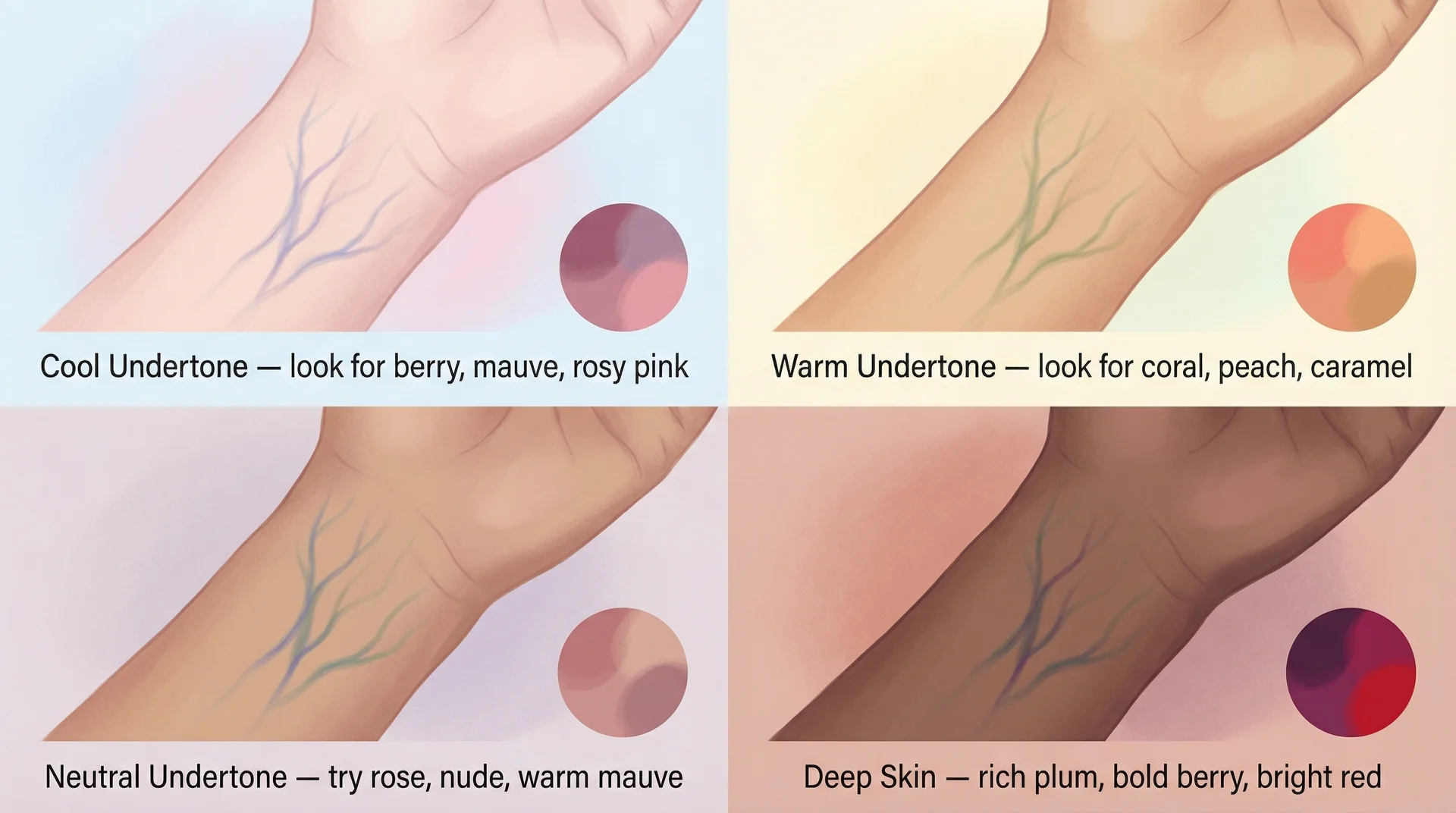
This is one of the most common questions I get from clients sitting in my chair, particularly those new to wearing gloss regularly. The formula matters for your lip health, but the shade matters for whether you actually reach for it every day.
A few quick rules before the breakdown:
- Undertone is more important than surface skin tone when choosing a gloss shade
- Check your wrist veins: blue or purple veins suggest cool undertones, greenish veins suggest warm, and if you genuinely cannot tell, you are likely neutral
- Sheer and tinted formulas are far more forgiving across skin tones than opaque ones
| Undertone | Shades That Flatter | What to Avoid |
|---|---|---|
| Cool (blue/pink veins) | Berries, mauves, rosy pinks, soft wine | Orange-based nudes, terracotta, golden-bronze |
| Warm (green veins) | Peachy pinks, corals, warm nudes, caramel | Icy pinks, blue-based reds, purple-heavy berries |
| Neutral | Almost universal – try rose, pinky nudes, classic reds, warm mauve | Extreme ends of either spectrum |
| Fair skin | Soft pink, sheer peach, light coral | Very dark shades worn alone |
| Medium skin | Warm corals, warm berry, mauve | Shades too light that read ashy |
| Deep skin | Rich plum, bright berry, bold red, caramel | Pale pastels or shades too light for the lip |
From my own experience working with clients across a wide range of skin tones for bridal shoots, a clear or barely-there tinted gloss works on absolutely everyone as a starting point. If you are unsure where to begin, that is always the safest first gloss to own.
How to Apply Your Gloss So It Actually Lasts
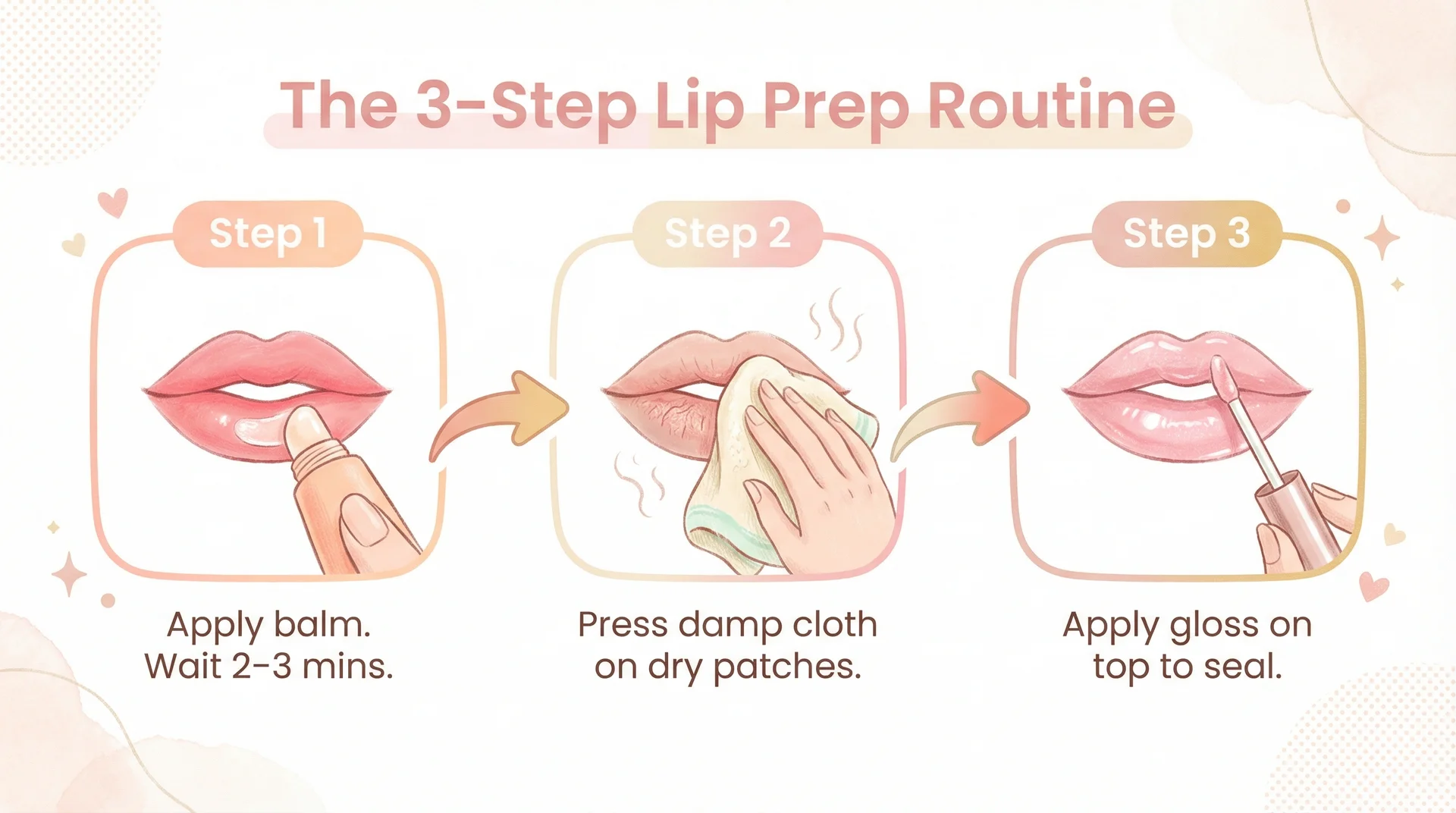
The formula matters, but so does the application sequence. I have seen clients with excellent glosses still end up with dry lips by early afternoon because they skipped the preparation step.
Start With a Prepped Lip Surface
A glossed-over dry lip does not look or feel good. The lip skin needs moisture underneath before the gloss seals it in.
My standard lip prep sequence, whether on a client or myself, takes about three minutes:
- Apply a gentle, non-abrasive balm and give it two to three minutes to absorb
- If visible dry patches remain, press a clean, damp cloth gently against the surface without scrubbing
- Apply the gloss on top of the absorbed balm layer
That sequence extends comfortable wear time significantly. The gloss seals in moisture that already exists rather than fighting against compromised lip skin.
Layer Gloss Over Liner for Longer Wear
Lip liner as a gloss base is a technique I use consistently on editorial shoots because it gives the gloss a textured surface to grip rather than smooth bare skin. The liner visibly extends wear time and creates the illusion of a slightly fuller lip border because the gloss sits within a defined edge.
For bridal work, I line and lightly fill the entire lip with a neutral liner before applying gloss. This combination holds through vows, photographs, and a meal far better than gloss alone. Setting powder dusted very lightly over the liner before gloss application extends wear even further.
When to Reapply and When to Worry
Reapplying after eating or drinking is normal. The gloss film breaks down with any contact, and a quick touch-up takes seconds.
What to watch for: if you are reapplying every 20 to 30 minutes on otherwise bare lips throughout the day and your lips still feel tight or uncomfortable, the formula is likely irritating your lip surface rather than hydrating it.
More applications will compound the problem. Switch formulas before assuming you simply “need” to reapply constantly.
Hydrating Lip Gloss vs. Lip Oil vs. Lip Balm
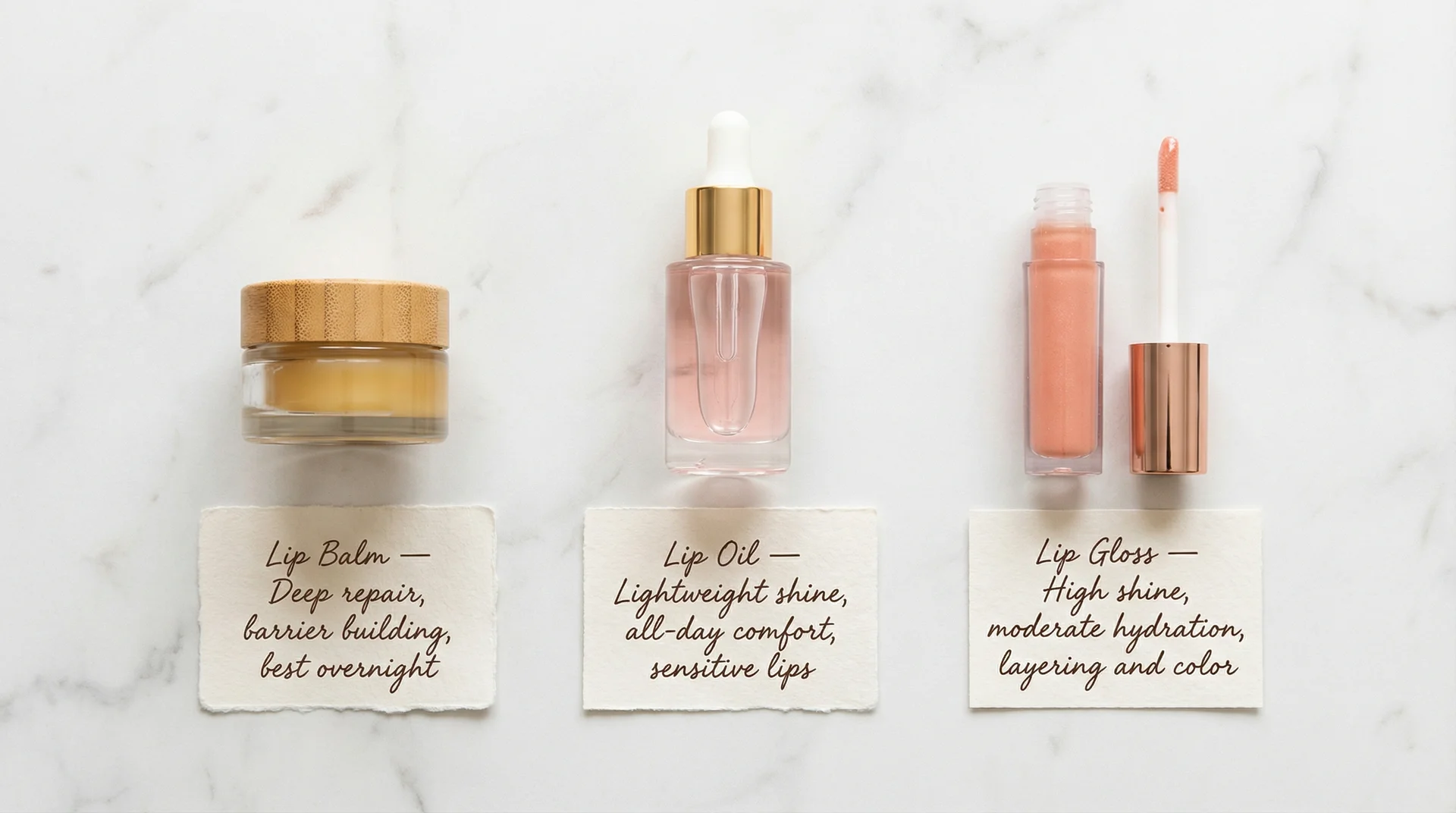
This is the comparison that comes up in almost every consultation I have with clients rebuilding their lip care routine.
| Product | What It Does Best | Best Time to Use |
|---|---|---|
| Hydrating Lip Gloss | Shine, moderate hydration, color options | Everyday wear, layering over balm |
| Lip Oil | Lightweight hydration, comfortable all-day feel | No-makeup days, light touch-ups, sensitive lips |
| Lip Balm | Deep moisture, barrier repair, overnight treatment | Morning prep, nighttime routine, severely dry lips |
Are lip oils better than glosses?
In terms of comfort for daily wear, many people find lip oils gentler. In terms of shine and layering versatility, gloss wins. The most effective routine uses both: balm as the foundation overnight, gloss as the daytime treatment, and a finish.
What is the glass lips trend, and how do you get it?
Glass lips refer to a high-shine, almost reflective finish that makes lips look smooth and full. You achieve it by prepping with a rich balm first, then applying a high-shine clear or barely-tinted gloss over the top. The ILIA Overglaze and Tower 28 ShineOn both deliver this finish without stickiness.
One Habit That Makes Every Gloss Perform Better
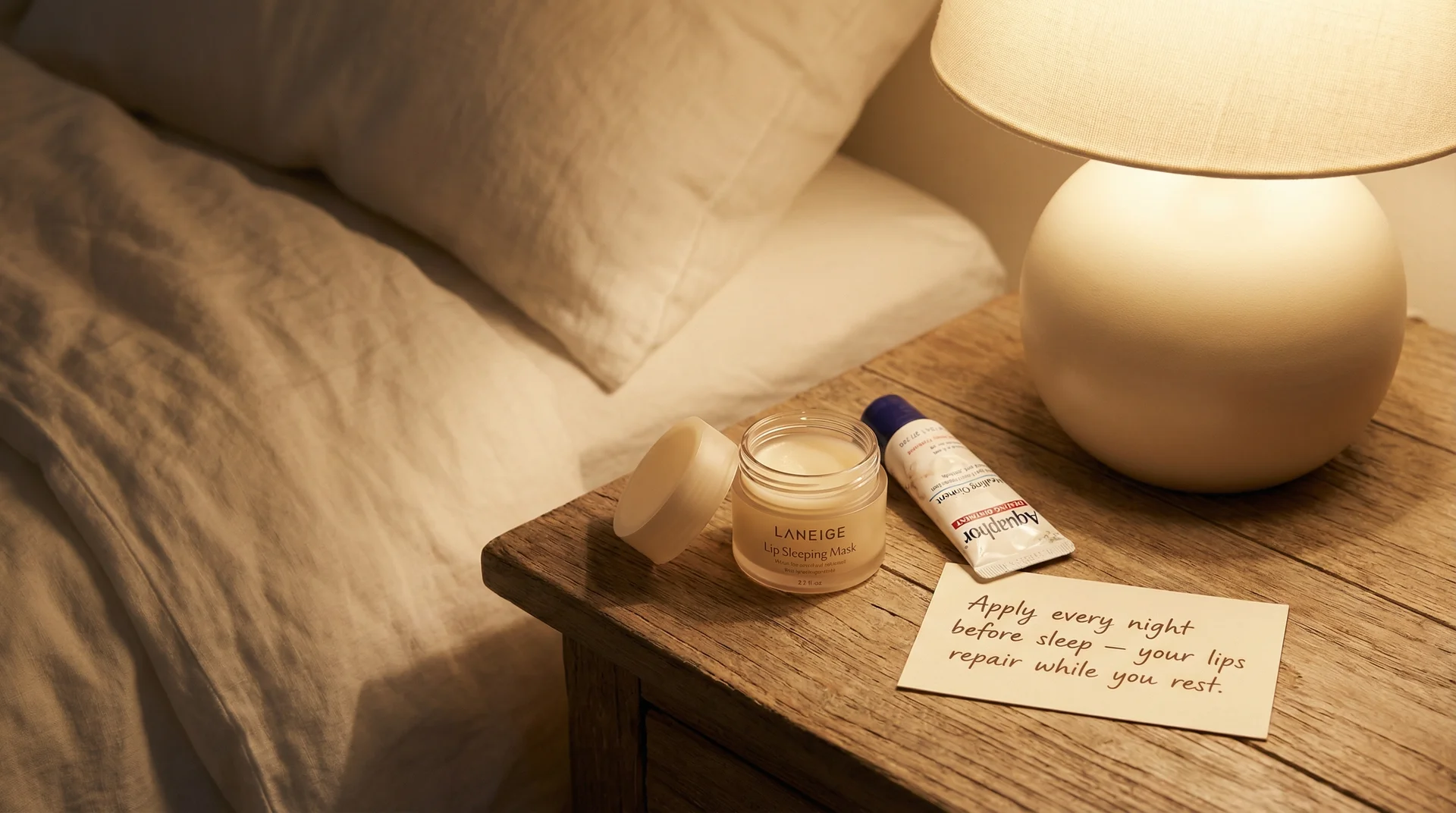
Wear a balm to bed every night. Without exception.
This is the single routine change that has made the most visible difference for clients with persistent dry lips, regardless of what they use during the day. Your lip skin repairs itself overnight, and doing that repair work in a moisture-rich environment changes the baseline your daytime gloss has to work with.
Laneige Lip Sleeping Mask is the most-recommended option for good reason. Aquaphor is the more affordable but equally effective alternative. Either one, applied before sleep, will change how your lips feel by morning. And that improved baseline makes every hydrating gloss you apply the next day perform noticeably better.
Build the foundation overnight. Let the gloss finish the job during the day.
Frequently Asked Questions
What makes a lip gloss actually hydrating?
A genuinely hydrating lip gloss contains all three formula layers working together: a humectant to draw moisture in, an emollient to soften the surface, and an occlusive to seal everything against the skin. Formulas with only one or two of these layers hydrate temporarily but cannot maintain that hydration through a full day of wear.
Can hydrating lip gloss replace lip balm?
A hydrating lip gloss works best alongside lip balm rather than as a replacement for it. Balm repairs and conditions the underlying lip tissue, while gloss seals and adds shine on top. Using both in sequence gives substantially better results than either one alone.
Why does my lip gloss dry out my lips even though the label says hydrating?
The most common cause is an irritating ingredient like menthol, synthetic fragrance, or alcohol that compromises your lip surface with every application. It can also mean the formula contains hyaluronic acid without a sufficient occlusive layer, causing the HA to pull moisture out of your lip tissue in dry conditions rather than from the air.
What is the best hydrating lip gloss for severely dry or chapped lips?
Rhode Peptide Lip Treatment and Tower 28 ShineOn Lip Jelly are the two that consistently help most. Both are free of common irritants, both carry multi-layer hydration systems, and neither aggravates already compromised lip skin.
Is hyaluronic acid in lip gloss actually effective?
Hyaluronic acid works well when the formula also contains occlusives to seal the moisture it attracts. In humid conditions, it draws moisture from the air into your lips.
In dry conditions, without that occlusive seal, it can pull moisture out of your lip tissue instead. Correctly paired with an occlusive, it remains one of the most effective humectants available.
Do I need SPF in my lip gloss?
Lips are particularly vulnerable to UV damage because they lack the outer skin layer that protects the rest of your face.
Dermatologists recommend SPF 30 as the minimum. If your chosen gloss does not include SPF, apply a balm with zinc oxide or titanium dioxide underneath before your gloss, especially on days spent outdoors.
How long does a hydrating lip gloss last?
Most provide comfortable wear for two to four hours before reapplication becomes necessary. Eating and drinking shorten that window. Glosses applied over a balm-prepped lip surface consistently last at the higher end of that range.
What is the difference between a lip oil and a hydrating lip gloss?
Lip oils have a thinner texture that absorbs more readily and delivers a softer shine. Hydrating lip glosses carry a more structured film that sits on the lip surface and gives a higher-gloss finish.
Lip oils suit all-day low-maintenance wear. Lip gloss layers more effectively over other lip products and delivers more visible shine.