
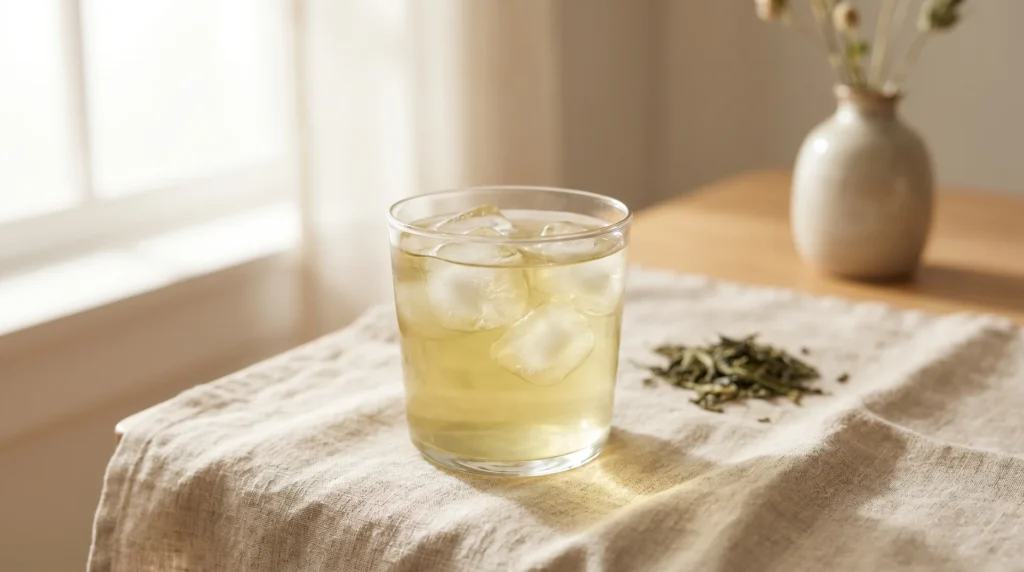
Yes, you can drink green tea cold, and your body absorbs its key compounds whether the tea is steaming, room temperature, or pulled straight from the fridge.
That is the short answer. What is more useful is understanding what actually changes when the heat is removed, because the answer depends almost entirely on how your cold tea was made.
There is a difference between hot-brewed tea that has cooled down and tea that was cold-brewed from the start.
That distinction shapes the flavor, the caffeine content, the stomach tolerability, and, to a lesser degree, the antioxidant yield. Most articles skip over it entirely. This one won’t.
Yes, You Can Drink Green Tea Cold
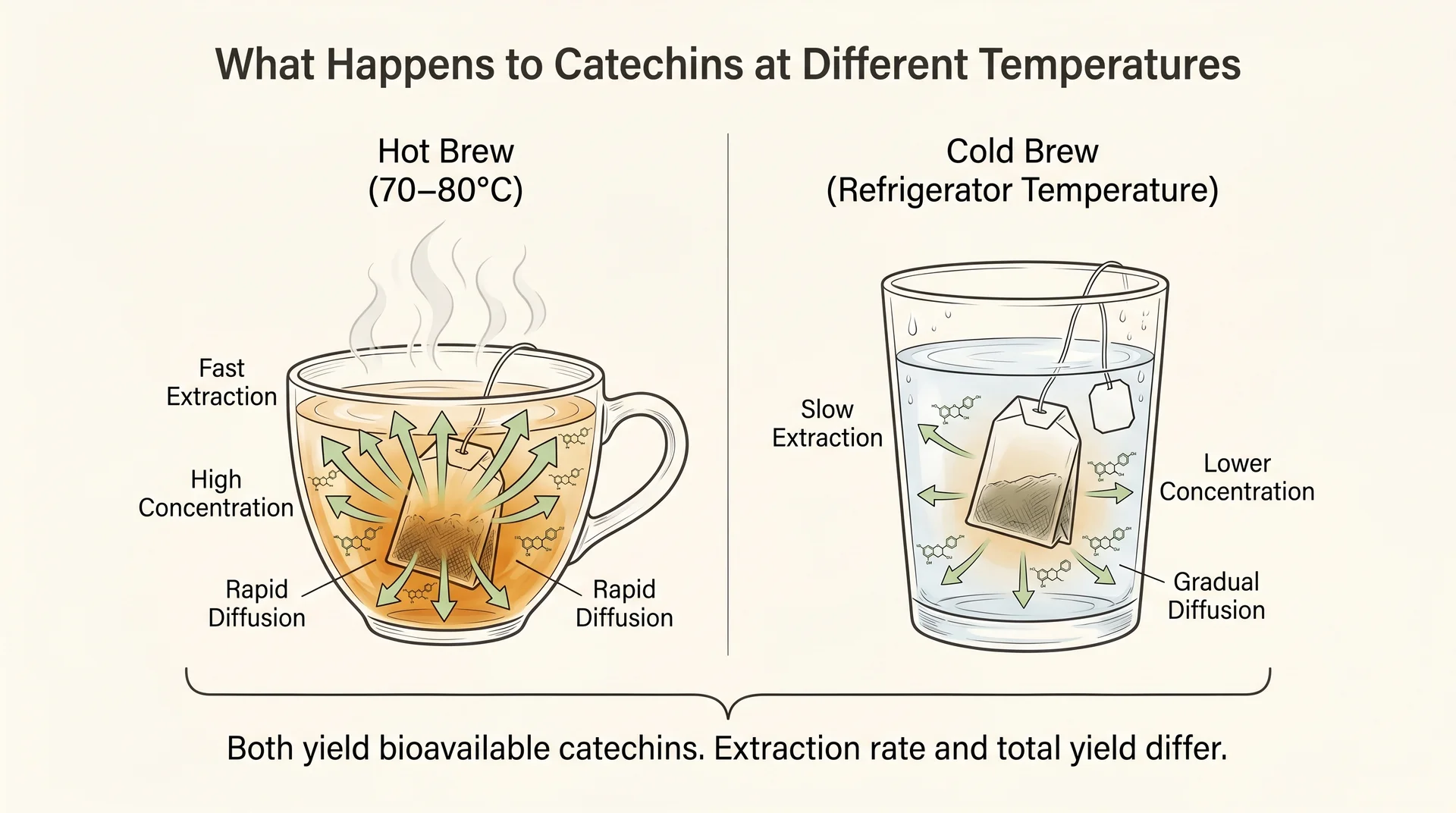
Drinking green tea cold does not destroy its antioxidants or eliminate its health benefits. The primary active compounds in green tea, a group of plant antioxidants called catechins, survive temperature changes.
They are present in cold preparations and remain bioavailable once consumed.
What temperature affects is the extraction speed and yield. Hot water pulls catechins from the tea leaves quickly and in higher total amounts over a short steep.
Cold water draws out the same compounds more slowly, which is why cold-brewed green tea takes several hours rather than two to three minutes.
What Green Tea’s Benefits Actually Come From
Green tea’s most researched compound is epigallocatechin gallate, commonly written as EGCG. It belongs to the catechin family, and it is the compound most clinical studies focus on when examining green tea’s effects on metabolism, inflammation, and cellular health.
Green tea also contains caffeine and L-theanine, an amino acid that moderates caffeine’s stimulant effect. Together, these three compounds account for most of what gets attributed to green tea as a health drink. All three are present in cold preparations.
- EGCG and other catechins: Primary antioxidant activity, studied in connection with metabolic and anti-inflammatory effects, even in some juices. The concentration in your cup depends on preparation method, steep time, and water temperature, not just whether the tea is hot or cold.
- Caffeine: A mild stimulant that contributes to the thermogenic response examined in weight management research. Cold brewing reduces caffeine yield measurably, which I’ll cover in a later section, and for some people, that’s the most practically useful piece of information in this entire article.
- L-theanine: Associated with calmer, more focused alertness compared to caffeine alone. Present in cold preparations. One reason green tea’s energy effect feels different from coffee’s.
Does Cold Green Tea Have the Same Antioxidants as Hot?
A 2020 study published in Antioxidants by Venditti and colleagues found that cold-water extraction yields lower total catechin content over comparable steeping times.
Hot water, particularly between 70°C and 80°C, extracts catechins faster and in higher total amounts over a short steep.
The gap narrows considerably when cold tea steeps for an extended period, typically eight to twelve hours in the refrigerator. And the catechins that are extracted in cold water are fully bioavailable, meaning your body can absorb and use them after you drink the tea.
Honestly, the framing of “same antioxidants” misses the more practical point. The useful question is whether cold-brewed green tea, steeped properly, delivers a meaningful dose of catechins. It does.
Whether that dose precisely matches your hottest, longest-steeped cup is a more granular question that most people do not actually need answered.
Cold-Brewed and Cooled Hot Tea Are Not the Same Thing
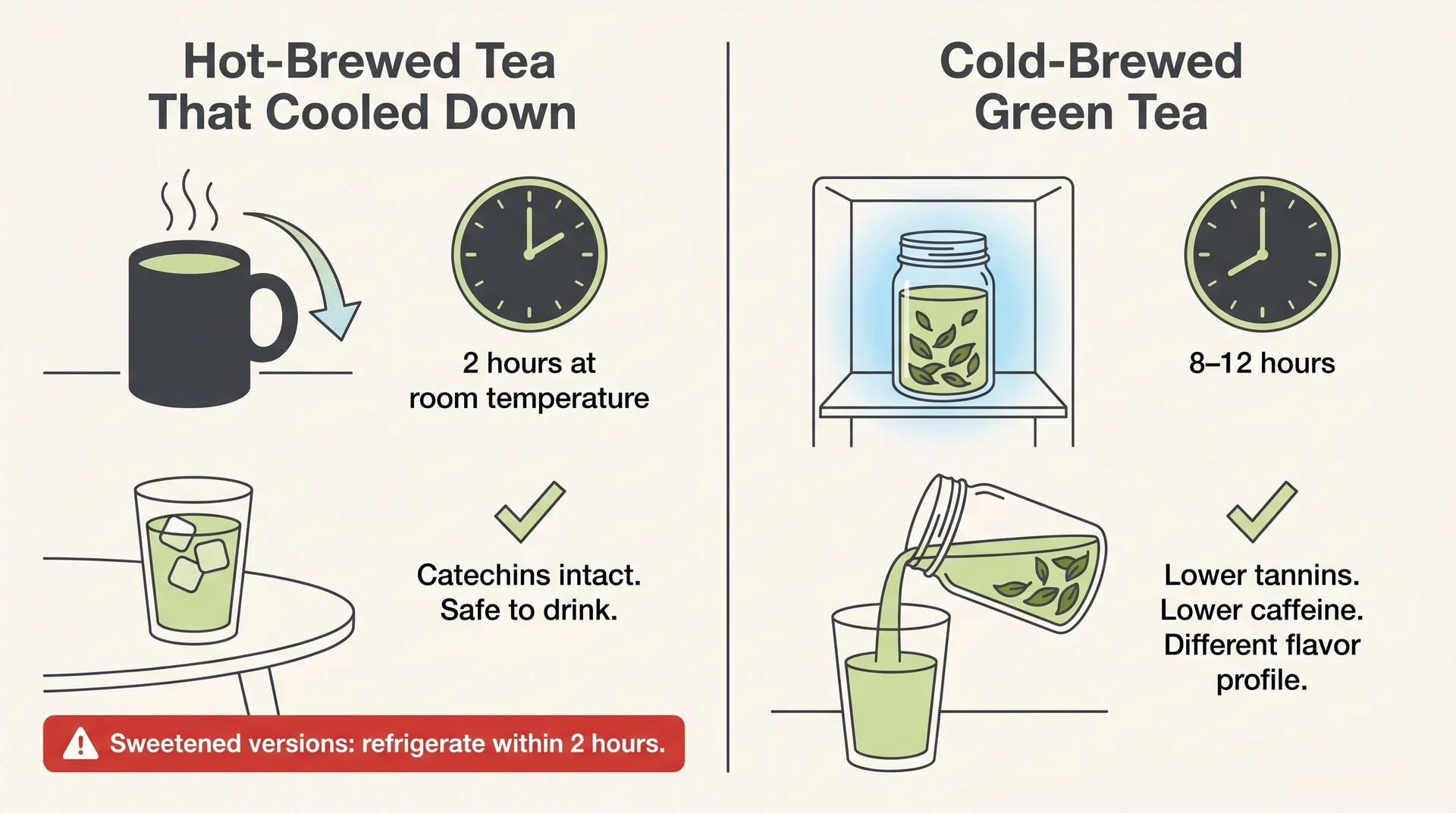
Cold-brewed green tea and hot-brewed tea that has cooled down are chemically different beverages. This distinction matters for everyday use, and it is the one almost no article in this space makes.
Treating the two preparations as interchangeable leads to mismatched expectations about flavor, caffeine, and stomach tolerability.
Hot-Brewed Tea That Has Cooled Down
Hot-brewed tea that cools is safe to drink and retains its catechins. The antioxidant content of a properly brewed cup is essentially the same whether you drink it hot or after it has sat on your desk and gone cold. Catechins do not degrade at room temperature over the course of a few hours.
The practical concern with cooled hot tea is food safety, not nutrition. Plain, unsweetened tea left at room temperature for a couple of hours is generally fine.
Add sugar or fruit juice, and the calculation changes; the added sugar creates a more favorable environment for bacterial growth. Refrigerate sweetened tea within two hours if you are not drinking it right away.
Properly Cold-Brewed Green Tea
Cold-brewed green tea is a deliberate preparation method, not a workaround for people who forgot their mug.
Because cold water extracts more slowly, it also releases fewer tannins, the compounds responsible for green tea’s bitterness and the slightly drying sensation it leaves at the back of the throat.
The result is a noticeably smoother, naturally sweeter-tasting drink with lower caffeine content.
For clients I have worked with who found hot green tea harsh on an empty stomach or who avoided it entirely because of the flavor, switching to cold-brew changed their experience with it completely. A preparation you will actually drink regularly matters more than one you avoid because it is unpleasant.
Cold-brewed green tea also stores well in the refrigerator for several days, which makes it genuinely practical for people who want green tea as a consistent daily habit rather than a fresh-brewed occasion.
If you’ve been avoiding green tea because of caffeine, cold brewing may change that, and the next question most people ask is whether there are any other reasons to be thoughtful about how much they drink.
Does Cold Green Tea Still Work for Weight Loss?
Cold green tea contains the same EGCG associated with metabolic effects in research, but the honest answer about green tea and weight loss involves more than temperature.
What the Research Actually Says About EGCG and Metabolism
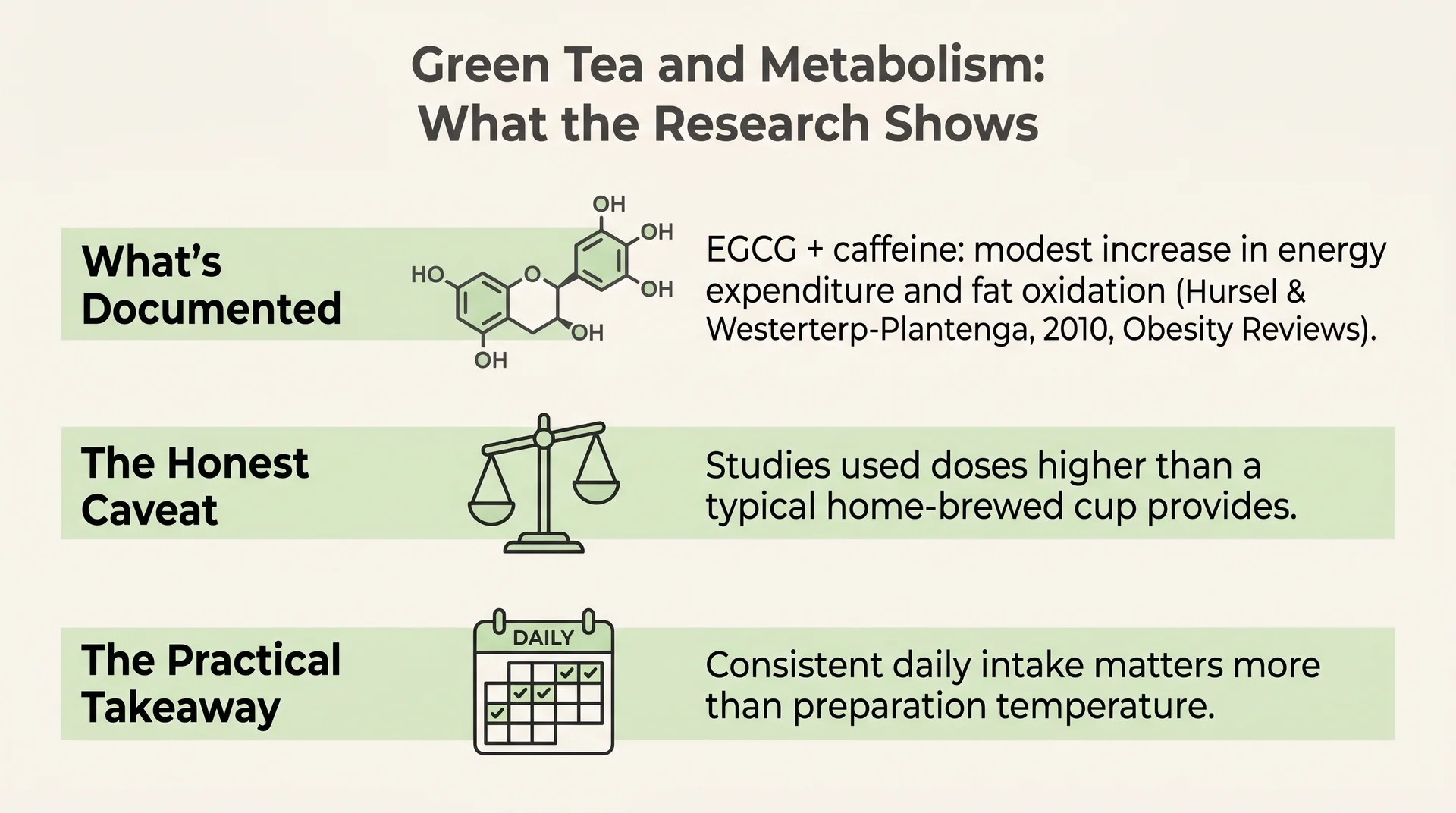
A 2010 meta-analysis by Hursel and Westerterp-Plantenga published in Obesity Reviews examined the evidence on green tea catechins and thermogenesis.
The researchers found that green tea catechins, in combination with caffeine, produced modest increases in energy expenditure and fat oxidation compared to caffeine alone. That effect is documented and not in dispute.
Here is what those same studies do not prominently feature: the doses of EGCG used were considerably higher than what a typical home-brewed cup, hot or cold, actually contains.
Most studies used EGCG in supplemental or controlled form, equivalent to several strong cups per day.
I want to be straightforward about a genuine gap in the research: we do not have many high-quality studies comparing EGCG bioavailability from cold-brewed tea to hot-brewed tea at real-world doses in human subjects.
What we can say with confidence is that catechins from cold preparations are absorbed. The precise quantity differences between preparations are less settled than the confident tone of most popular articles suggests.
None of this means your cup of cold green tea does nothing. It means the realistic effect at one or two cups a day is modest and functions as a complement to broader habits, not a standalone metabolic intervention. Temperature is not the determining variable.
Why Consistency Matters More Than Temperature
The catechins in cold green tea are bioavailable. The metabolic effects documented in research are cumulative, not immediate.
A cold batch you pull from the fridge every morning for three weeks is doing more work than a hot cup you make twice a month when motivation is high.
Does Cold Brewing Change the Caffeine Level?
Yes, cold-brewed green tea contains less caffeine than hot-brewed green tea steeped for the same duration.
Research published in Food Chemistry by Liang and colleagues confirmed that brewing temperature significantly affects caffeine extraction from Camellia sinensis leaves, with lower temperatures producing lower caffeine yields.
This matters for two groups of people in particular.
- Those who are caffeine-sensitive and have avoided green tea because of jitters or disrupted sleep may find cold-brewed versions considerably more tolerable.
- And anyone who drinks green tea in the afternoon, partly because it has less caffeine than coffee, should know that cold-brewing shifts that already-lower amount down further.
The exact reduction varies with leaf type, tea-to-water ratio, and steep time. Cold-brewed green tea is not caffeine-free. It is a meaningfully gentler option if caffeine management is part of your reason for choosing it.
Is Cold Green Tea Safe? A Few Real Considerations
Green tea, hot or cold, is safe for the overwhelming majority of people. There are a few practical considerations worth understanding — not as warnings, but as information that helps you work it into your routine without surprises.
How Long Does Cold Green Tea Keep in the Fridge?
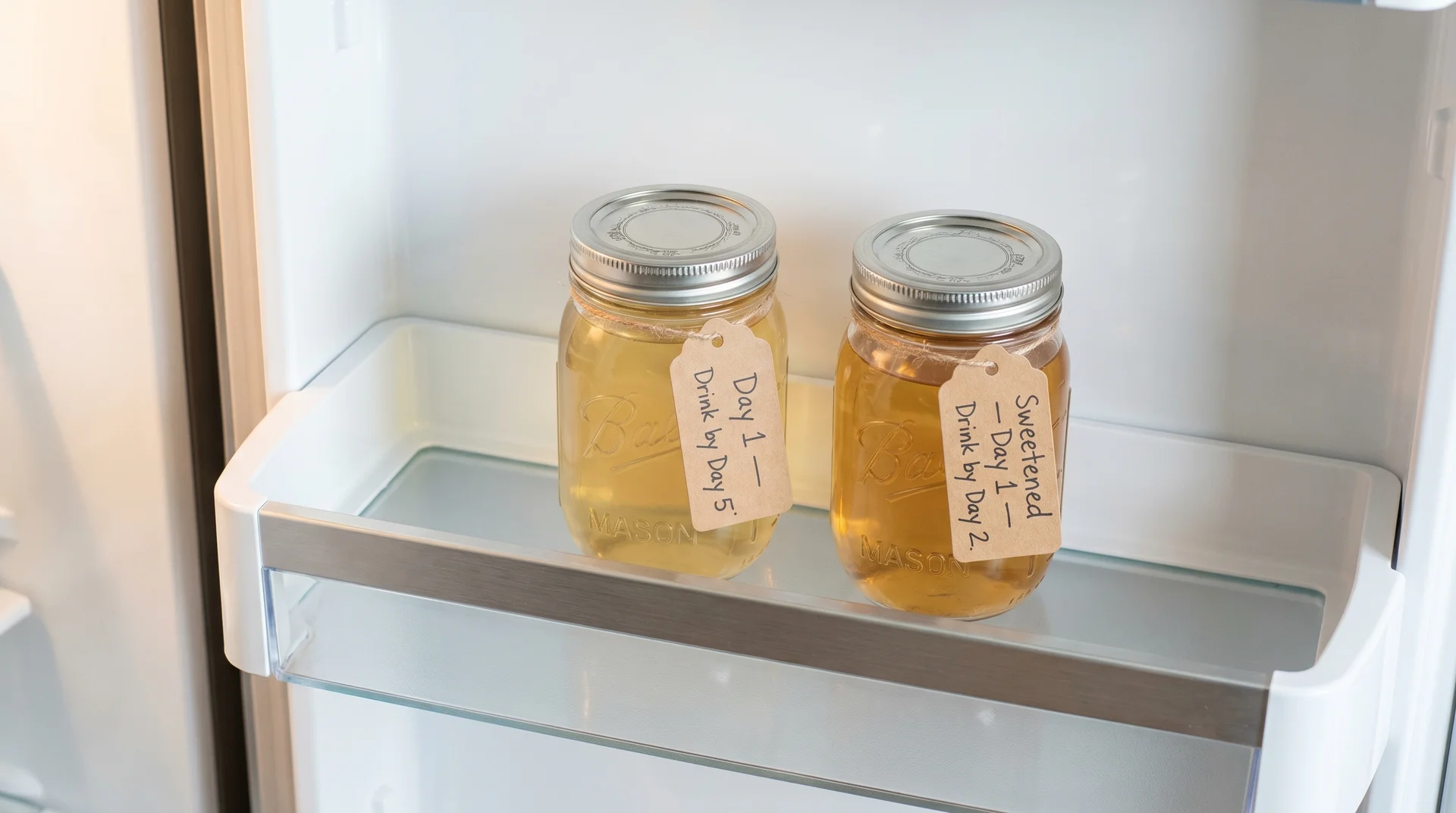
Plain, unsweetened cold-brewed green tea keeps in the refrigerator for three to five days in a sealed glass container. The flavor is freshest in the first two days. After that, it can taste slightly flat or develop a mild bitterness as compounds continue to interact even in cold storage.
Sweetened versions, or anything with added fruit, citrus, or herbs, should be consumed within two days. Added sugar accelerates spoilage. If the tea smells off or the flavor has shifted noticeably, make a fresh batch.
This is the same principle we covered with hot-brewed cooled tea: plain and unsweetened keeps longest, and sweetened versions need more attention.
Who Should Be Thoughtful About Green Tea
Green tea contains compounds that can reduce iron absorption when consumed alongside food. If you are managing iron-deficiency anemia, drinking green tea between meals rather than with them reduces that interaction. Hot or cold, the effect is the same.
Green tea also contains vitamin K, which can interact with anticoagulant medications. If you are on blood thinners, your prescribing physician should know about your regular green tea intake.
For those who are pregnant, guidance from organizations including the WHO and ACOG recommends keeping daily caffeine intake under 200 milligrams.
Cold-brewed green tea’s lower caffeine content may make it a more comfortable fit within that limit, though it should still count toward your total daily intake. For most people, there is no reason to hesitate. The more useful question is how to make it well.
How to Make Cold Green Tea at Home
Two methods produce genuinely different results. Cold-brewing takes eight to twelve hours and produces the smoothest, most naturally sweet cup. The iced method takes about ten minutes and produces something bolder.
The choice depends on your schedule and flavor preference.
Cold Brew Method
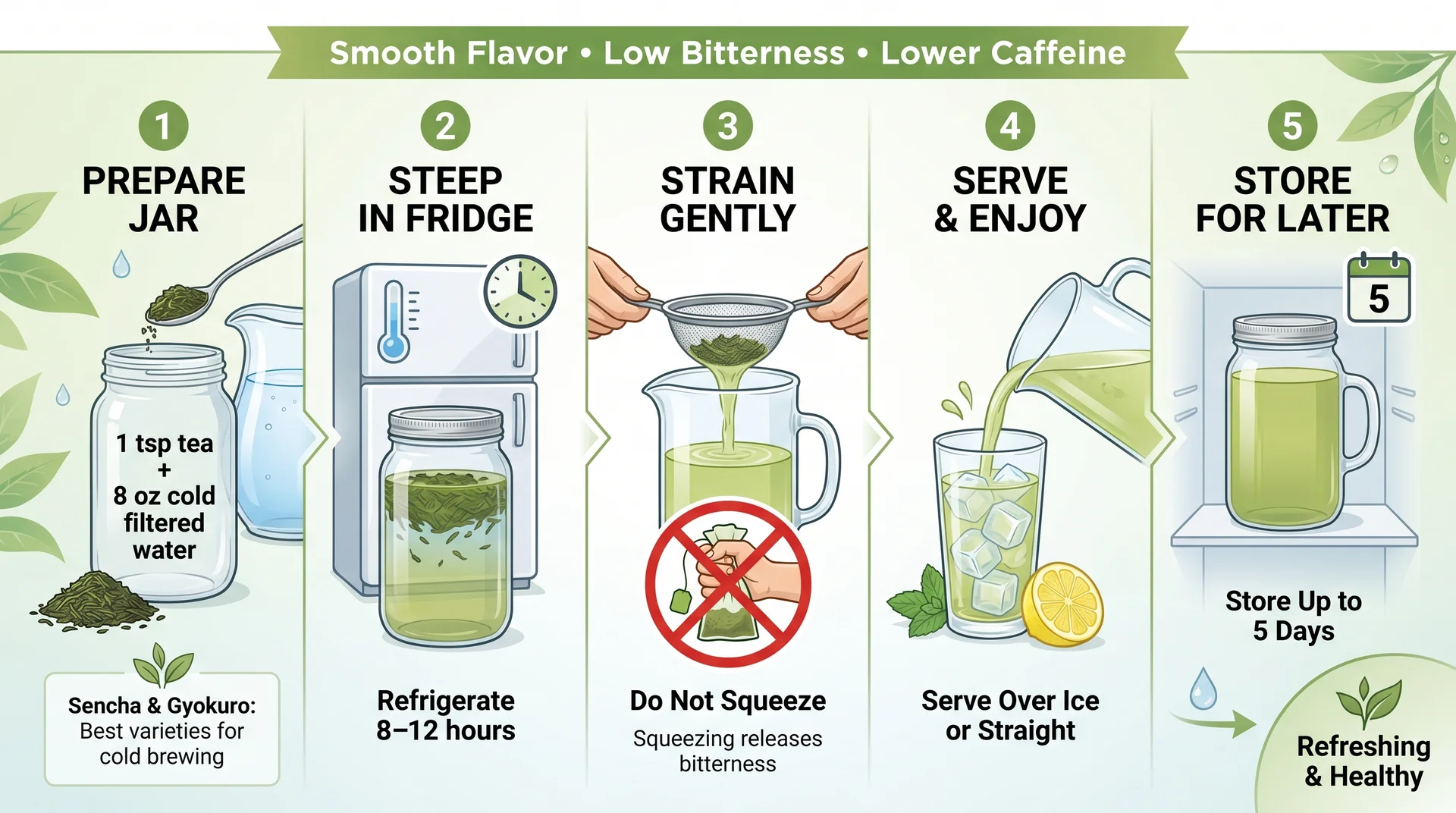
This is the preparation that answers the question directly: yes, you can brew green tea in cold water, and the result is worth the patience. Sencha and gyokuro varieties work particularly well with this method.
- Use one teaspoon of loose-leaf green tea or one tea bag per eight ounces of cold, filtered water.
- Combine the tea and water in a sealed glass jar or pitcher.
- Refrigerate for eight to twelve hours. Do not steep longer than twelve hours, even in cold water; extended contact eventually over-extracts the leaves and adds bitterness to what should be a clean, smooth result.
- Remove the tea bags or strain the loose leaves. Do not squeeze the bags. Squeezing releases additional tannins that undermine everything cold-brewing was trying to avoid.
- Serve over ice or straight from the jar. Store remaining tea sealed in the refrigerator for up to five days.
Iced Green Tea Method
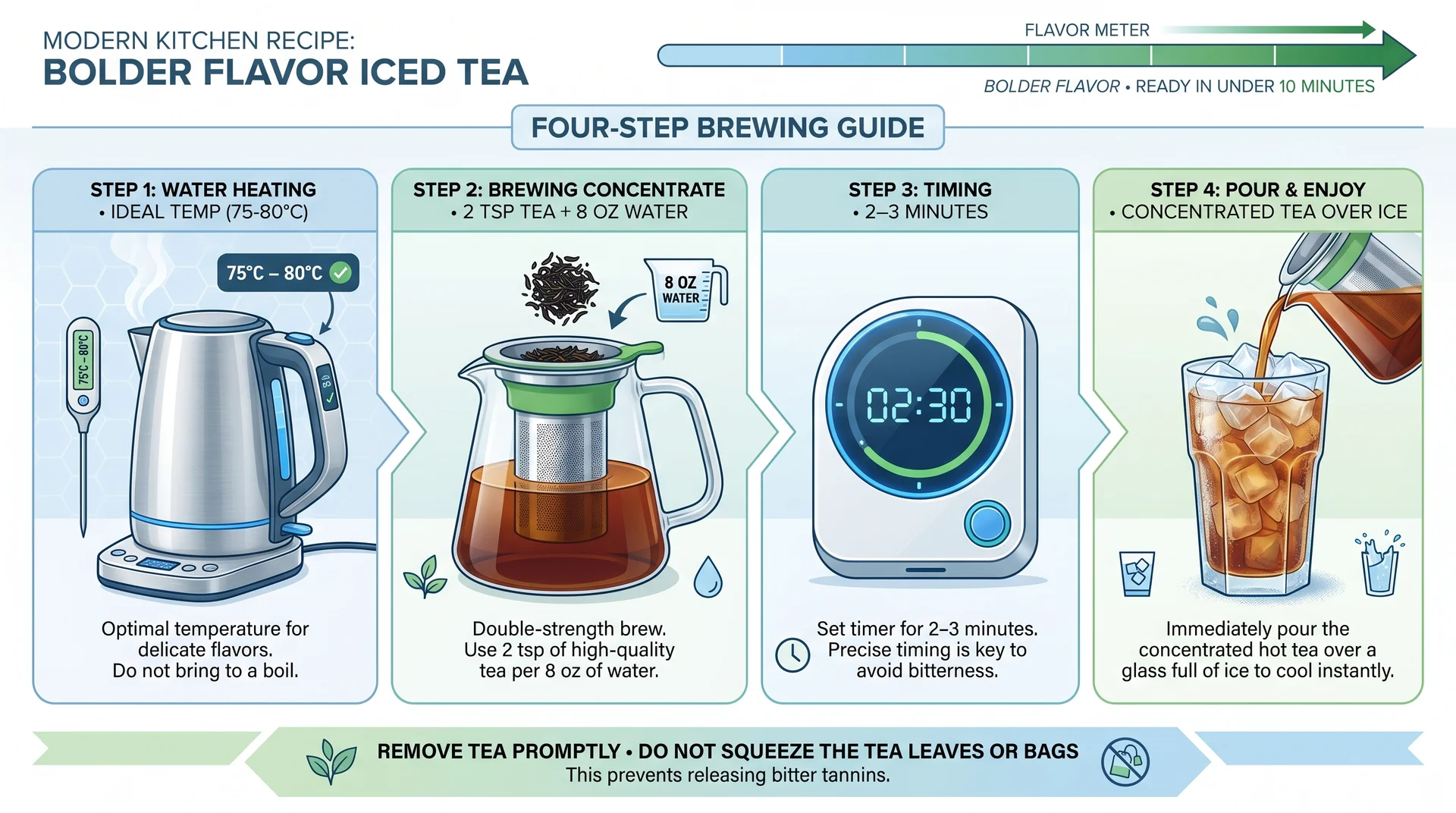
This method produces cold green tea in under ten minutes by using hot extraction followed by immediate chilling. The flavor will be stronger and slightly more bitter than cold-brew, which is exactly what some people prefer.
- Brew double-strength: two tea bags or two teaspoons of loose-leaf in eight ounces of water. Use water around 75°C to 80°C, not a full boil.
- Steep for two to three minutes. Remove the tea promptly and do not squeeze.
- Pour immediately over a full glass of ice. The ice dilutes the double-strength brew to a normal concentration and chills it simultaneously.
- Drink right away or refrigerate. Apply the same storage guidance as hot-brewed tea, which is within one to two days or sooner if sweetened.
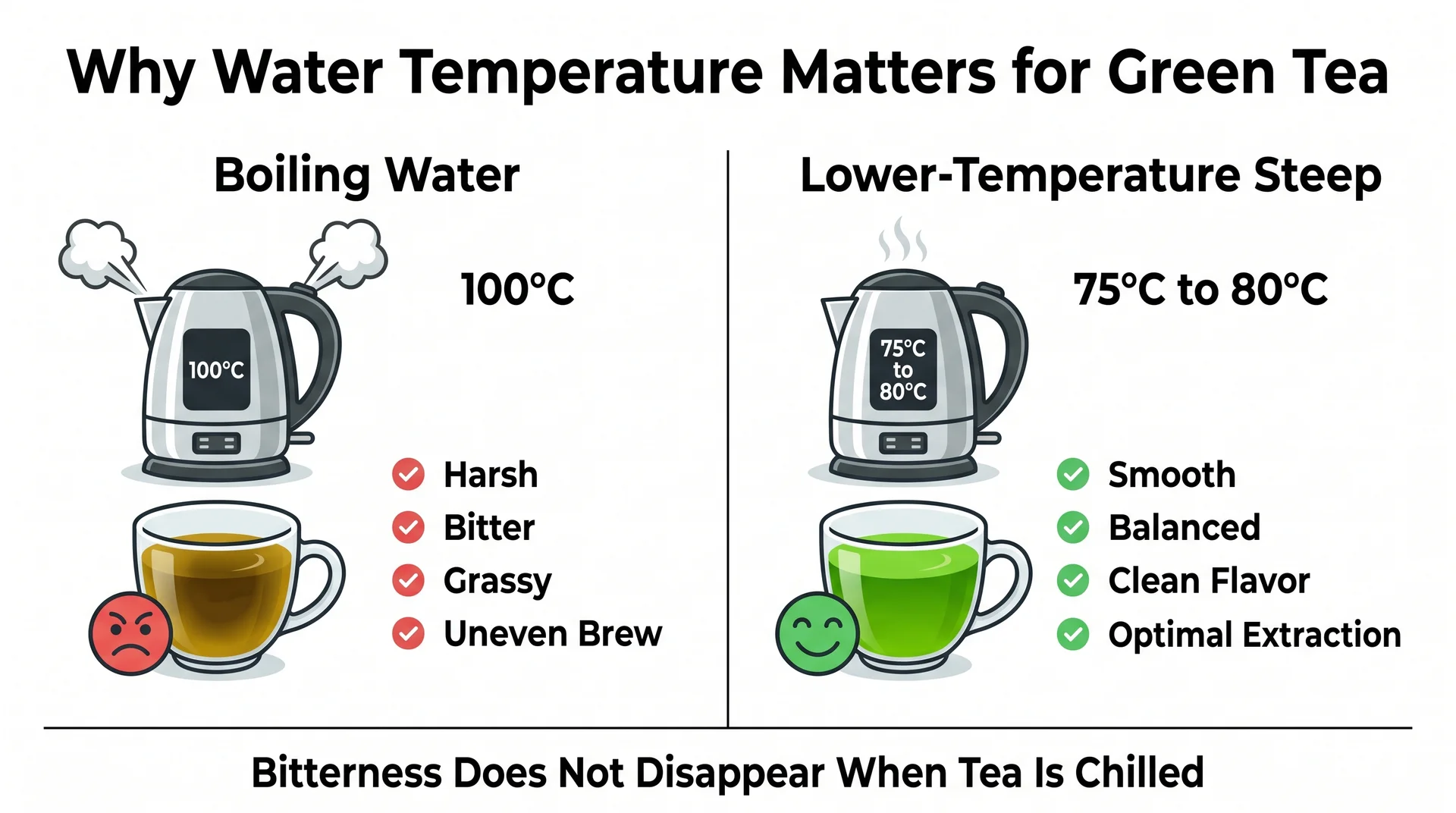
Most advice on iced green tea gets the temperature step backwards: boiling water, then wondering why the cold result tastes harsh and grassy. A lower-temperature steep fixes that entirely.
Boiling water makes green tea bitter, whether it is served hot or cold, and that bitterness does not disappear when the temperature drops.
Hot vs. Cold Green Tea: A Direct Comparison
Cold-brewing produces lower caffeine, lower bitterness, and a slightly reduced catechin yield compared to hot-brewing at the same steep time, a gap that narrows significantly with an eight-to-twelve hour cold steep.
Before settling on which method is categorically better, it is worth reading the full picture.
| Factor | Hot Green Tea | Cold-Brewed Green Tea |
|---|---|---|
| Catechin / EGCG content | Higher per short steep | Slightly lower; the gap narrows with a longer steep time |
| Caffeine content | Higher | Measurably lower |
| Tannin content | Higher – more bitter and astringent | Lower – smoother, naturally sweeter |
| Stomach tolerability | Can irritate on an empty stomach | Generally gentler due to lower tannins and caffeine |
| Prep time | 2 to 5 minutes | 8 to 12 hours (cold brew) or 10 minutes (iced method) |
| Refrigerator shelf life | 1 to 2 days | 3 to 5 days |
| Flavor profile | Bolder, sometimes grassy or vegetal | Cleaner, lighter, less bitter |
Final Thoughts
The right method is whichever one you will actually drink consistently. The catechin difference between a properly cold-brewed cup and a well-made hot cup is real but not large enough to override practical preference.
One thing worth naming before you go: if you have been drinking bottled green tea from a grocery store shelf, the Snapple, Arizona, or similar ready-to-drink varieties, that is a different conversation.
Those products typically contain far less actual tea, substantial added sugars, and a fraction of the polyphenols in home-brewed versions.
The nutritional picture in this piece applies to tea you brew yourself, not what comes in a bottle with a marketing claim on the label.
| This article is written for general informational purposes by a registered dietitian nutritionist. It is not a substitute for personalised medical or nutritional advice. If you are managing a health condition, taking medication, or are pregnant, discuss your tea consumption with your healthcare provider before making changes. |