

| Written by Dr. Molly Grant, Registered Dietitian Nutritionist. This article covers general health information only. If you are experiencing severe or persistent GI symptoms, or if you take medications that affect electrolyte or potassium balance, speak with your healthcare provider before using any laxative-containing product. |
Detox tea makes you poop because it contains ingredients, most commonly senna leaf, that trigger a pharmacological response in your colon. That is not a cleanse. Understanding the difference changes everything about how you should think about drinking it again.
If you spent this morning making urgent trips to the bathroom and wondering whether the tea is “working,” this article gives you the clear answer, the mechanism behind it, and an honest account of what happens to your body if this becomes a daily habit.
Yes, Detox Tea Can Make You Poop! (Reason is Specific)
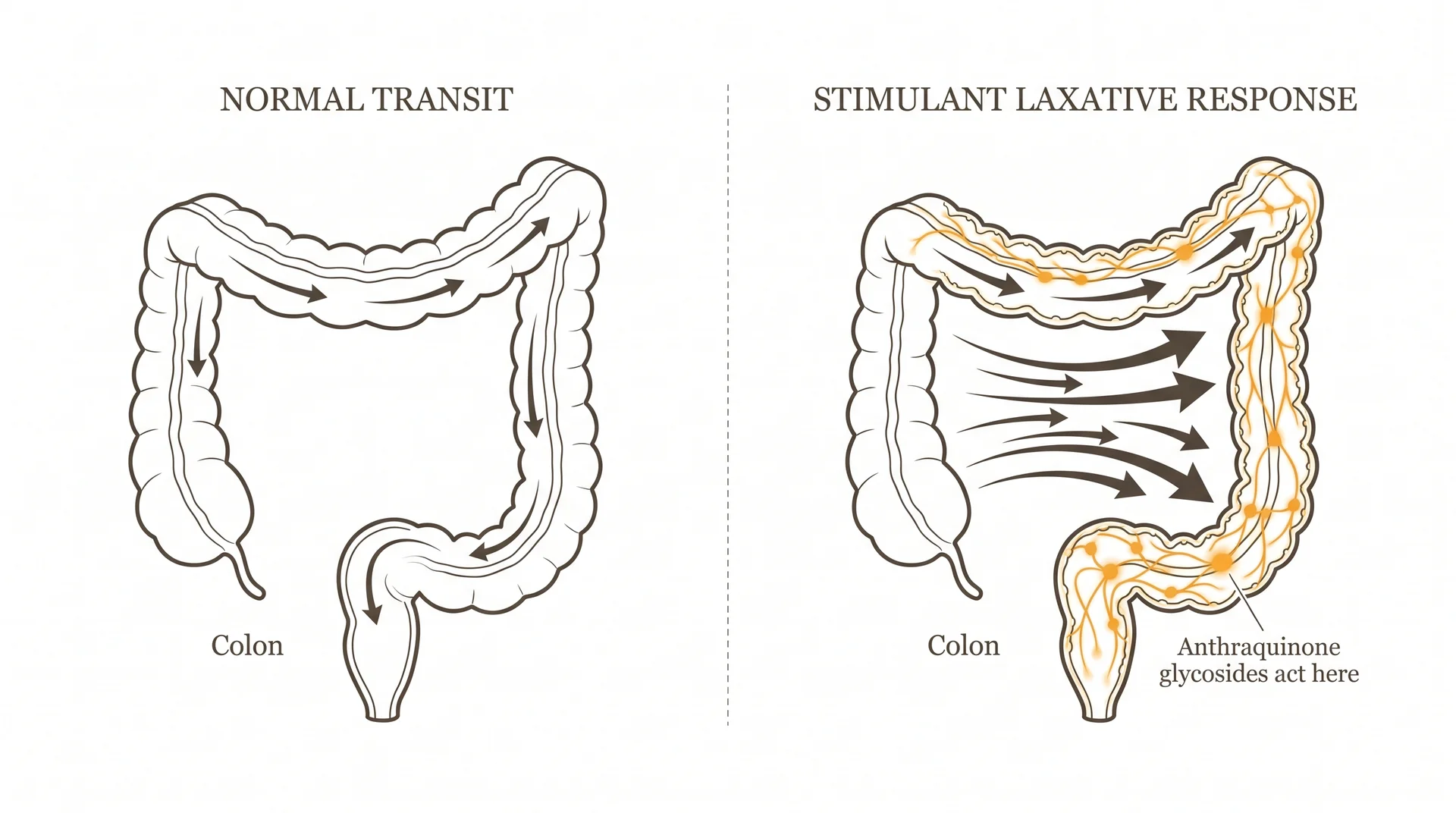
The laxative effect from detox tea is a direct response to stimulant herbs in the formula, not evidence that your body is detoxifying.
Senna leaf, the most common culprit, contains compounds called anthraquinone glycosides that act on the nerve network in your colon wall, triggering peristaltic contractions.
Your colon responds the same way it would to an over-the-counter laxative, because in many products, the active compound is chemically identical.
The urgency, cramping, and frequency are all mechanisms working as designed. Not toxins being expelled. Not confirmation that the tea is “working” in any nutritional or metabolic sense.
This Is Not a Cleanse, It’s a Pharmacological Response
Your liver and kidneys process and remove metabolic waste continuously, independent of what you drink.
Accelerating bowel transit does not meaningfully assist that process. What stimulant herbs do is force the colon to move its contents faster than it would on its own, which produces a bowel movement, but does not alter what your detoxification organs are doing in the background.
The word “cleanse” is doing a lot of marketing work in this category. The mechanism behind the effect is much simpler and more pharmacological than the packaging suggests.
The Ingredients That Cause the Laxative Effect

Not every herb in a detox blend acts the same way on your digestive system. The specific ingredient driving the bathroom effect tells you the mechanism, the expected intensity, and the risk profile for regular use.
Check your label before reading further. What’s in the formula changes how relevant each section below is to your situation.
Senna Leaf: Stimulant Laxative, Not a Digestive Herb
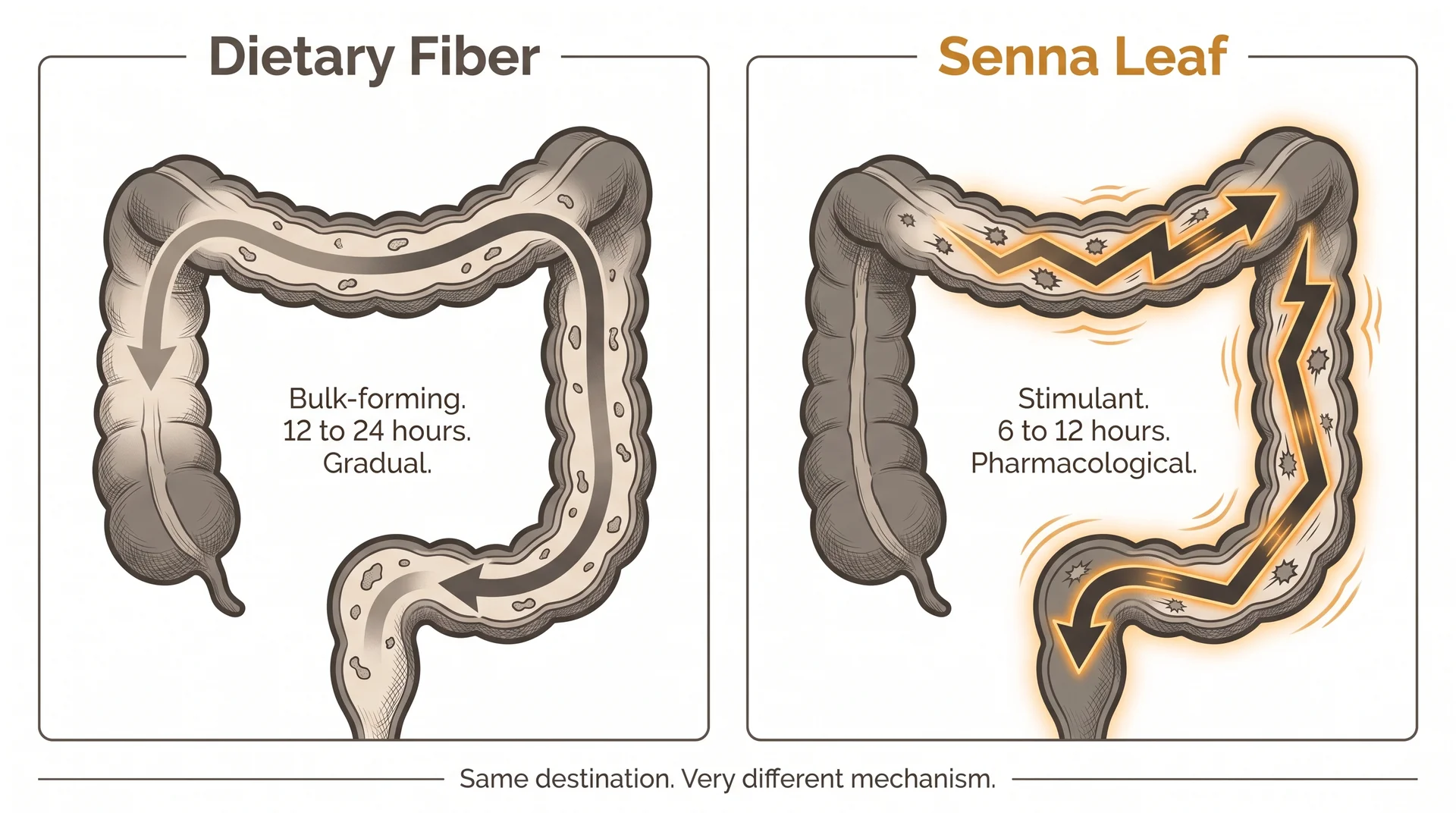
Senna is an FDA-approved over-the-counter laxative.
Its anthraquinone glycosides pass through the small intestine intact and act directly on the nerve plexus in the colon wall, triggering rhythmic muscle contractions that push stool through faster than normal. The effect typically begins 6 to 12 hours after ingestion.
This is a fundamentally different process from eating fiber. Dietary fiber works by bulking stool and drawing water into the colon gradually, producing a comfortable, predictable effect over 12 to 24 hours.
Senna overrides the colon’s normal timing by stimulating it pharmacologically, which is why the response is faster, more urgent, and often accompanied by cramping. The difference in how it feels reflects a difference in mechanism, not in how much tea you drank.
Senna is safe and effective as an occasional laxative. Honestly, if you handed me a product containing senna leaf and told me it was a “daily detox ritual,” the framing would concern me before I even looked at the dose.
That tension between what the ingredient is and how it’s marketed is the central issue in this product category.
Cascara Sagrada: Similar Mechanism, Stronger Effect
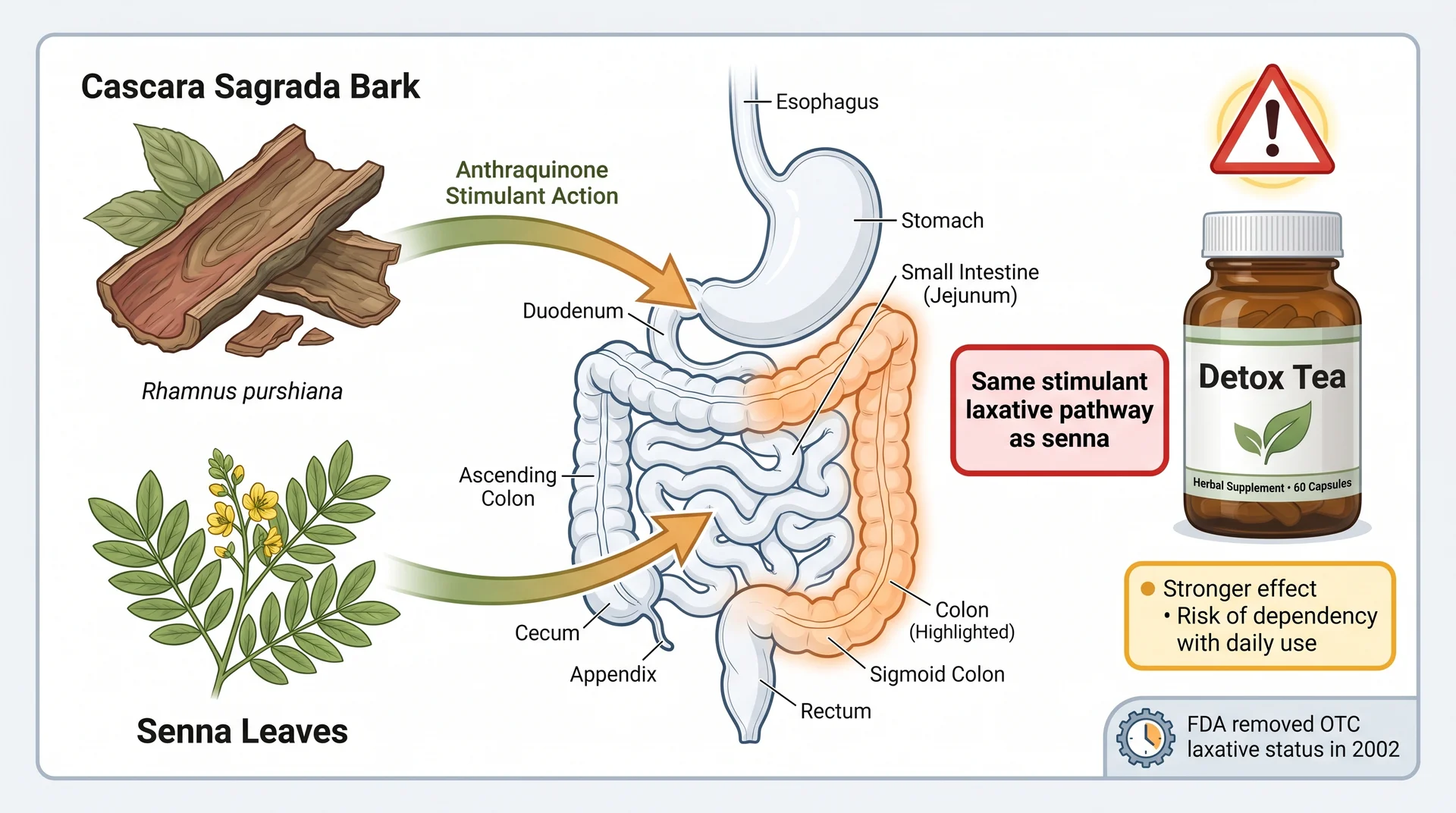
Cascara sagrada works through the same anthraquinone pathway as senna, typically producing a stronger laxative response. In 2002, the FDA removed cascara sagrada from its list of ingredients generally recognized as safe for use in over-the-counter laxative drug products, citing insufficient data supporting its safety for long-term use.
It still appears in products sold as dietary supplements, which are regulated differently from drug products. That regulatory distinction affects pre-market safety review, not the pharmacological profile.
Cascara is still a stimulant laxative with the same dependency risk as senna, regardless of the product category it appears in.
If cascara sagrada is on your detox tea label and you have been drinking it daily, that warrants stopping and reconsidering before your next cup.
Dandelion Root: A Very Different Pathway
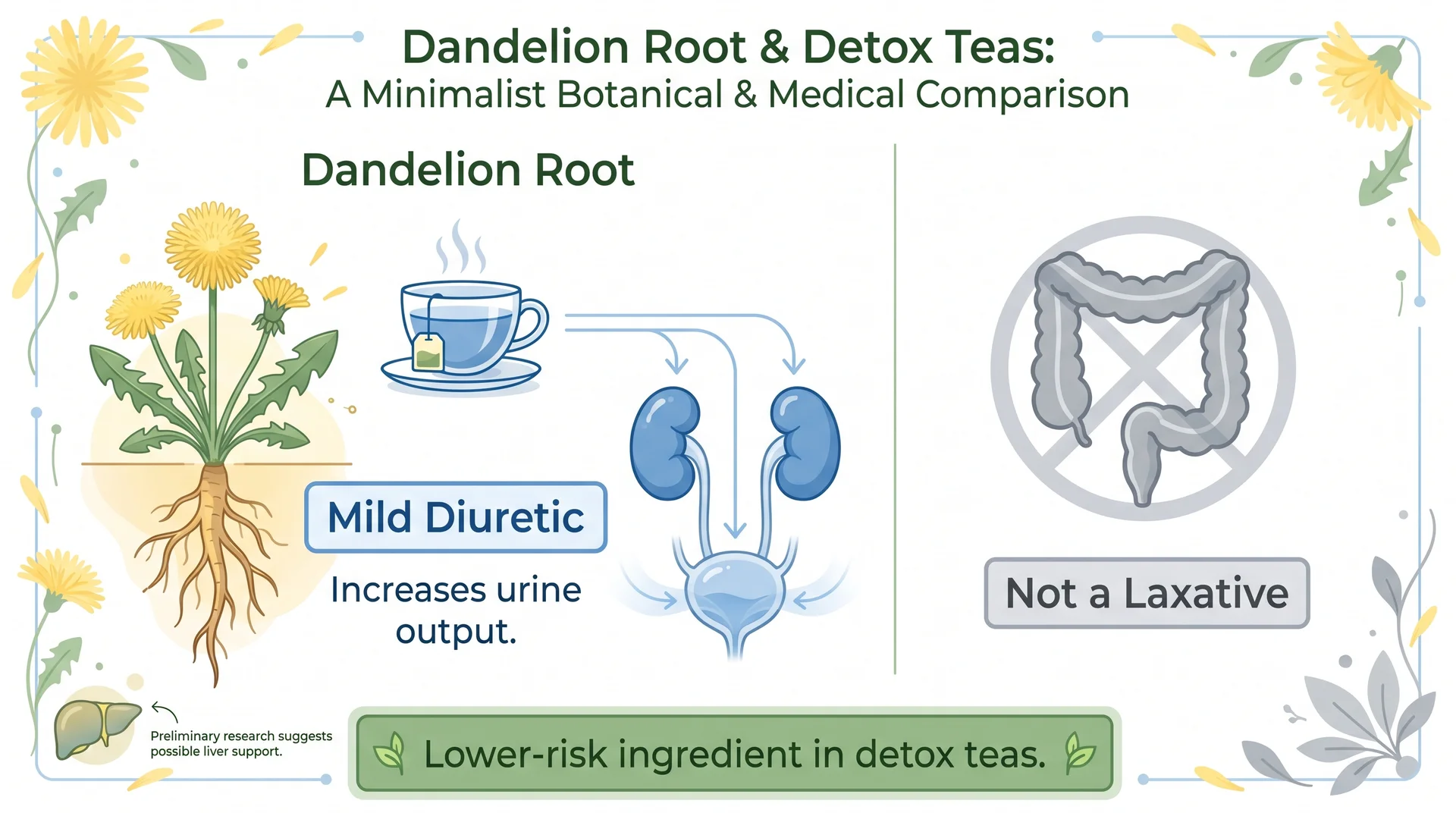
Dandelion root is a mild diuretic, not a laxative. It increases urine output, not bowel movement frequency. If a dandelion-based tea is producing softer stools for you, the more likely explanation is increased fluid intake, not any laxative action from the herb itself.
Some early research, mostly animal-based and preliminary, suggests dandelion may support liver function. That claim is separate from laxative action and worth keeping separate. Dandelion detox teas sit in a much lower-risk category than senna-containing products for anyone considering regular use.
Ginger, Peppermint, and the Supporting Cast

Ginger supports gastric emptying and reduces nausea. Peppermint relaxes smooth muscle in the GI tract, which is why it is used in IBS management. Licorice root has mild demulcent properties. None of these produces a laxative effect at normal tea quantities.
These herbs appear in detox blends for palatability and to support a “digestive support” claim on the label. They are not what is sending you to the bathroom.
Is the Weight You Lost Actually Real?
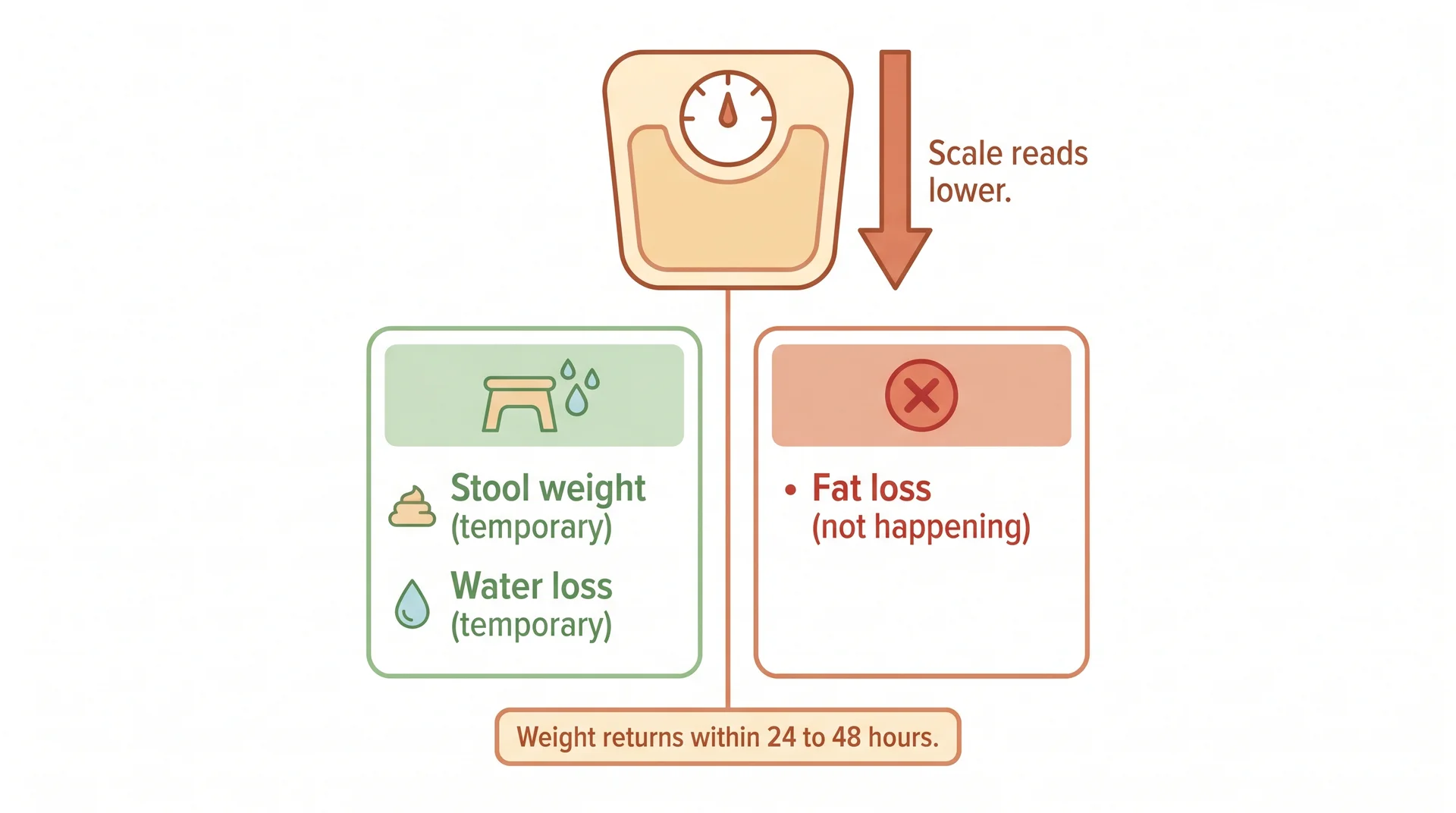
No. The weight lost immediately after drinking detox tea is stool and water, not fat.
When senna speeds up bowel transit, the colon reabsorbs less water than it normally would. The result is looser, heavier stool and, temporarily, a lower number on the scale. Most people notice a drop of a few pounds in the day or two following a detox tea session. That weight returns within 24 to 48 hours of normal eating and hydration.
No bowel movement, however significant, burns fat. These are completely separate physiological processes. The scale change is real. What it represents is not what most people hope it is.
I understand that is not what anyone wants to hear after spending money on a product positioned as a weight management tool. But conflating laxative-induced weight change with fat loss is exactly how the pattern of daily use begins, and daily use is where the real risk conversation sits.
Normal Reaction vs. a Problem: How to Tell the Difference
The laxative effect from detox teas exists on a spectrum. Where you land depends on the dose, the specific herb, your individual gut sensitivity, and whether you drank it on an empty stomach. Most people who drink a senna-containing tea once will experience an uncomfortable but not dangerous response.
What to Expect After Drinking Detox Tea
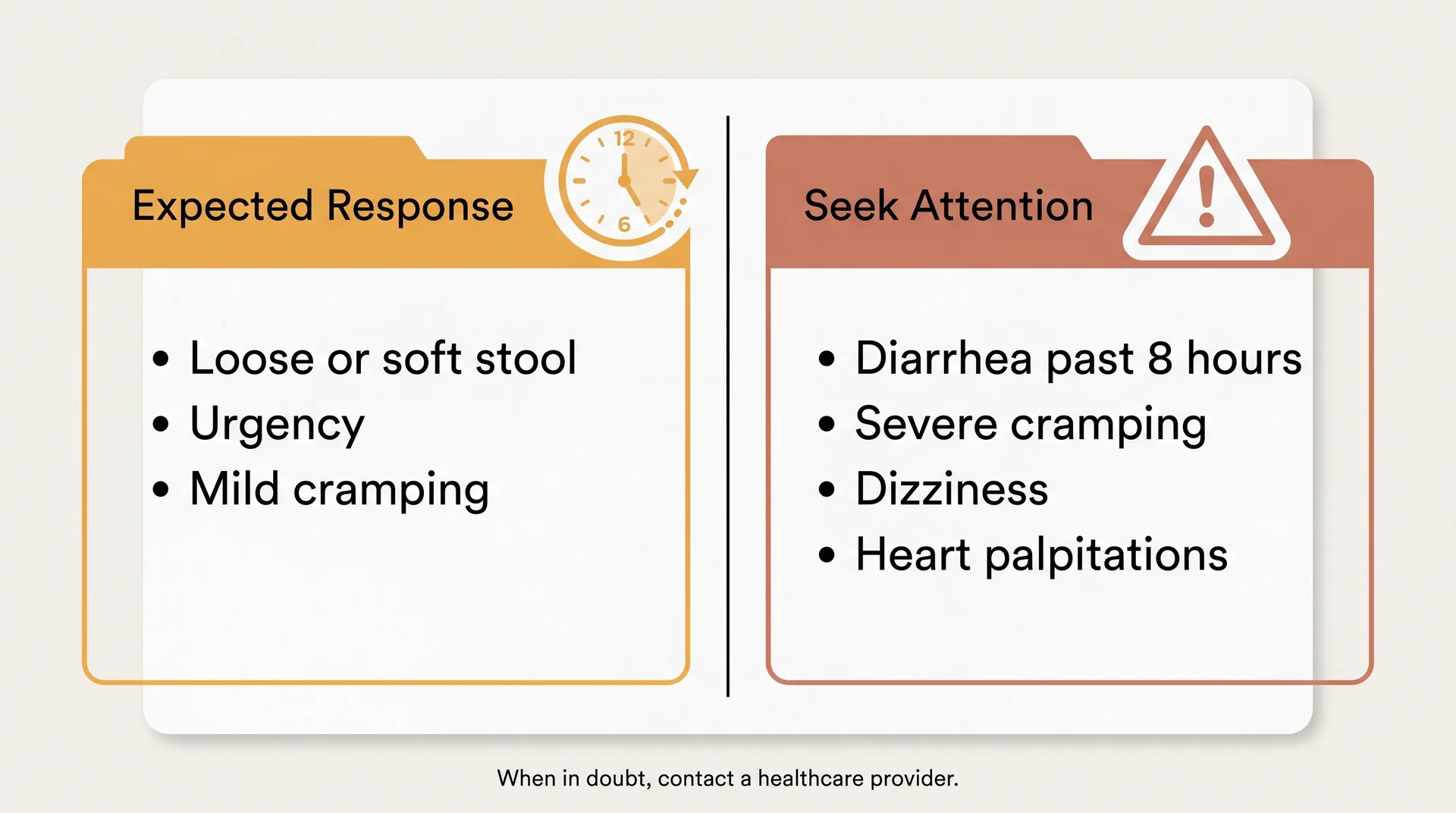
With senna at a typical serving size, expect the effect to begin 6 to 12 hours after drinking it, often overnight for an evening cup. You will likely notice one to three loose or soft bowel movements, some urgency, and mild to moderate cramping. That falls within the expected range for this ingredient at standard doses.
The cramping from stimulant laxatives is not comfortable, but it is the mechanism in action. Senna-triggered peristaltic contractions feel more forceful and wave-like than normal bowel movement sensations. If you experienced this and worried something was wrong, it probably was not.
Does Detox Tea Give You Diarrhea?
It can, and whether that qualifies as diarrhea depends on how long it lasts and how severe it is.
Loose or urgent stools in the 6 to 12 hour window after drinking a senna tea are an expected laxative response. Diarrhea persisting beyond 6 to 8 hours after that window, or accompanied by the symptoms below, is a different situation and warrants attention.
- Diarrhea continuing well past the expected 6 to 12-hour window
- Severe cramping that does not ease between bowel movements
- Dizziness or lightheadedness, which can indicate electrolyte loss rather than simple fluid loss
- Heart palpitations alongside GI symptoms
- Nausea or vomiting occurring together with urgency
- Blood in stool
Dizziness and heart irregularity, alongside GI symptoms, are not detox symptoms. They are signs of electrolyte depletion and need medical attention, not waiting it out.
What to Do If the Effect Is Too Strong
- Stop drinking the tea. Do not take a second serving thinking it will counterbalance the first.
- Hydrate with water and an electrolyte-containing drink. Coconut water, a low-sugar sports drink, or water with a pinch of salt are all reasonable options.
- Eat something bland and lightly salted: crackers, plain rice, or toast. This slows transit and begins to restore sodium balance.
- Rest and monitor. If symptoms ease within 4 to 6 hours, you are likely fine. If they worsen or you develop dizziness or palpitations, seek care rather than continuing to wait.
What Happens When You Use Detox Tea Regularly
The single-cup risk profile is mostly benign for a healthy adult. The daily habit is a genuinely different conversation, and the reason comes back to the mechanism we covered at the top: senna works by stimulating a nerve network, and nerve networks adapt.
Why Your Body Stops Responding Over Time
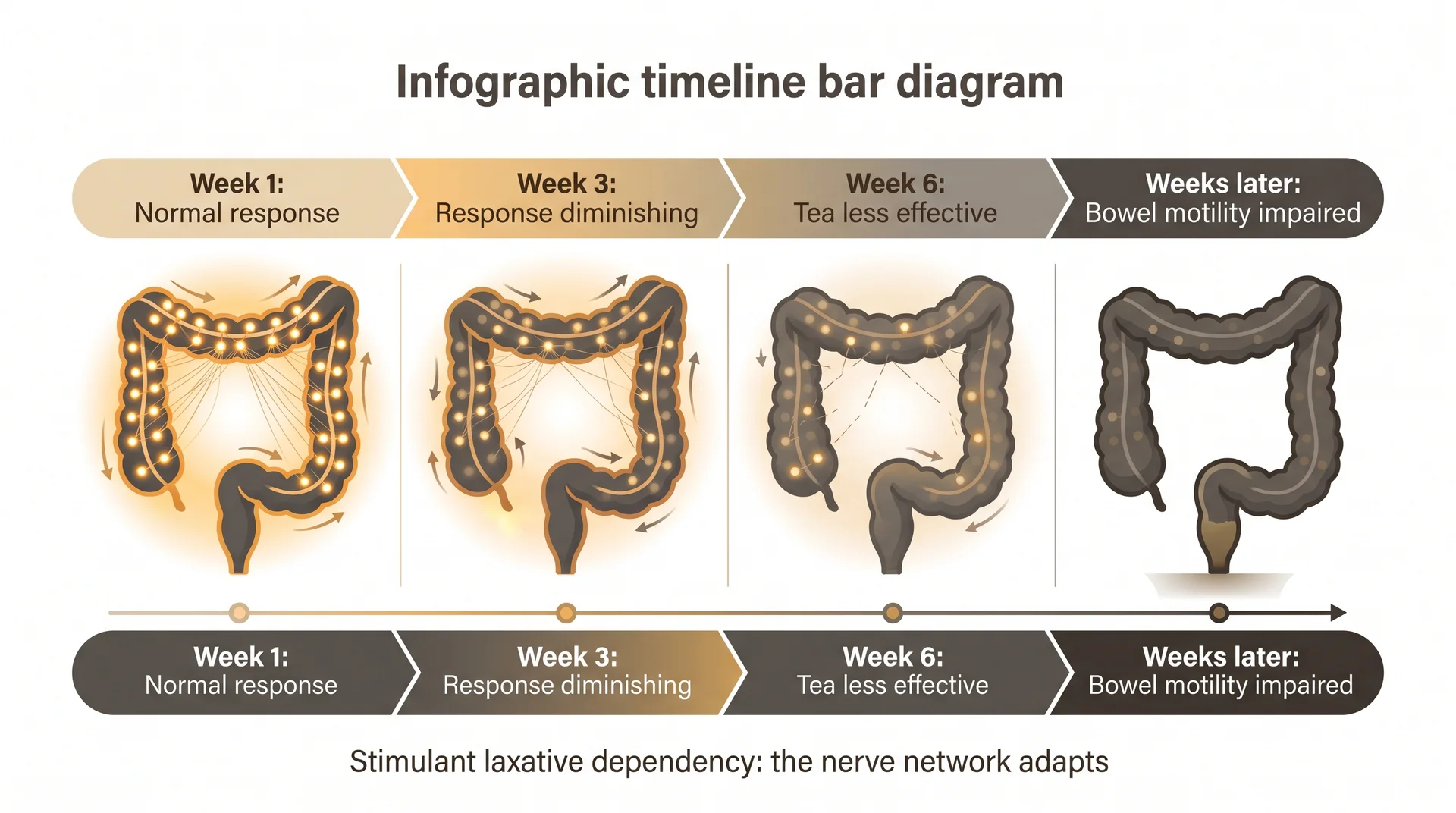
The myenteric nerve plexus, the nerve network in the colon wall that senna activates, adapts to repeated stimulation. With regular use of stimulant laxatives, that network becomes progressively less responsive.
The colon requires stronger, more frequent stimulation to produce the same effect. This is stimulant laxative dependency, a documented consequence of long-term stimulant laxative use recognized by the National Institute of Diabetes and Digestive and Kidney Diseases.
In practical terms, someone who drinks senna-containing tea every day may find after several weeks that the tea stops producing a reliable effect, or that normal bowel movements do not happen without it.
Natural bowel motility, the colon’s ability to contract on its own schedule without external stimulation, can diminish significantly. Restoring it typically requires a supervised weaning process that takes weeks, not days.
Most advice on this topic gets the framing backwards, focusing on whether the tea works rather than on how it works and what that means over time. Those are very different questions.
The Electrolyte Risk That Most People Don’t Think About
Rapid colonic transit reduces the time available for water and electrolyte reabsorption. With occasional use, this produces temporary fluid loss that the body corrects on its own. With regular use, it can contribute to persistently low potassium, a condition called hypokalemia, and chronically low sodium levels.
Low potassium matters because the heart, muscles, and kidneys all require adequate potassium to function properly.
The FDA’s consumer warnings on laxative-containing weight loss teas specifically cite electrolyte imbalance as a primary safety concern, alongside liver injury risk, with habitual use.
If you take diuretics, blood pressure medications, or any medication that affects potassium levels, raise this with your prescribing provider before continuing to use detox teas regularly. The interaction risk is real and underreported in wellness content.
I want to be honest about one limit here: the research on electrolyte depletion thresholds comes primarily from studies on over-the-counter laxative products rather than herbal teas specifically, and individual gut sensitivity varies considerably.
I cannot give you a precise number of cups per week that reliably separates safe from risky, because that number is genuinely different from one person to the next.
What I can say clearly is that any product positioned as a daily practice that contains a stimulant laxative deserves a conversation with a clinician before you commit to the routine.
Does the Brand Matter? Common Detox Teas and What’s in Them
Brand matters only insofar as the ingredient list matters. Two products, both labeled “detox tea,” can work through completely different mechanisms, or one may do very little at all. The name on the box is not a mechanism.
| Tea Type | Key Ingredient(s) | Laxative Effect? | Risk Profile for Daily Use |
|---|---|---|---|
| Senna-based (most “skinny” teas) | Senna leaf | Yes, significant | High: dependency, electrolyte loss |
| Cascara-based | Cascara sagrada | Yes, strong | High: FDA caution, dependency risk |
| Rhubarb-based | Rhubarb root | Mild to moderate | Moderate: milder anthraquinone effect |
| Dandelion-based | Dandelion root/leaf | No (diuretic only) | Low: mild diuretic, no stimulant laxative |
| Herbal support blends | Ginger, peppermint, licorice | No | Low: no laxative mechanism |
Yogi Detox Tea and Yogi Peach Detox Tea
Yogi’s original Detox Tea formula relies primarily on dandelion root, burdock root, and licorice root, and does not list senna as an ingredient.
If that formula is producing strong urgency or cramping, that is likely individual sensitivity to one of the herbs rather than a stimulant laxative response. Any effect should be mild.
Yogi Peach Detox is a distinct product with a different formula.
The same brand name covers products with meaningfully different ingredient profiles. Always check the label of the specific product you are holding, not the general brand’s reputation.
The effect your friend reported from “Yogi tea” may have come from a different product than the one you are looking at, even if the brand name is the same.
Dandelion-Based Detox Teas
Teas built primarily around dandelion root are unlikely to produce a meaningful laxative effect. You may urinate more frequently. You may notice slightly softer stools from increased fluid intake. Senna-type urgency, cramping, and bathroom frequency are not part of the expected experience with these products.
For anyone seeking digestive support without stimulant laxative exposure, dandelion-based options represent a substantially different risk profile. That is a comparison of mechanisms, not an endorsement of the detox claim.
“Skinny” and “Fit” Teas
Products marketed as skinny teas, flat tummy teas, or packaged 28-day cleanse programs reached mainstream audiences through influencer content and almost universally contain senna in meaningful quantities.
Many use a two-product structure: a morning tea that is mild and caffeine-forward, and an evening “cleanse” tea that contains the stimulant laxative.
That structure frames the laxative component as a targeted nighttime cleanse. What it is, pharmacologically, is a stimulant bowel intervention taken at a dose and frequency that standard OTC laxative guidance would not recommend.
I am not going to evaluate specific products here since that belongs in a different article, but the category as a whole warrants more scrutiny than the marketing invites.
What to Check on the Label Before You Drink
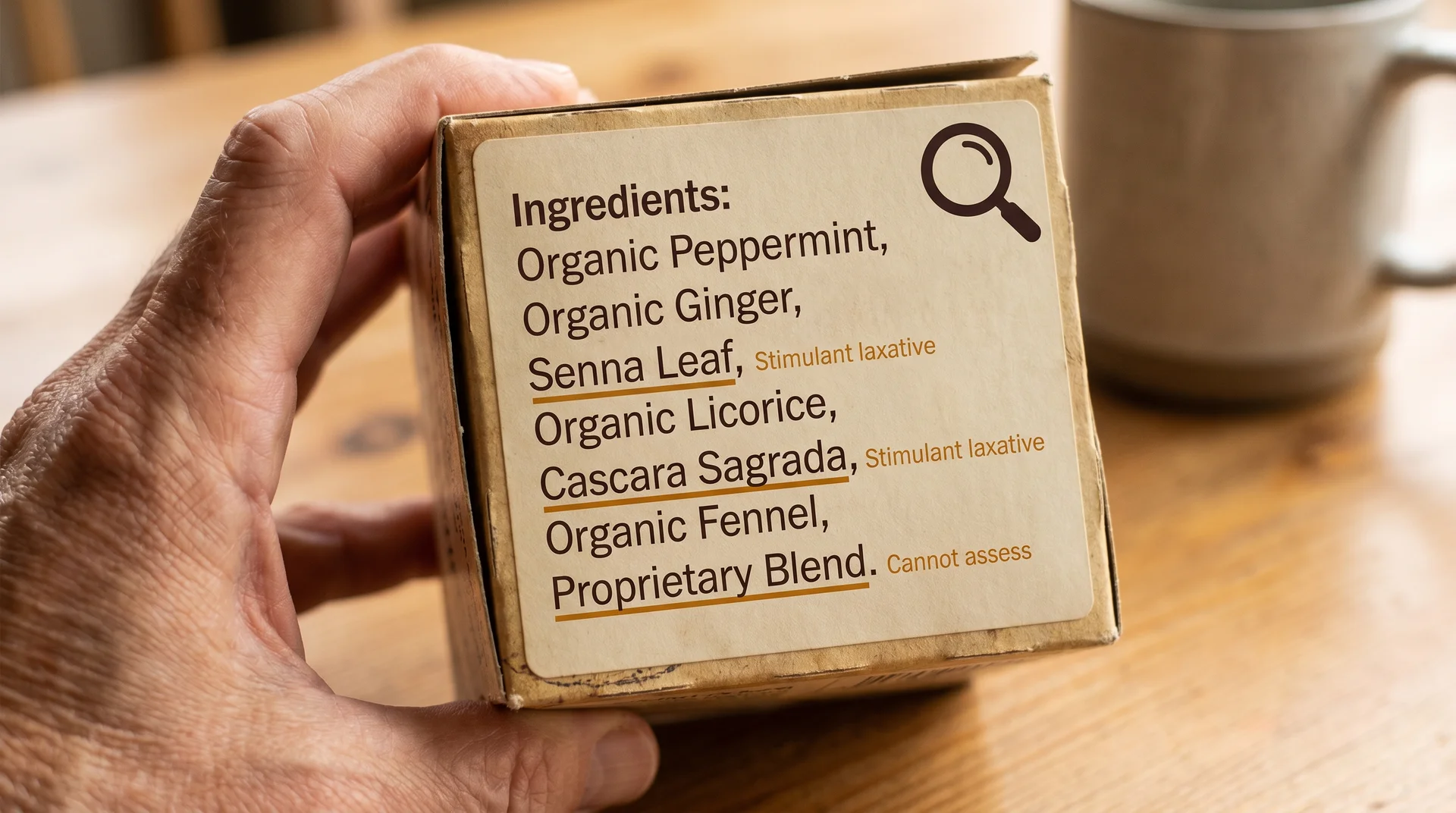
Read the ingredient list before anything else on the packaging. The front panel is a marketing decision. The ingredient list tells you what the product actually does.
- Senna leaf or Senna alexandrina: Stimulant laxative. Expect a significant bowel response within 6 to 12 hours. Not appropriate for daily use without clinical guidance.
- Cascara sagrada: Stronger stimulant laxative than senna. FDA caution on long-term use applies. Worth avoiding as a regular-use ingredient entirely.
- Rhubarb root: Contains anthraquinones similar to senna. Produces a laxative effect, typically milder than senna but pharmacologically present. Worth noting if you are sensitive.
- Dandelion root or dandelion leaf: Mild diuretic, not a laxative. Much lower risk profile for regular use. Some preliminary research on liver support, mostly animal-based.
- Ginger root, peppermint leaf, licorice root: Digestive support herbs. No meaningful laxative effect at normal tea quantities. Generally benign for regular use.
- “Proprietary blend” without individual ingredient amounts disclosed: You cannot assess how much of any active compound you are consuming. That is a reason to pause before proceeding, not a reason to trust the brand’s marketing.
Serving frequency matters as much as the ingredient list.
A product recommending one occasional cup is a different risk conversation than one recommending two cups daily for 28 days. Dose and duration together determine where on the risk spectrum you sit.
The Bottom Line
Detox tea makes you poop because it contains stimulant herbs, most commonly senna leaf, that trigger bowel contractions by acting on the nerve network in your colon.
That response has nothing to do with toxin removal. The weight that disappears after a session is stool and water, not fat. And the pharmacology that causes the effect is the same pharmacology that creates the dependency risk with daily use. The tea bag does not change the mechanism.
A single cup is unlikely to harm a healthy adult. The daily habit, particularly with senna or cascara sagrada in the formula, carries real risks that this product category consistently underplays.
For genuine, sustained digestive support, dietary fiber, adequate hydration, and regular physical movement have a stronger and clearer evidence base than any detox tea on the market.
That is the least marketable answer. It is also the correct one.