
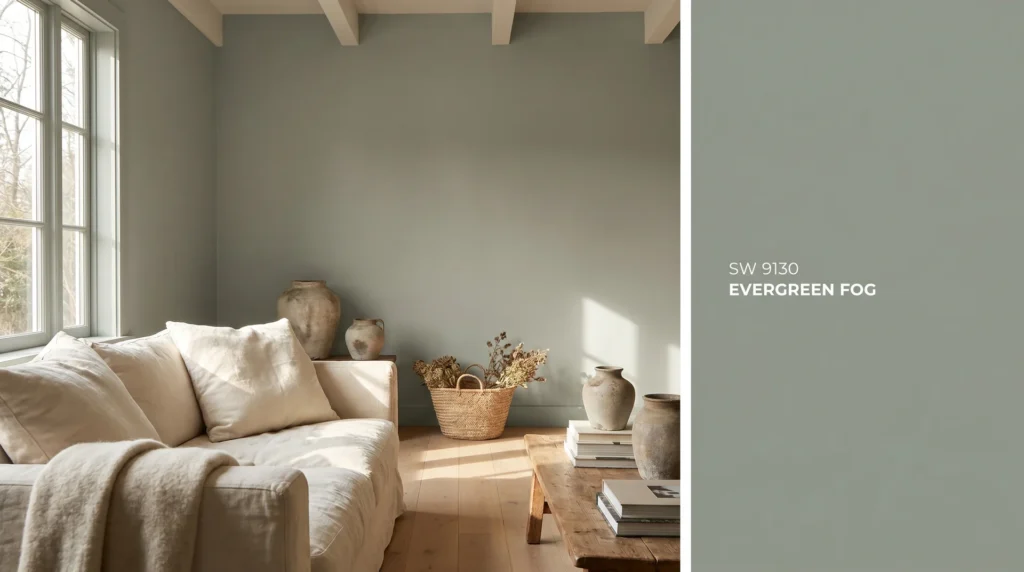
Evergreen Fog SW 9130 was Sherwin-Williams’ 2022 Color of the Year, and unlike most trend colors that disappear the moment the calendar turns, it stuck. Clients still ask me about it by name. You still see it on accent walls, kitchen cabinets, front doors, and full exterior wraps in homes that were painted years ago. That kind of staying power doesn’t come from hype.
Part of what keeps it relevant is how difficult it is to pin down. Evergreen Fog reads differently depending on your light source, your trim choice, and the time of day.
Two people can stand in the same room and argue about whether it’s more green or more gray. I’ve had that argument with clients. Both people were right.
This guide covers what Evergreen Fog actually is, how it behaves across different rooms and surfaces, which colors pair well with it, and whether it’s the right choice for the space you’re considering. If you’re deciding between this and a comparable color, the comparison sections near the end should help you land on a decision without needing to buy samples of everything.
What Is Evergreen Fog?
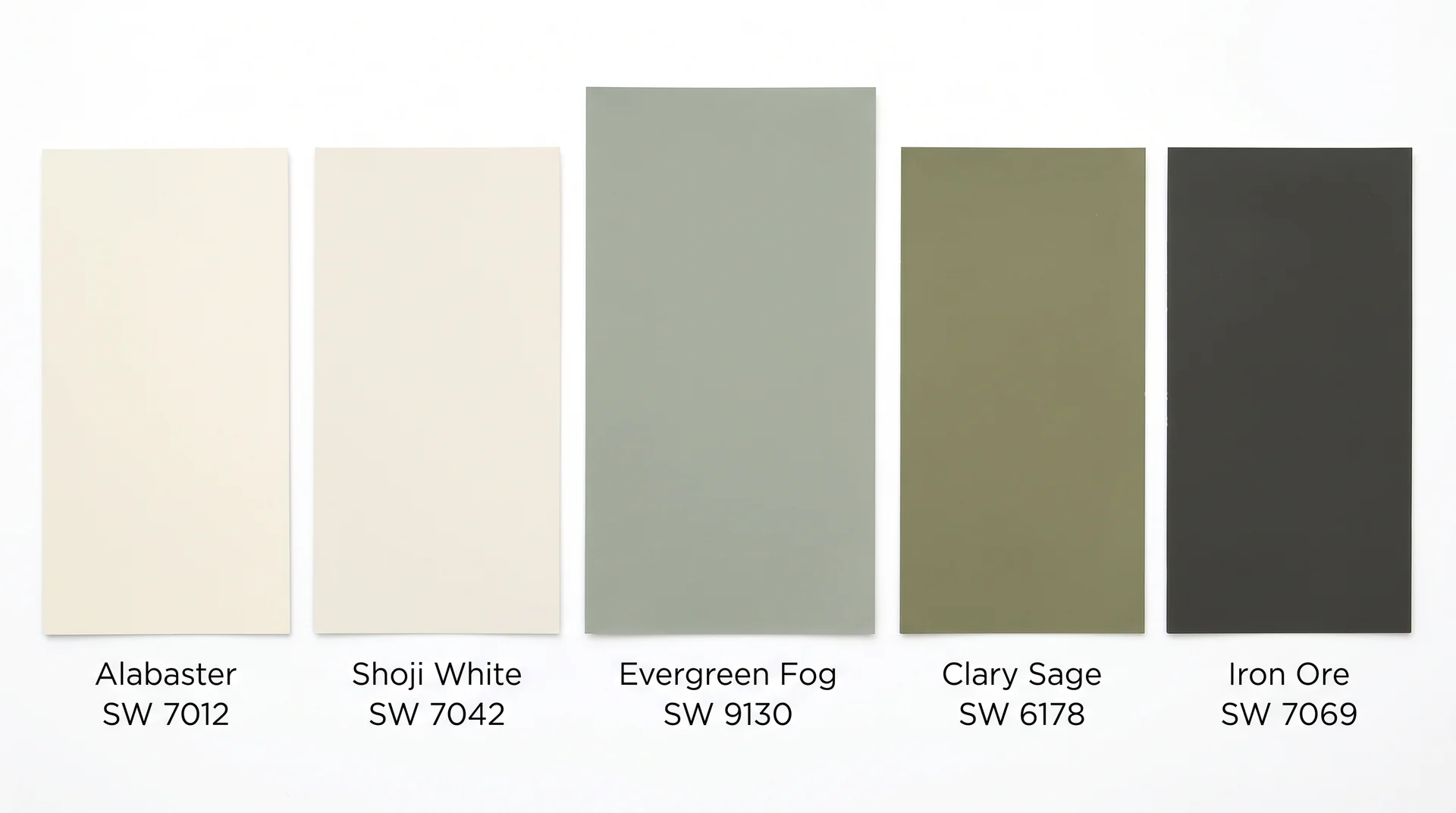
Evergreen Fog is a muted, dusty sage-green from Sherwin-Williams, code SW 9130. Its LRV (Light Reflectance Value) is 42, which puts it in the medium range: darker than the popular off-whites and soft warm neutrals, but not deep enough to make a room feel heavy when used on all four walls.
The hex code is #A1AC9A. In RGB terms, that’s 161 red, 172 green, 154 blue, which tells you immediately that the color sits in a narrow band where green, blue, and gray overlap. It’s not garden green. It’s closer to what happens when sage gray gets left in the rain long enough to blur at the edges.
The undertones are where things get interesting and where most people run into confusion. Evergreen Fog carries both cool blue and warm gray undertones simultaneously. That’s why it shifts so dramatically with light, which I’ll cover in the next section.
| Attribute | Value |
|---|---|
| Paint Code | SW 9130 |
| LRV | 42 |
| Hex | #A1AC9A |
| RGB | 161, 172, 154 |
| Color Family | Green |
| Undertones | Blue, gray |
| Color of the Year | Sherwin-Williams 2022 |
How Light Changes Evergreen Fog?
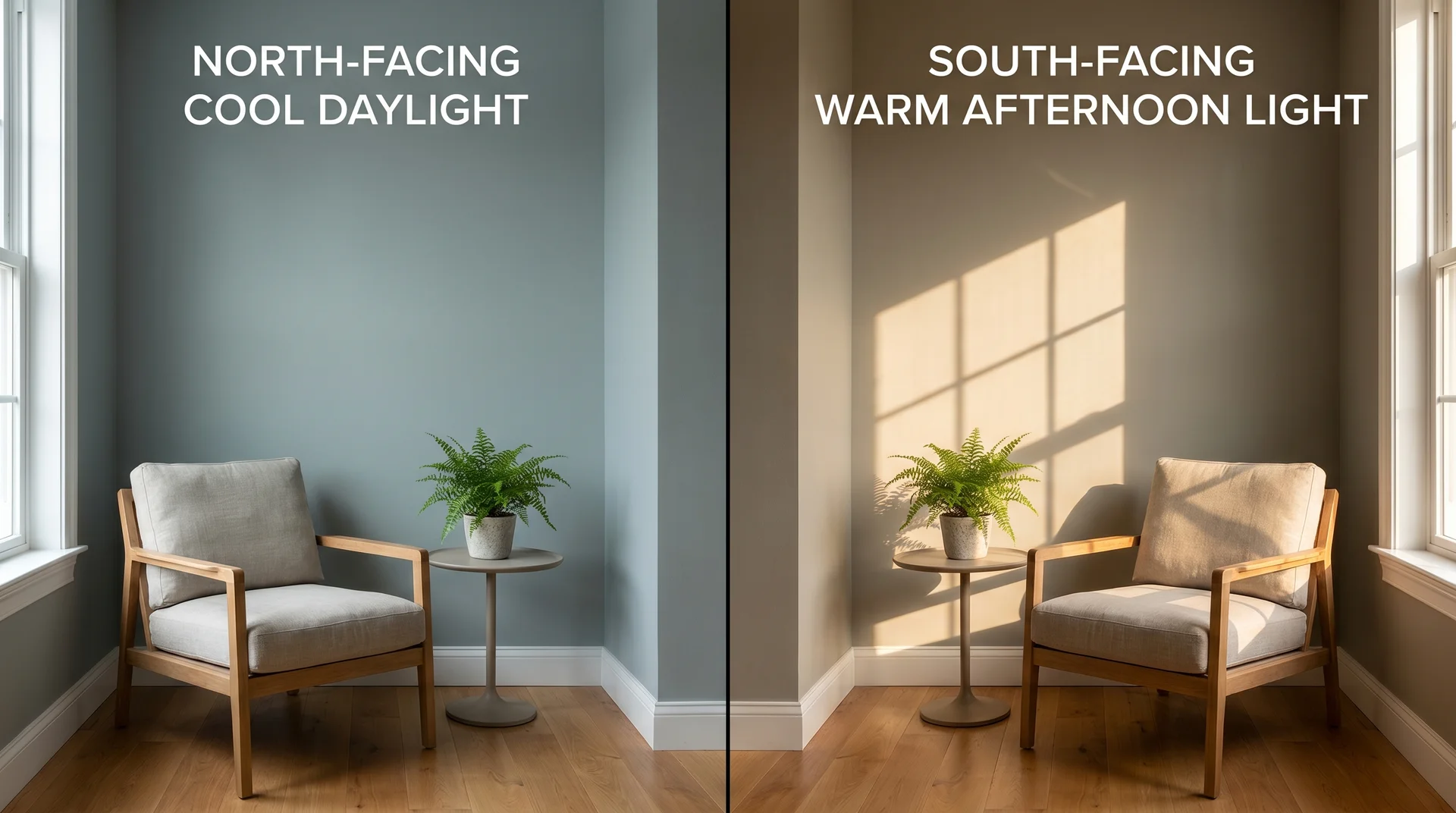
Evergreen Fog behaves differently depending on your room’s light, and this is the thing most people don’t expect until they’ve already painted a wall and are standing there wondering why it doesn’t look like the swatch.
In north-facing rooms with cool, indirect daylight all day, Evergreen Fog pulls toward its blue-gray side. It reads moodier, almost like a weathered slate. That quality works well in a bedroom where you want a calming, cocooning atmosphere. It’s harder to work with in a basement or any space where the light is already low, because the color deepens into something that reads flat rather than layered.
In south or west-facing rooms with warm natural light, the gray comes forward, and the color warms up noticeably. It reads closer to a muted greige-sage, something that sits quietly in the room without making a statement.
If you have warm wood tones in the space, white oak floors, or walnut furniture, Evergreen Fog tends to settle into them in a way that feels considered rather than accidental.
Artificial light is part of the equation, too. LED bulbs with a warm color temperature (2700K to 3000K) push the color toward its warmer, grayer register. Cool-white LEDs above 4000K pull the blue forward. Before committing to Evergreen Fog in any room, test the actual paint on the wall in at least two locations and observe it over a full day, morning through evening, with the lights on. The chip at the store is a starting point, not a preview.
Evergreen Fog Color Palette and Coordinating Colors
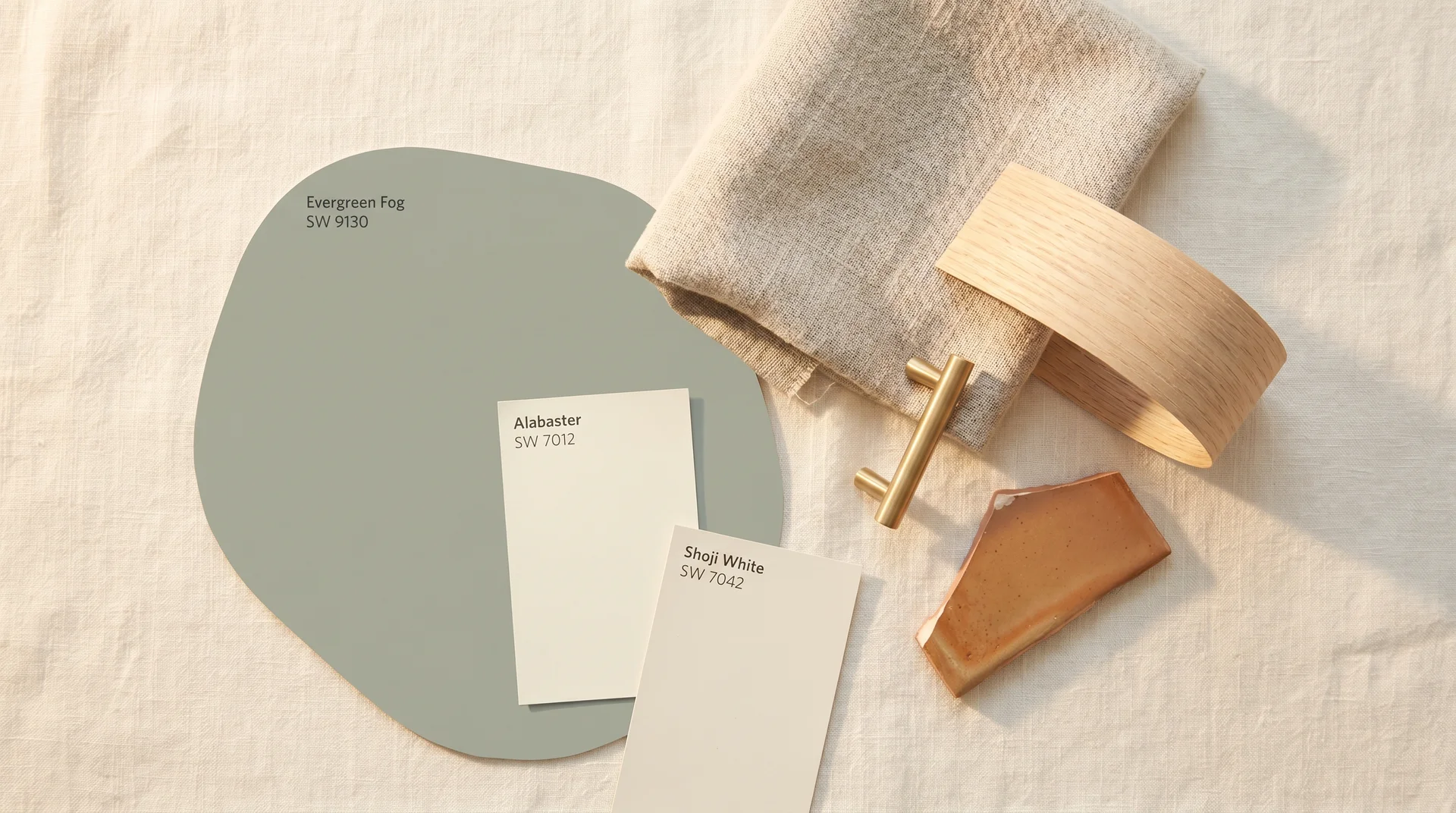
Evergreen Fog coordinates best with colors that don’t fight its double nature. Because it’s both cool and warm depending on the moment, you need pairings that stay grounded as neutrals, colors that let Evergreen Fog do its shifting without looking unstable next to a fixed point.
Sherwin-Williams coordinates it with Shoji White SW 7042, Pearly White SW 7009, and Antique White SW 6119. These work because they’re all warm-leaning whites that soften the cooler quality of Evergreen Fog without competing with it.
Beyond the official palette, these pairings also hold up well in practice:
- Warm whites on trim rather than bright whites. True whites make the gray undertones in Evergreen Fog read dingy by comparison.
- White oak, medium walnut, or natural pine for flooring and furniture. The warm wood tones anchor the color’s cooler side without fighting it.
- Brushed brass and aged bronze hardware. Warm metallics complement Evergreen Fog; cool chrome and nickel don’t.
- Terracotta and clay accent tones. The warmth of terracotta does something interesting against the coolness in Evergreen Fog, specifically, it keeps the room from reading cold without overheating it.
- Undyed linen, warm wool, and natural canvas textiles. These textures sit well with Evergreen Fog’s organic quality.
- Deep greens and near-blacks as accents.Iron Ore SW 7069 on a door or a built-in works as a dark anchor that grounds the palette without pulling it in a different color direction.
One pairing to avoid: cool grays or blue-grays alongside Evergreen Fog. Both colors share similar undertones and don’t create enough contrast to read as intentional. The result looks like the room couldn’t decide what it was doing.
Evergreen Fog and Alabaster
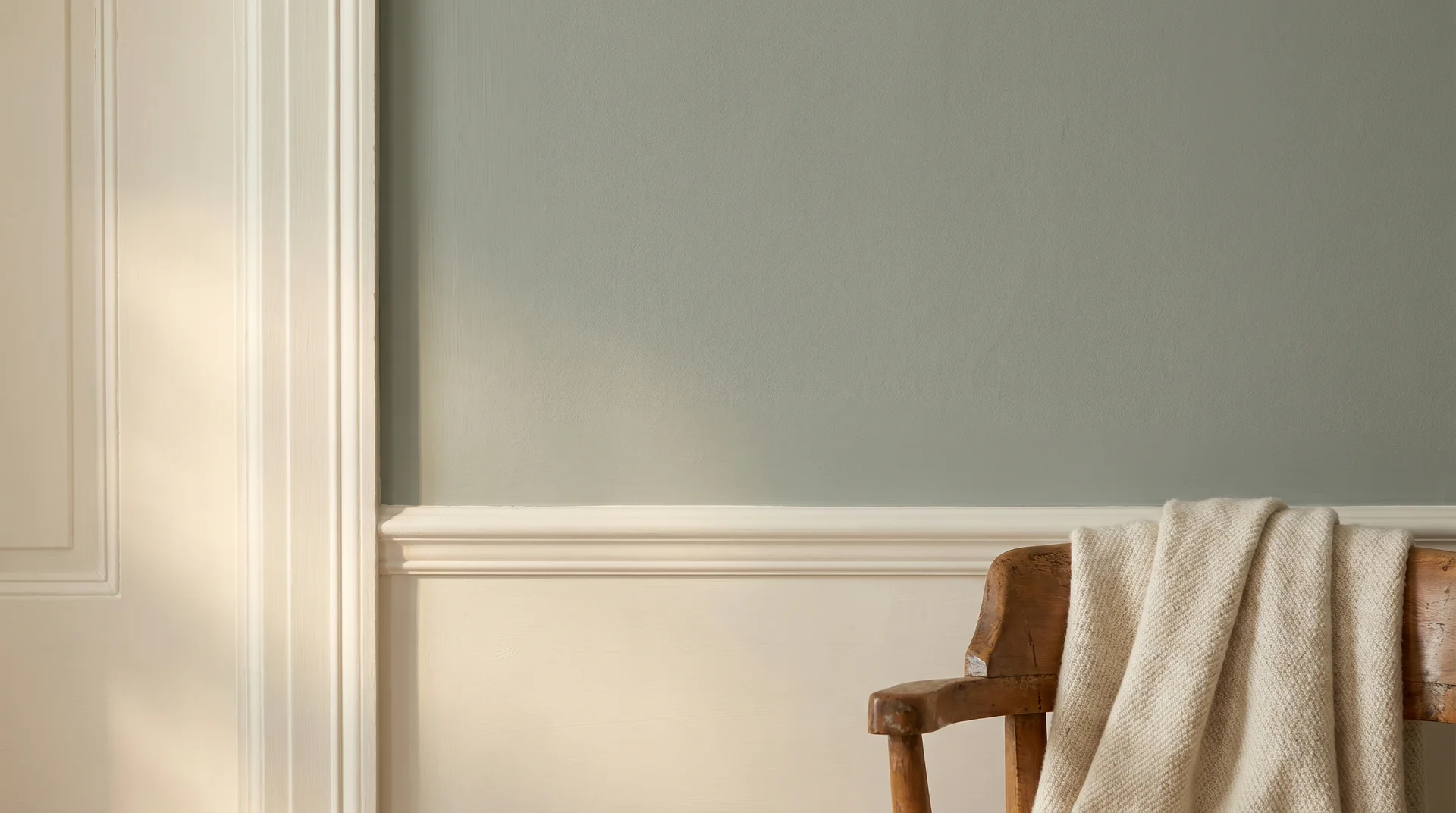
The Evergreen Fog and Alabaster pairing is the most searched color combination for this paint. There’s a reason for that: it genuinely works across almost every room type and style.
Alabaster SW 7012 is a warm, creamy white with yellow undertones and an LRV of 82. Where Evergreen Fog sits at LRV 42 and shifts with the light, Alabaster is steady and warm. The contrast between them reads as soft and organic rather than stark. It photographs well and, more importantly, it’s livable day-to-day, which isn’t always the same thing.
The most common version of this pairing puts Evergreen Fog on walls with Alabaster on trim, ceiling, and doors. The warm white casing keeps the room from reading too cool, and the contrast level is enough that the room’s architecture stays visible without the trim feeling heavy.
Some designers flip it: Alabaster on the walls with Evergreen Fog on cabinetry or built-ins. That’s a cleaner approach for smaller rooms where you want to keep the space light but still add some visual weight to the cabinetry. For kitchens in particular, Alabaster walls with Evergreen Fog lower cabinets tend to be easier to live with long-term than the reverse, because kitchen lighting is task-focused and less forgiving of complex wall colors.
One thing to watch: Shoji White and Alabaster both work with Evergreen Fog, but they’re not interchangeable on every surface. Alabaster is creamier and warmer, and in rooms with very warm natural light, it can read almost buttery alongside Evergreen Fog. Shoji White is slightly cooler and typically a safer trim choice in those situations. If you’re unsure, put both whites on cardboard and move them around the room at different times of day before committing to either.
Evergreen Fog in the Bedroom
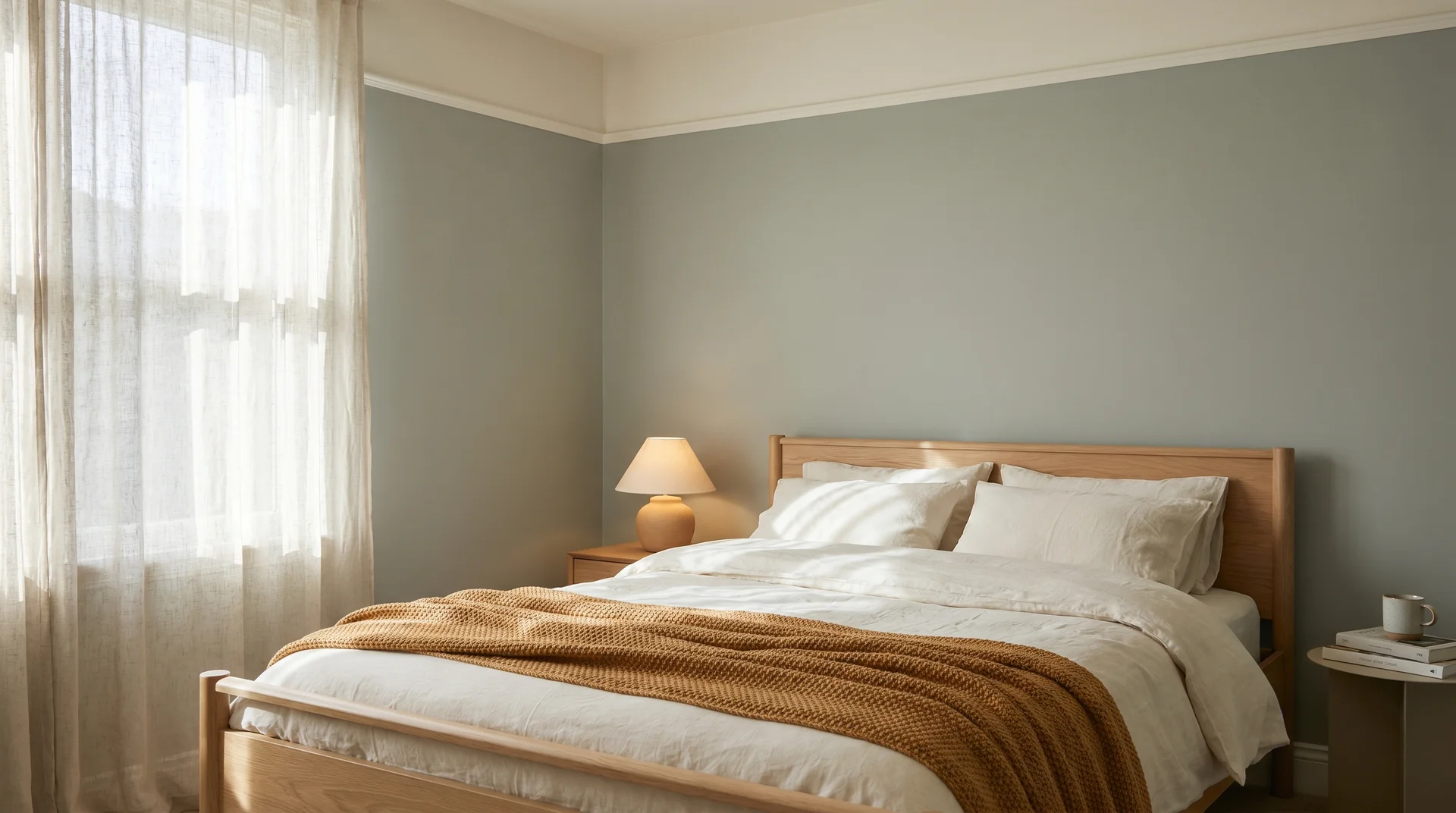
The bedroom is where Evergreen Fog works best. It’s a genuinely calming color, not in the generic spa-neutral way that gets applied to anything beige-adjacent, but in a way that actually quiets a room. The muted quality of the green removes visual noise without making the space feel blank.
Use Evergreen Fog on all four walls rather than just an accent wall. At LRV 42, it’s not so deep that a room feels oppressive when used fully. The color is complex enough to hold up across a full room in a way simpler paint colors don’t, and a single accent wall in Evergreen Fog can look indecisive in a bedroom, as if you wanted to commit but didn’t quite get there. If you’re thinking through the full investment, the cost to paint a bedroom is worth factoring in before you plan.
Pair it with warm white bedding and warm wood furniture. Keep the rest of the room relatively calm so the color can work without visual competition. Avoid cold metallics or high-contrast geometric patterns; both undercut the settled quality Evergreen Fog creates.
For the ceiling, use Alabaster or Shoji, White. Ceiling paint choice matters more than most people think, and in a bedroom where Evergreen Fog is on all four walls, a warm white ceiling keeps the room from feeling closed in. Painting the ceiling the same color as the walls can work in a larger bedroom if you’re deliberately going for an enveloping effect, but in a standard room, it lowers the perceived height more than most people are happy with once they see it.
Furniture arrangement matters too once the color is up. How you position the furniture affects how much of the wall color is visible and how the room reads from the doorway.
Evergreen Fog in the Bathroom
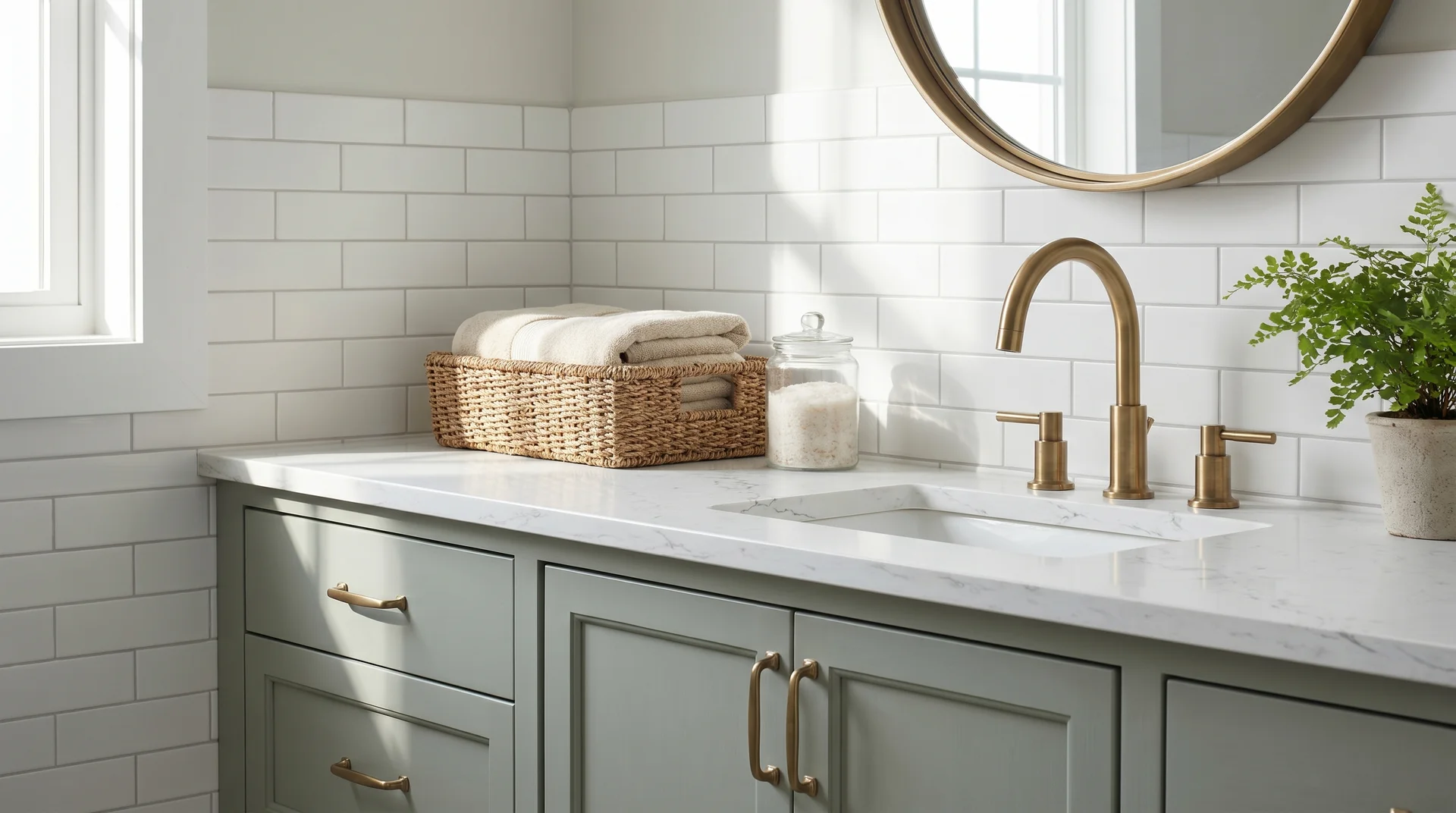
In bathrooms, Evergreen Fog’s result depends almost entirely on the light. Get that one variable right, and the rest follows.
In a bathroom with a window and natural daylight, Evergreen Fog creates the layered, misty quality that makes the color appealing in the first place. Combined with warm white tile and aged brass fixtures, it produces an atmosphere that reads as collected and spa-like without being precious about it. This is a real result, and it’s not hard to achieve with the right light situation.
In a windowless or low-light bathroom, the color tends to read dark and flat. At LRV 42, Evergreen Fog doesn’t have the reflectivity to hold a dim space. If your bathroom has no natural light, you’re better served by something with an LRV closer to 60 or above.
Sea Salt SW 6204 has a similar muted, organic feel but sits at a higher LRV and holds up much better under artificial light.
For a windowless powder room, there’s a separate argument for committing to the depth on purpose, using the lack of natural light as a design choice rather than fighting it. That’s a different design intent entirely, one that involves darker, richer color and deliberate drama rather than the soft sage quality most people are after with Evergreen Fog.
For the finish in a bathroom, use eggshell rather than flat. The slight sheen holds up to moisture and wipes clean without looking glossy on the wall.
Evergreen Fog on Cabinets and Kitchen Cabinets
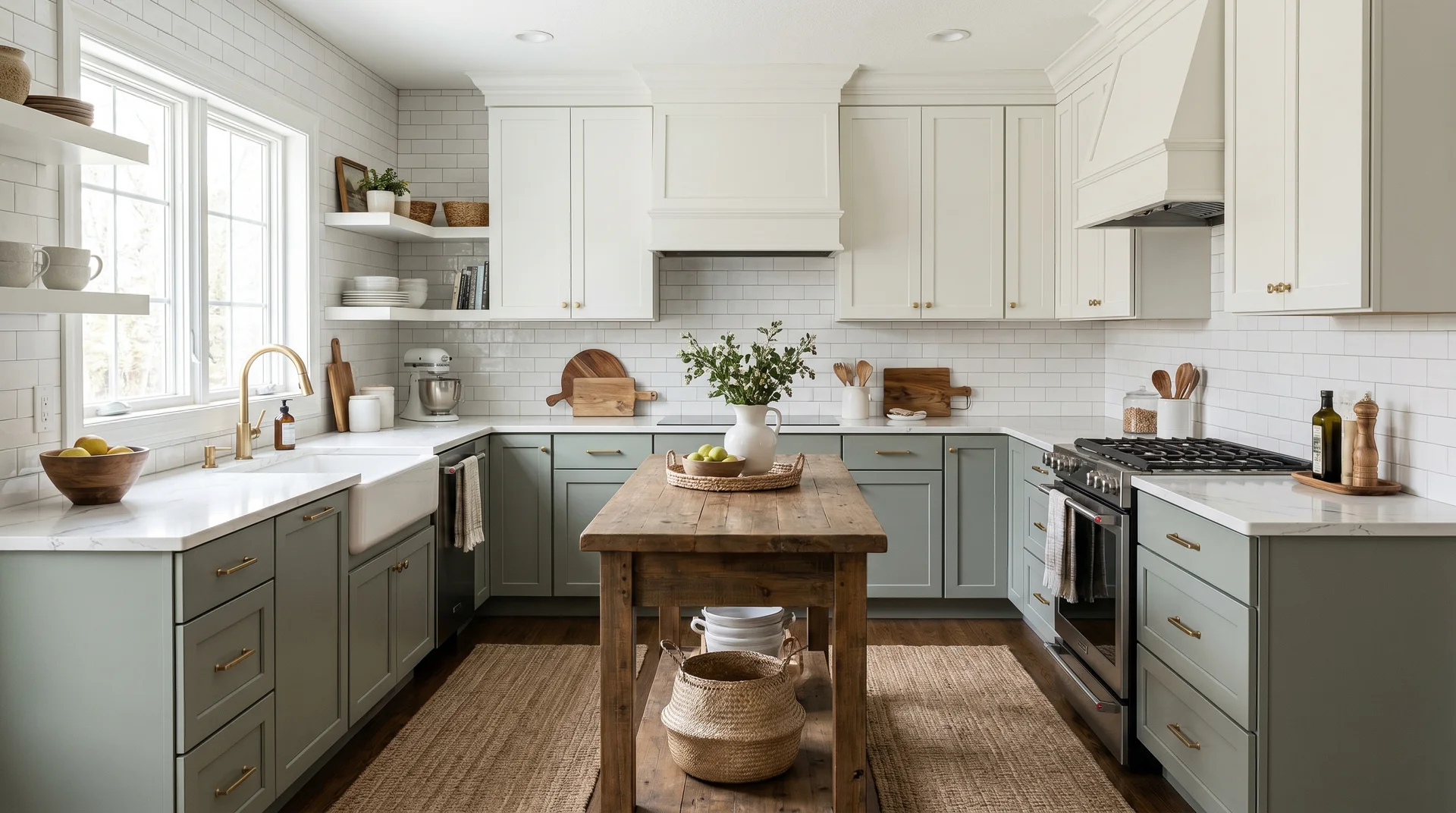
Evergreen Fog on kitchen cabinets is a popular application, and the version that consistently works best puts Evergreen Fog on the lower cabinets while upper cabinets stay white. This two-tone approach grounds the kitchen without closing it in, and the contrast reads as deliberate in a way that all-one-color cabinetry doesn’t always manage.
If you’re working through the color placement decisions for a two-tonee working through the color placement decisions for a two-tone kitchen, the two-tone blue and gray kitchen cabinet guide covers the undertone compatibility logic and placement rules that apply regardless of which specific colors you’re using.</p>
Finish choice matters more on cabinets than on walls. Use semi-gloss or satin. Flat or eggshell on cabinet faces collects grease and shows scuffs over time, and the warm grays in Evergreen Fog show dirt more visibly than cleaner colors do.
Semi-gloss gives you the most durable surface; satin is the right compromise if you want slightly less shine.
The pairing that works most consistently for Evergreen Fog kitchen cabinets is white or cream countertops with brushed gold hardware. Matte black hardware is also popular, but against Evergreen Fog it can read cold in kitchen light.
The warmth of brushed gold fills the gap that Evergreen Fog’s blue undertones leave open. If you’re working through the broader color strategy for your kitchen, that context helps when deciding how much visual weight to put on the cabinetry versus the walls and countertop.
For a bathroom vanity, the same logic applies: light countertop, warm hardware, and a neutral tile wall or backsplash. A white or cream matte tile keeps the vanity from getting muddy. If you’re planning to build or paint your own cabinets, there’s more detail in this guide to building cabinets from scratch.
Evergreen Fog on the Exterior
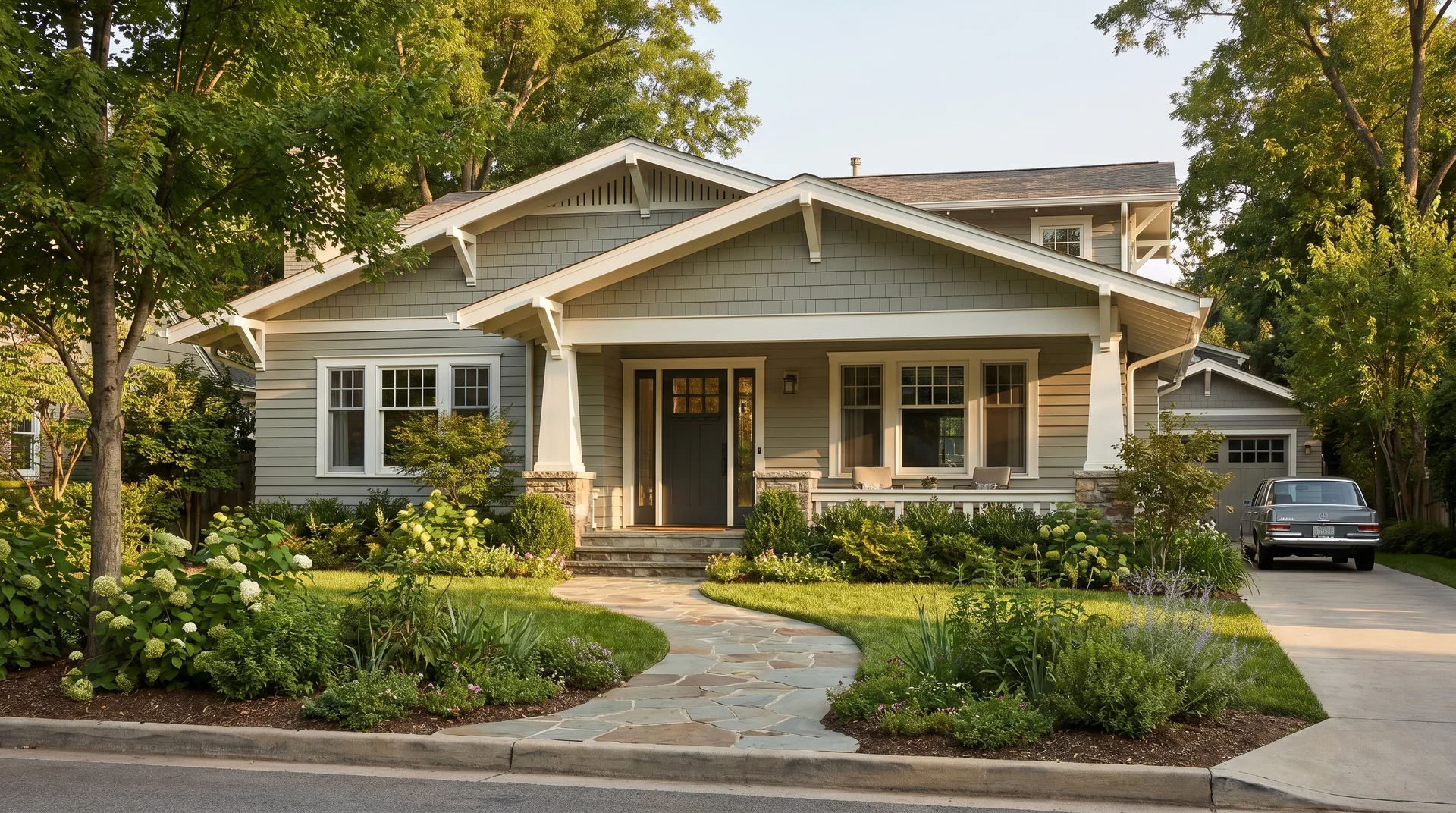
Evergreen Fog as an exterior color reads differently than it does on interior walls.
Outdoors, under direct natural light, the blue shift largely disappears, and you get more of the gray-green, particularly in full afternoon sun. It can look richer and more grounded outside than indoors, which surprises people who tested it on an interior wall and worried it was too cool.
For a full exterior application, Evergreen Fog works best on homes with warm architectural detail: brick, natural stone, wood accents, or warm metal roofing.
It doesn’t hold up well alongside a lot of gray or cool-toned trim, because those combinations read flat and indistinct from the street. The color needs contrast to anchor it.
White trim is the most common pairing, but the white still matters outdoors. Bright pure white makes the green in Evergreen Fog look muddy from the street. Extra White SW 7006 or Alabaster are both better choices; their slight warmth reads cleaner against Evergreen Fog siding without looking yellow.
A popular exterior combination: Evergreen Fog siding, Alabaster trim, and a dark front door in Iron Ore or Black Magic. The dark door creates a focal point that the muted siding alone doesn’t provide, and the three-color combination reads well at the scale of a full facade.
Craftsman-style homes pair well with Evergreen Fog because the muted sage tone suits natural wood trim and shingles. And if you’re considering the siding material itself, cedar board and batten siding is one of the most historically accurate and visually compatible choices for this style.
For sheen on exterior siding, use a satin or low-luster finish. Flat exterior paint on vertical surfaces works, but satin gives you better washability and holds up to weather more consistently over time.
October Mist vs Evergreen Fog
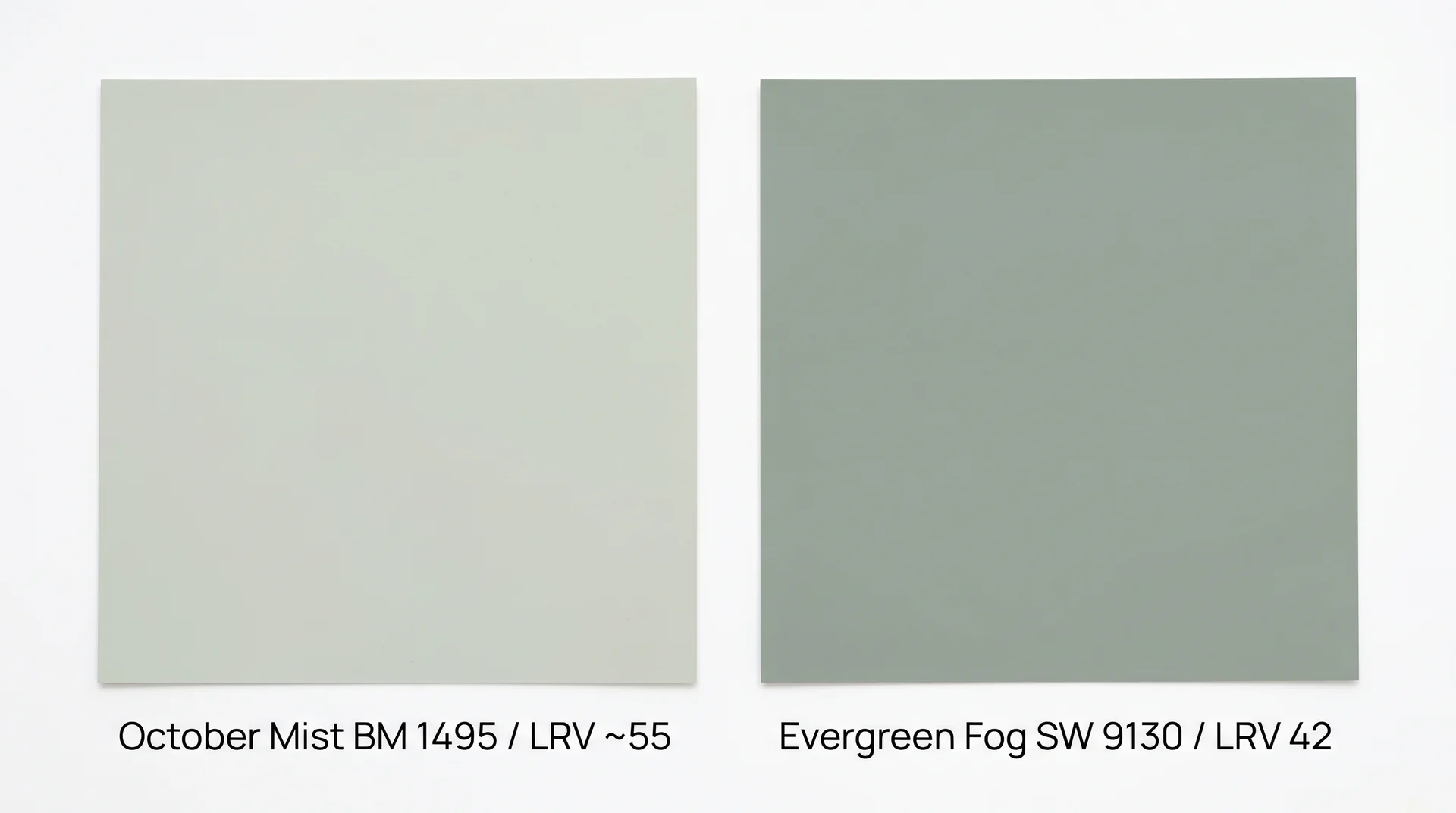
October Mist (Benjamin Moore 1495) and Evergreen Fog (Sherwin-Williams SW 9130) were both named Color of the Year for 2022 by their respective brands, which is why the comparison comes up constantly. They’re not identical colors. Knowing where they differ makes the choice easier.
October Mist is lighter, with an LRV around 55 [VERIFY] compared to Evergreen Fog’s 42. On the wall, October Mist reads as a whisper of green: very quiet, almost approaching a soft neutral in some lights. Evergreen Fog has more presence. It’s more committed to being a color.
| Attribute | October Mist BM 1495 | Evergreen Fog SW 9130 |
|---|---|---|
| LRV | ~55 [VERIFY] | 42 |
| Undertones | Gray, subtle green | Blue, gray |
| Light shift | Moderate | Significant |
| On cabinets | Too light, reads washed out | Holds its weight well |
| Best use | Rooms where you want a barely-there green | Rooms where you want depth and visible color |
October Mist is the easier color to work with. Its undertones are less complex, so it doesn’t shift as dramatically, and it’s harder to pair badly. If you want a quiet green that reads almost as a warm gray in certain lights, October Mist is the predictable choice. If you want the green to actually register as a color and hold visual weight, Evergreen Fog is the one to use.
On cabinetry, there’s no real competition: October Mist is too light to carry a cabinet face without looking washed out. Evergreen Fog holds up correctly at that scale.
Clary Sage vs Evergreen Fog
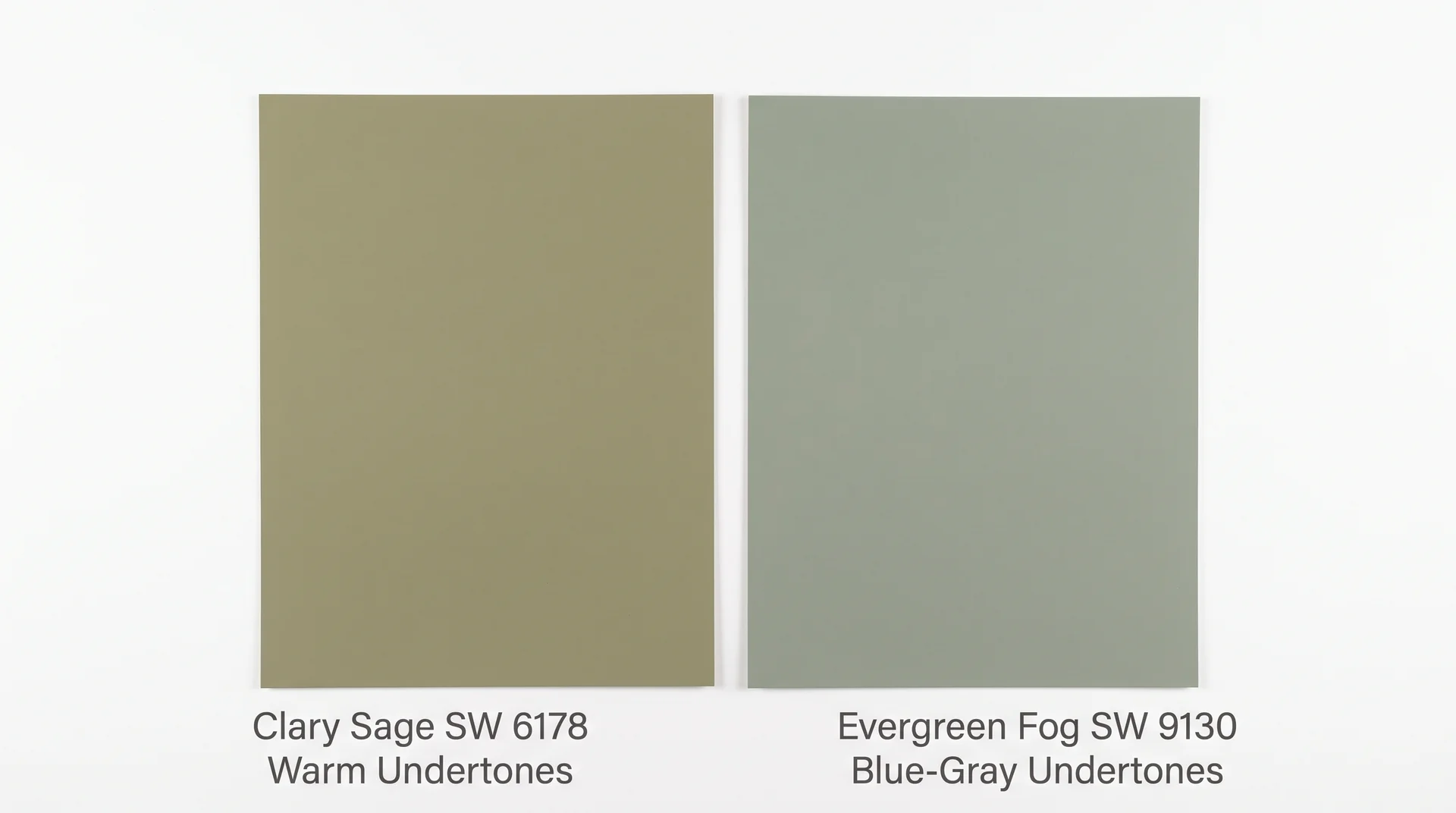
Clary Sage SW 6178 is a warmer, earthier green from Sherwin-Williams, and it’s the comparison that comes up most often after October Mist. The two colors are in the same general territory, but they’re not interchangeable, and the difference between them matters depending on your home’s existing tones.
Where Evergreen Fog carries cool blue and gray, Clary Sage leans toward olive and warm brown. It’s a more visibly warm color, and it behaves more consistently across different light conditions because of that. LRV is approximately 38, slightly lower than Evergreen Fog.
| Attribute | Clary Sage SW 6178 | Evergreen Fog SW 9130 |
|---|---|---|
| LRV | ~38 [VERIFY] | 42 |
| Undertones | Olive, warm brown | Blue, gray |
| Light shift | Lower, more stable | Higher, more variable |
| Warm-toned homes | Fits in naturally | Can contrast slightly |
| Exterior in full sun | Reads yellow-green, more assertive | Reads stone-like, more restrained |
If your home runs warm, warm wood tones, amber lighting, and terracotta accents, Clary Sage fits into that warmth without any effort. Evergreen Fog in the same room sits slightly cooler and can create a contrast that reads intentional if you use it correctly, but it requires more attention to get right.
On exterior applications in direct sunlight, Clary Sage reads more yellow-green and tends to be more visually assertive on a large facade. Evergreen Fog reads more restrained outdoors, closer to a stone gray-green, which makes it easier to use on larger exterior surfaces without the color becoming the loudest thing about the house.
What Sheen to Use with Evergreen Fog
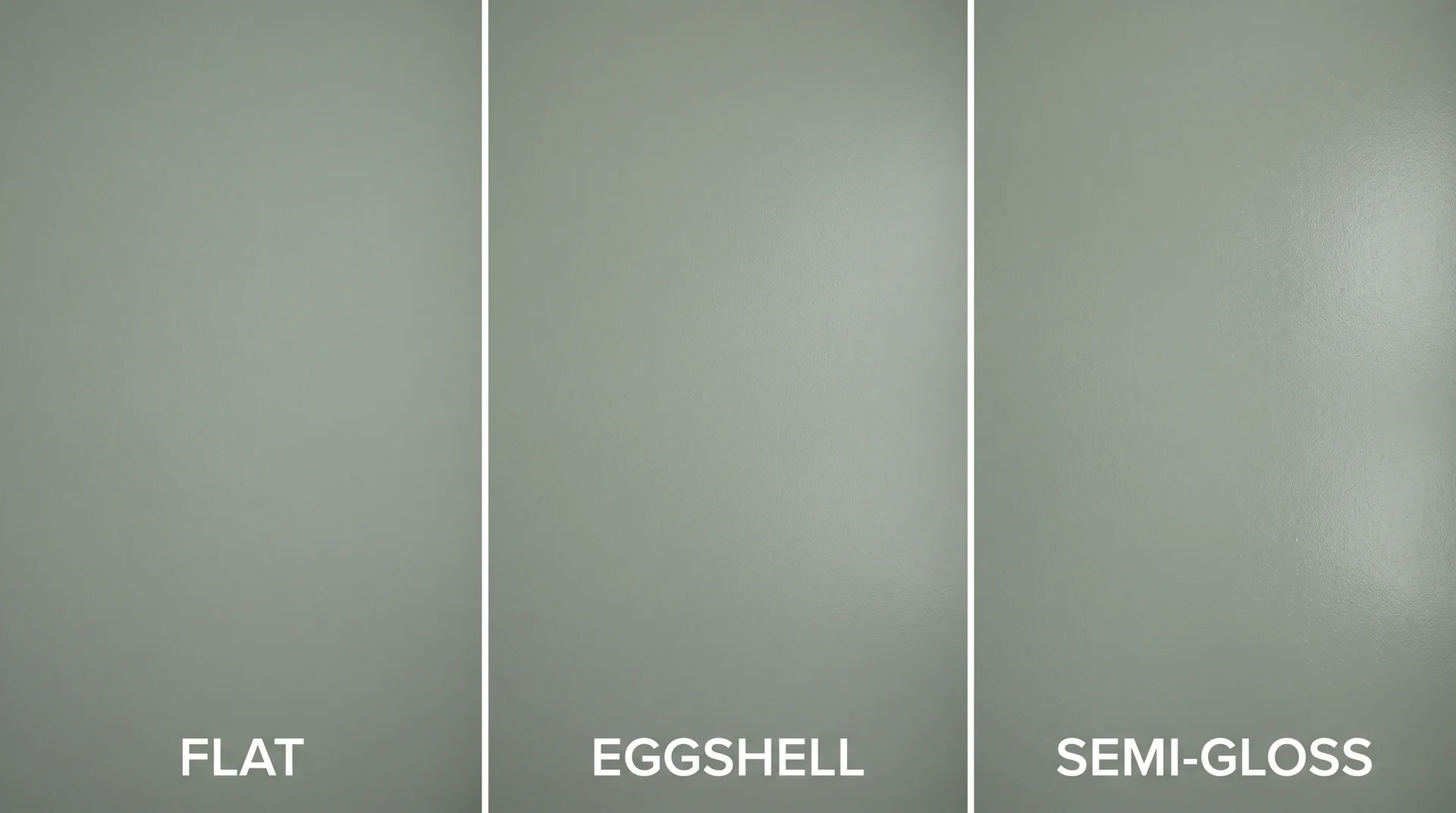
The right finish depends on the surface and the room. Because Evergreen Fog sits at a medium LRV with complex undertones, sheen selection has more impact on how the color reads than it does with lighter, simpler colors. A wrong finish won’t ruin it, but the right one makes it look noticeably better.
| Surface | Recommended Finish | Why |
|---|---|---|
| Bedroom and living room walls | Flat or matte | Absorbs light, softens the color, and reduces wall imperfections |
| Kitchen and bathroom walls | Eggshell or satin | Holds up to moisture and cleaning without reading shiny |
| Cabinets and trim | Semi-gloss | Maximum durability on high-contact surfaces |
| Exterior siding | Satin or low-luster | Better washability and weather resistance than a flat exterior |
| Ceilings (when painted in trim color) | Flat ceiling paint | Absorbs light, eliminates roller texture visibility |
On paint line selection: Sherwin-Williams offers Evergreen Fog across multiple product lines, including Emerald, Duration, and SuperPaint.
Emerald Interior is the most durable option for walls and gives the truest color payoff, particularly with a flat finish, because its pigment density handles the muted quality of Evergreen Fog better than lower-end lines. For cabinets, Emerald Urethane Trim Enamel is the appropriate choice. Duration is a reasonable middle option for rooms where you’re watching the budget.
On primer: if you’re painting over white or light walls, a good quality gray-tinted primer makes a visible difference with Evergreen Fog. The color has enough depth that it needs two solid coats over bare primer, and sometimes three over a very light surface. Skipping primer on a white wall adds coat count and affects the final color. Allow proper dry time between coats: rushing the second coat on a flat finish is where coverage problems tend to develop.
For everything you need to know about finish choice beyond this specific color, there’s a full breakdown in this guide to flat versus matte paint.
Is Evergreen Fog Right for Your Space?
Evergreen Fog works when you want a room that feels settled without being loud, when you have warm wood tones and enough natural light for the color to do its shifting, and when you want some depth on a cabinet or exterior surface without committing to a color that takes over every other decision in the room.
It’s a harder color to work with in spaces that have no natural light, in rooms with cool or blue-dominant existing finishes, or alongside bright whites that make its gray undertones look muddy. It also requires more planning than simpler colors because its behavior changes so much across different light conditions. If what you want is a green that reads clearly and consistently as green without needing much interpretation, Clary Sage or a less complex green will get you there more reliably.
When Evergreen Fog works, it works well. It has a quality that’s harder to describe than to see: a kind of settled, considered feel that doesn’t date the room the way bolder colors can. For anyone building out a broader color story across the home, it sits naturally alongside Agreeable Gray in adjacent rooms and hallways, with Alabaster on trim and ceilings, and Iron Ore as the dark anchor on doors or built-ins where you want the palette to have some weight.
Frequently Asked Questions About Evergreen Fog
What color is Evergreen Fog?
Evergreen Fog SW 9130 is a muted, dusty sage-green from Sherwin-Williams with an LRV of 42 and a hex code of #A1AC9A. It carries both cool blue and warm gray undertones, which is why it shifts noticeably between light sources. In north-facing rooms with cool daylight, it reads more blue-gray. In south-facing rooms with warm light it reads more like a muted greige-sage.
What are the best coordinating colors for Evergreen Fog?
Evergreen Fog coordinates best with warm whites like Alabaster SW 7012, Shoji White SW 7042, and Antique White SW 6119. Warm wood tones, brushed brass or aged bronze hardware, and terracotta accents also work well with it. Avoid cool or bright whites, which make the gray undertones in Evergreen Fog read dingy, and avoid cool-toned grays, which share similar undertones and don’t create enough contrast.
Is Evergreen Fog a good color for a bedroom?
Evergreen Fog is one of the better bedroom colors in the Sherwin-Williams line. At LRV 42, it’s deep enough to feel enveloping without making the room dark, and its muted blue-gray-green quality creates a calm atmosphere that holds across different times of day. Use it on all four walls with Alabaster or Shoji White on the ceiling and trim. Pair with warm white bedding and warm wood furniture.
What is the difference between October Mist and Evergreen Fog?
October Mist (Benjamin Moore 1495) is lighter, with an LRV around 55 compared to Evergreen Fog’s 42. October Mist reads as a barely-there green that approaches warm gray in some lights. Evergreen Fog has more depth and more complex undertones; it actually reads as a color. On cabinets, Evergreen Fog holds up correctly because it has enough LRV depth to carry that surface. October Mist at that LRV tends to wash out on cabinet faces.
Does Evergreen Fog need a primer?
Yes, primer makes a visible difference with Evergreen Fog. Because the color sits at LRV 42 with complex undertones, it typically needs two to three coats over white or very light surfaces. Using a gray-tinted primer reduces the number of finish coats needed and helps the final color read true. On cabinets, always use an appropriate bonding primer before applying any topcoat.
What trim color works best with Evergreen Fog?
Warm whites are the most reliable trim choice with Evergreen Fog. Alabaster SW 7012 is the most popular pairing because its creamy warmth contrasts with the color softly without competing with it. Shoji White SW 7042 is a slightly cooler alternative that works better in rooms with very warm natural light, where Alabaster might read too yellow. Avoid pure bright whites, which make the gray undertones in Evergreen Fog look washed out or dirty.
Is Evergreen Fog good for kitchen cabinets?
Evergreen Fog works well on kitchen cabinets, particularly on lower cabinets with white uppers. The two-tone combination grounds the kitchen without closing it in. Use semi-gloss or satin finish for durability. Pair with white or cream countertops and brushed gold hardware. Matte black hardware also works but can read slightly cold against Evergreen Fog in typical kitchen lighting.